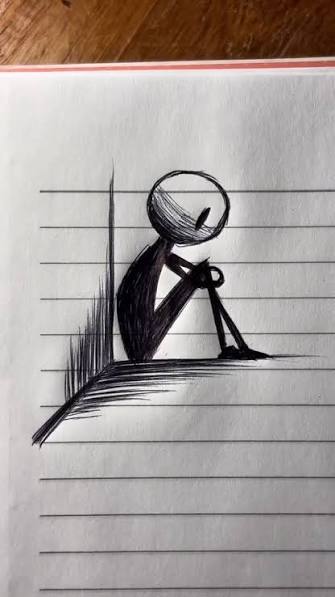
To Someone I Know

(I had intended to send this before the July 12th post. So don’t be thrown off by the type saying how long it’s been since I wrote. I didn’t post it because I wanted to work on it more. But I’m just posting anyway. Smile. Good luck! )

It’s been a minute, Blog-verse, since we spoke. I’m sorry for losing gravity. I’ve missed this space.

…Does gravity lose me or do I lose gravity? I’ll ask all the debris eternally orbiting in space. Maybe they know.

We’re going through a remodel right now and that’s my excuse. I hear the groans. You get me. We decided to do this in part because we are officially “emp·ty nest·ers”. I never liked that name. Who came up with that anyway? It has the same melancholy sigh as, “the wind came out of the cloud by night”, (Edgar Allan Poe’s final poem, “Annabel Lee,” published in 1849), …something much loved once lived here and now the absence with an echo sounds out. Couldn’t we have called this something a bit sexier, “Like even though you are going through menopause, and you keep asking yourself if ‘that’ or ‘this’ means you are getting dementia, you are still alive?” I think that’s catchy.

Coming home to a remodel every day has not been energizing. Nor inspiring. I am reminded of an old woman in crocheted slippers who scuttles around her house smelling faintly of powdery pharmaceuticals and incontinence, picking up one piece of lint at a time, moving a teacup from one tiny patch of exposed countertop to another, then to the sofa, only to spot another thread on the floor and start the whole scuttle over again.

I’m beginning to suspect I’ve become her.

It has however been fertile ground to process character, ergo, mine. My husband and I have been partners in all of this. And are we done? We are not. …Maybe that’s why K’s prayer landed where it did.

But I’m here with you today.

I wanted to share about this morning’s phone call with one of my girlfriends. Let us call her “K”, because like a Sesame Street episode she popped up into my day and taught me all sorts of things.

One was about Abraham.

We were enjoying our spontaneous encounter when she prayed that we could be like Abraham, who brought his son to an altar, surrendering him to God.

Why? because he knew the promise. And he knew who made the promise.

More back story. Here’s the short version of basically several chapters in Genesis. There was a promise God made to Abraham. Abraham was an old man at the time. He and his wife didn’t have any kids and in those days, that meant a lot, including wealth, legacy, and life meaning.

Abraham was so old, that his machine was shooting cobwebs rather than sperm. And then God came to him and said that he would make him the father of so many decedents that they would outnumber the stars and the sands on the seashore. And Abraham believed him, cobwebs and all.

“And Abraham believed….” Gen 15:6

That has been following me around all day. (Thanks for that, K.)

Maybe that’s what steadies someone living in an empty, but yet still tossed, space. I don’t have certainty. (Where’s my salt? When are the tilers coming? The gas is disconnected from the stove. Let’s just get Jilberto’s.) I do, however, have certainty about the One who spoke the promise. Even way back when to Abraham. And then to me. And it steadies me as my kids leave and make their choices and they are such wonderful humans but you know…

And what I would do for another and then another time to brush her soft long hair. And to share space while he sings with his guitar and she plays the viola in harmony. And to listen to her talk about social justice at the dinner table. Well, it’s a lot for Mommas. (That’s what they call me). Mt. Moriah looms. And I feel like I’ve been climbing up it with my kids, not understanding how I could obey God to let them go, and at the same time, God be able to keep his promises. But I am. Not to some world of chaos, or a term we use, “the Universe”, or any wide unknown space out there. Rather step by step, I go toward that place on top of the mountain with a Guide.

I give them to God.

To someone I know.

To someone I am in covenant with.

I’m not saying I’ve gotten the same promise as Abraham, many nations and all that. But there have been promises made.

And I am all in.

For me right now, it’s my kids.

For you, it may be something different.

Whatever it is, I don’t think surrender means giving what we love over to empty space. It means placing it into the hands of Someone we know. Someone who has proven themselves. Someone with whom we are in covenant.

And then, be all in.

Self-Care Tip: Take one thing you’re wound up about—a relationship, a choice coming up, a fear—and practice giving it over. Release what you love because you trust the One receiving it.

Question: What would it look like to entrust it—not to the unknown—but to the God you know?

Anxiety the Thief of Freedom

I was recently reminded when with one of my patients—let’s call her Emily—that one of the greatest losses in anxiety isn’t simply peace.

It’s freedom.

One of the hardest things about anxiety is that when treatment works, it works so well that you begin to forget what life was like before. That, in turn, can make taking medication long-term more difficult.

Early in our visit, Emily said, “It feels good when you’re on it, that you forget what you’re like when you’re off of it. I feel like, ‘I don’t need this,’ but I know from experience, I feel great. I don’t need this, and then I go off, and then I have, like, a panic attack.”

Panic is part of it. But there is something else that anxiety anxiously steals. It changes your perspective on the world around you.

It is a subtle change in your freedom to think.

Your thoughts stop being free before you even realize they’ve been taken over.

They start being controlled by the anxiety rather than by the free part of your identity.

When I asked her what that felt like, she said:

“Basically, when I’m anxious, everything’s skewed, and I’ll have a thought, and I try to tell myself, ‘This isn’t a real thought. This isn’t real. This is my anxiety,’ but my brain keeps swimming around it.”

This is so so common in people struggling with taking meds. Who actually wants to?!  And it’s not only self-stigma impacting how people feel. Because look who’s telling you that? It’s your own brain. But patients are also struggling with what anxiety has convinced them is true about themselves and about the world.

The thoughts are not invited. They come without invitation. And because they come without invitation, they are not under voluntary control.

That means anxiety begins choosing for you before you have the freedom to choose.

The consequence is much larger than feeling nervous. It impacts joy. It changes the way you spend time with other people. It impacts everything.

It affects your capacity to connect with the world. It isolates you. It shapes your choices about how you intersect with the people around you. Invitations get rejected. Opportunities start narrowing. Loved ones become more of an attachment blanket than a relationship.

In a way, it changes your personality.

More accurately, it changes the story you tell about yourself.  That’s the story we are really talking about.

I said, “If you were to write, ‘Emily is a woman in her early thirties who is expecting her first child, and she…’ that story would become different. The identity you would describe yourself as would become someone shaped by anxiety rather than someone who is free to choose.”

That distinction matters.

It also matters when we begin talking about treatment during pregnancy.

The conversation cannot simply be, “Is the medication safe?”

Medication decisions during pregnancy need to be discussed together with your obstetrician because there are really two questions. One is the safety profile of the medication on the fetus. The other is the cost of untreated illness on you and your fetus.

I hesitate to call any medication “safe” because people define that word differently. What I can say is that some medications are among the most commonly used during pregnancy.

I can also tell you what is not safe for your baby: you not being well.

Even during pregnancy, studies have shown that untreated anxiety and depression affect the developing fetus. When these risks are weighed together, the benefits of treatment are often greater than the risks of leaving psychiatric illness untreated.

Near the end of our visit, our conversation shifted and Emily smiled.

“Have I ever told you that I have two older sisters? They’re both on Zoloft, 50 milligrams, and my dad is too. So, like, I don’t know if it’s, like, my destiny.”

“From a biological standpoint, we call that genetic loading. You are a creature created by your genetic design. You did not come from nowhere.”

“And maybe my baby will be on Zoloft too.”

I smiled.

“Maybe.”

I asked her one final question, “How would you feel if your child was on Zoloft? Would you feel like they shouldn’t be?”

“No, not at all.”

“Would you give them grace and not yourself? Would you be like, ‘Get on that yesterday,’ if they needed it?”

“One hundred percent.”

I smiled again.

“Maybe the question isn’t whether you deserve treatment. Maybe the question is whether you deserve the freedom to be yourself.”

Maybe that’s what self-care really is.

Not becoming someone different.

But caring for your biology enough that you’re free to become yourself again.

Questions: In what ways has anxiety, or other difficult emotions and behaviors, changed the story you tell yourself about who you are? How have they reduced your freedom?

Self-care tip: Caring for your biology is one way of caring for your freedom.

what this blog is about

Hello Blog-verse!

I’ve been wanting to recenter myself on what this blog is about. In brief, it is supposed to be about self-care from a biological standpoint and, from there, a branching out into the psychosocial paradigms. This means that it is a stance on what our agency is when thinking about it medically, from a physician’s point of view. That means someone who goes through full medical training, including a college degree, four years of medical school, a period of primary care training in general medicine, and then completing four years of psychiatric specialty training.

For me, this included a fellowship in “Prime Psychiatry,” which is medical psychiatry—as in psychiatry for those who are suffering primarily, at the time of the encounter with me, from a primary medical illness, such as being inpatient in the ICU for pneumonia. In this psychiatry consult scenario, the patient may be seeing me for crying jags and a work up for depression while going through the life threatening medical illness. That is a different perspective on psychiatric illness than someone whose training is different, such as from a psychology or social work background.

We look at emotions and behaviors somewhat differently because our training in understanding mental illness begins from a different starting point. Medicine first asks, “What is happening biologically?” I.e., the brain as an organ, disease processes, medications, hormones, sleep, inflammation, pain, and the countless ways the body influences the mind. That is where this blog tries to begin. But it doesn’t end there.

Psychology and social work often begin by asking, “What experiences, relationships, thoughts, and environments are shaping this person’s life?” Both perspectives are valuable, but they naturally emphasize different aspects of the same human experience. I am in danger of oversimplifying this and misrepresenting, which I apologize for.

Human beings are never just biology. We are also shaped by our relationships, beliefs, losses, trauma, purpose, and the stories we tell ourselves. Understanding ourselves well requires attention to both.

In training for psychiatry, we also cover many of the therapies taught in the various schools of counseling, and likewise, they cover neuroscience. But our pivot point in medicine is always going to be from a biological level. Nor do we spend anywhere near as much time on the many schools of thought devoted to talk therapy.

That doesn’t mean the biological explanation is always the answer. Far from it. But in psychiatry it is our nidus. From there, we broaden our view to include a person’s relationships, developmental history, coping patterns, personality, beliefs, culture, trauma, purpose, environment, and so forth. The goal is never to reduce someone to a diagnosis or a collection of neurotransmitters. Rather, it is to understand how biology and life experiences continually shape one another.

What is funny about me, and I don’t know if this is true about other psychiatrists, is that I often find myself on this blog talking most about coping issues and psychological perspectives, and I’m not sure I need to improve that. So, it makes me think I need to come clean about what I really love doing here at Friend to Yourself.

One of my agendas seems to be washing up in the tide of time and experience: trying to help others understand the role of psychiatry and detangle the social perspectives of where emotions and behaviors come from and the way those perspectives help or harm access to benefits and medical care.

So much of my practice is spent helping people understand why medication is appropriate when there is a medical illness, and why emotional and behavioral pathology may reflect illness rather than a “poor choice,” “weakness of character,” or “lack of surrender to God.”

That is an extraordinarily difficult idea.

The idea is that pathological emotions and behaviors are symptoms of an underlying disease process at the cellular level from which they arise. I.e., emotions and behaviors come from a body organ, the brain. If the place where emotions and behaviors are generated from is well, there are emotions and behaviors that are well. And vice versa.

Much like when my eyesight is bad, it means that the cells, somewhere from wherever that vision comes from in the human head, aren’t working right. They should be treated medically, such as with prescription eyeglasses—a medical prescription for a medical condition. Eyeglasses don’t heal the underlying biology, of course. They compensate for it. But we don’t moralize needing glasses; we recognize that when vision is impaired, we seek a medical solution for a medical problem.

This just isn’t easy for almost anybody to understand.

The drive to think we have control over our emotions and behaviors, i.e., our identity, is so very, very high. But emotions and behaviors start somewhere. They are birthed and formulated amongst a slurry of neurotransmitters, ions, gated channels, DNA, and so much more. From there, they take shape and grow into what we finally see in a smile, feel as an impulse, experience in tears and laughter, and even recognize as affection.

Why do we so easily believe that more hard work on “my part”—through hours of talk therapy, an exercise of prayer beads, or giving ourselves a tune-up with a wrench and hand tools—should be able to fix it? We don’t do this to someone with nearsightedness but we do it with psychiatric illness.

Many medical practitioners struggle with this. Psychiatry occupies a peculiar place in medicine because our symptoms (pathological emotions and behaviors) are experienced as our identity, much more so than in other specialties. That makes it much easier to mistake disease for personality. Other medical practitioners may inadvertently counsel patients to “work on it” in one way or another through a behavior or thought change rather than directing them to a medical treatment for a medical disease. This turns the treatment of psychiatric illness mistakenly away from medical treatment and toward volitional control, as though emotions and behaviors were under the same conscious control we have when operating a joystick or shifting the gears of a manual transmission.

It’s super unfortunate because it’s hard enough for people to understand this, let alone when their clinical providers give them inaccurate medical information.

So, this blog has become, in part, a place where I try to do just that, moving from one dial setting to another, one color on the spectrum to another, and so forth. There just are not enough voices-and-volume out there explaining this.

It is still about how to be a friend to yourself from a biological standpoint, but less directly than I thought it would be when setting out. We are doing it, but a little more circuitously, in that we have to get into and through all the reasons—the many, many reasons—we don’t understand that emotions and behaviors come from the brain, which is just as much a part of the human body as a kidney or a liver or an eyeball. To care for ourselves when we are medically ill in these ways, we need medical treatment.

To be a friend to yourself from a biological perspective, we first stop blaming ourselves for what we don’t fully control consciously: our emotions and behaviors. We grow our understanding of, and modify our actions accordingly, to the fact that the brain is an organ and is the only place from which we experience ourselves.

It is the only place from which come our perceptions of what is true, of reality, of the way we identify ourselves, and of those around us.

Even though I’ve often said emotions and behaviors come from the brain, it could be said, rather, that they come from neurotransmitters, cells, DNA, hormones, immune signaling, relationships, trauma, nutrition, and sleep, if that makes it clearer. Because they do. They all converge in brain function.

The brain is an organ, but it is also the place where we experience being human.

That acknowledges the profound influence of relationships, beliefs, faith, purpose, and culture, all of which continually affect and shape the brain, from which emotions and behaviors arise in this lovely biopsychosocial person we call “Me.”

Let us, therefore, end by saying, “this blog is about”… learning to undersand ourselves compassionately by recognizing that biolgy and lived experience continually shape one another. It doesn’t abandon biology—it explains why biology matters without reducing people to biology.

What else is this blog about? Hm. I’ll work on that. There is more that constitutes our voice here for sure. Smile.

Self-Care Tip: Treat your brain like any other organ.

Question: Have you mistaken a symptom for a personal failure? Please tell us your story! We need to hear you.