Bearable Disappointment

Guest Post!

Read on 🙂

We’re aware as smart single women that we can’t expect perfection.

But life still manages to throw us curve balls.

Maybe once you’re into your mid-thirties,

it shouldn’t be called dating,

it should be called waiting for the other shoe to drop.

…

Why is it always something?

Unless you’re in a problem free relationship with TiVo.

– Sex and the City


Despite the fact that the mention of TiVo dates this quote (remember TiVo?!), it still rings true. And you don’t need to be in your mid-thirties for it to apply. Any woman, or person for that matter, who has dated for a length of time knows the meaning of this quote in his or her bones.

You meet someone. It is electric. You connect over so many things. His father passed when he was small too. She loves Quentin Tarantino movies as much as you do. You both want to travel the world with nothing but a backpack. You share a love of fine wine and cooking extravagant dinners.

Before you know it you are sailing off in a sea of hormones and dreams of a future with this new, amazing person. You spend time at work day-dreaming of all the romantical things the two of you will share and your heart skips a beat when you see a new text/call/email.

You are twitterpated. Crushing, hard.

The intensity of these new-love emotions makes you feel as if this person is your destiny. This is deep and something you have never felt before. He is “the one”. You are ready to introduce her to mom.

Suddenly all of your hopes and dreams come crashing down, shattering into a million smithereens.

It could be any number of different things. “Deal breakers” are different for everyone. Prince charming could have said:

  • “Well, I am a musician, but it’s more of a hobby right now. I work at Big 5 to pay the bills”
  • “I live with my mom”
  • “I don’t actually have a college degree. I said I did because I’m only 20 credits away”
  • “I’m impotent”
  • “I have a daughter”
  • “I don’t want to see you anymore”

Sigh.

At the very least you are disappointed. You might feel devastated. Even worse, you might consider throwing your standards out the window to start a relationship with this individual anyway.

Let’s get real and break it down.

Getting real: You don’t know this person. Really, you don’t. You feel like you do because of the adrenaline, dopamine and serotonin running through you. It is also very likely that you have projected a huge, unrealistic fantasy onto them that has no basis in reality. That whole engagement speech you dreamed he would be reciting on bended knee? Yeah, you made that up in your head. The home-cooked meals and coffee dates with your mother you thought she would be making? Also fiction.

It is so easy to become disappointed and exhausted by dating, and life in general, when we live in the future instead of the present. When we live in the future we set ourselves up for disappointment and hurt feelings.

If you feel wounded by your dating life, only you can change that.

Be present. Make reality your friend.

Being present: Don’t wait for a partner to make your life happen. Enjoy every day. Plan trips. Have fun. Be grateful for everything you do have. You have so much! I keep a gratitude list on my phone that I add to and read when I am feeling sorry for my single self.

Making reality your friend: By realizing that that the initial excitement of dating a new person is not a promise for the future, you will save yourself a lot of heartache. People are often not who you perceive them to be (this is usually not their fault). And while it is frustrating when individuals misrepresent themselves, that is part of the dating game. Have compassion for people who don’t feel comfortable being up-front about who they are, and move on, (without them!).

Putting all your emotional eggs in one basket is your decision. Allow a potential partner to earn that over time. Let them demonstrate through actions who they actually are and that they are trustworthy. As the song goes. “You can’t hurry love, you just have to wait.”

Also realize this disappointment you feel is not personal. It is not a reflection on you. You are worthy of love. Have hope and stay positive. Remain grateful.

Be soft. Do not let the world make you hard. Do not let pain make you hate. Do not let the bitterness steal your sweetness. Take pride that even though the rest of the world may disagree, you still believe it to be a beautiful place.

– Kurt Vonnegut

Question:  How have you and do you endure well when disappointed?

Self-Care Tip:  Remember that this disappointment is not personal.  Keep on.

20140224_182909Jessica Adams:  I am a science teacher in Southern California who thinks about relationships, human health, love and of course science. I am passionate about doing what is right for kids and personal growth.

 

Trying to explain, temporary memory loss in ECT

rain gauge

I’m trying to help explain, “Why temporary memory loss in ECT versus loss of memories prior to ECT?” It is “friendly” to understand our treatment options and dispel stigma, starting with “Me.”  Please let me know if this effort is helpful in any way. 🙂

Community opinion of ECT, largely influenced by the media rather than data, has a very hard time believing that the memory loss is of new memories, (or imprinting memory, ) during the course of the index trial; not memories before ECT, not memories after the index trial is done, not memories when maintenance ECT is going on.  

The best way I can explain this, (and this is my own Dr. Q effort,) is that the memory loss is related to mechanical issues, like a cork in a bottle.  Think of a rain gauge, for example.  After it rains, we see on the gauge that it rained 2.3 inches last night.  We uncork it at the bottom, and all the rain water flows out until the rain gauge is empty.  We let the water out. The rain gauge may fill again when it is recorked.

The electrical stimulus and subsequent seizure to a brain cell is like the process of uncorking the rain gauge.  The natural process of the brain is to “recork” after a stimulus, be the stimulus pressure, magnetic, chemical, or in this case, electrical, and let the cell fill back up each time it happens.  The recorking process happens all the time in our brain, (in vitro,) after natural stimuli act upon a cell, be those natural stimuli pressure, magnetic, chemical, electrical, or another.  

ECT is a medical therapy that uses the basic recovery methods of our own physical design and perhaps, this is one of the reasons it is so effective.

Unless the cell has that inside content, it cannot lay down new memories.  The stimulus and stimulus response does not damage the cell.  They empty it. The response is mechanical.

This idea also works to help understand why the memory loss is most often temporary rather than long-term.  The cells replenish between treatments.  It is a cumulative effect, so the closer the treatments are, the more the degree of memory loss.  As the time between treatments increases, the recovery time is so brief, that the patient doesn’t notice memory loss.  The patient is able to imprint memories without difficulty.  The rain gauge, we could say, has its cork in for longer periods of time.

Question:  Have your choices toward treatment ever changed based on dispelling your own stigma?  Has information and greater understanding of your treatment options ever specifically improved your self-care?  Please tell us your story.

Self-Care Tip:  Use information and greater understanding of your treatment options to improve your self-care.  Keep on.

And Then Stigma Disappeared

scarlet

Discover Your Sweetness – Value, That is To Say.

This historical post above is what I will start tonight with when we meet at NAMI.

The blooming sense of value that comes when we pause to appreciate our imperfect selves, our abused selves, diseased, pecked at, and unrighteous selves, this we can trust more than the who believes she serves altruistically.

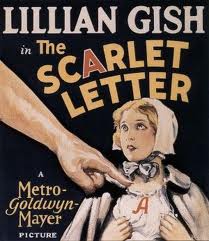
I remember the Scarlet Letter by, Hawthorne, and wonderful dirtied Hester.

But, in the lapse of the toilsome, thoughtful, and self-devoted years that made up Hester’s life, the scarlet letter ceased to be a stigma which attracted the world’s scorn and bitterness, and became a type of something to be sorrowed over, and looked upon with awe, yet with reverence too. And, …people brought all their sorrows and perplexities, and besought her counsel, as one who had herself gone through a mighty trouble. …with the dreary burden of a heart unyielded, because unvalued and unsought,—came to Hester’s cottage, demanding why they were so wretched, and what the remedy! Hester comforted and counselled them, …at some brighter period, when the world should have grown ripe for it, in Heaven’s own time, a new truth would be revealed, in order to establish the whole relation between man and woman on a surer ground of mutual happiness. 

Once we value ourselves, much of stigma disappears.  There is a coming together of that which is “perfect” with that which is imperfect, flawed, “unvalued and unsought,” and we can see the disease in others and not demand perfection in them either.

Everything starts and ends with Me.

Questions:  How has stigma touched you?  How have you, do you, deal with it?  What helps you?  Please tell us your story.

Self-Care Tip:  Let the imperfect come together with the perfect in you, to deal with stigma in others.

What Are Our Treatment Options in Psychiatry?

choosing

I go through this almost every time I see a new patient.  I often hear that this is all they really wanted, “To know what my options are and that I’m not choosing something way out there.”

First off, most treatments for psychiatric brain illnesses are not done with intention to cure, but rather to restore health and increase quality of life.  Healthy is not the same as disease free.

This applies to all the treatments listed here.

1.  Hospitalization:

Inpatient – 24 hour locked unit, voluntary and involuntary, little psychotherapy, and daily physician care.

Partial Hospital – Day Hospital that runs during business hours such as 9AM-3PM, voluntary only, includes intensive psychotherapy, and weekly physician care.

2.  Counselling/Psychotherapy:

Talk therapy and exercises of various forms.  May be with physician or nonphysician.

3.  Stimulation Therapies, such as:

Deep Brain Stimulation (DBS) requires brain surgery to implant an electrical stimulation device in the specific brain area, controlled by a device implanted in the gut. Effective, but higher risk.  Least time consuming for maintenance care.

Transcranial Magnetic Stimulation (TMS) – The patient sits in a chair with a magnet at the head’s surface that uses magnetism to stimulate the brain for treatment, 1 hour a day, 5 days a week for various weeks, according to the patient’s need and funding.  Few side-effects.  Time consuming.  Not as effective as DBS or ECT but comparable to some medications.

Electroconvulsive Therapy – Uses electricity to stimulate the brain, inducing a short seizure for treatment.  Considered safe and of low risk.  Most effective.  Response is speedy.  Few, and mostly temporary side effects.  Does not enter into the body systems.  Less time consuming.

4.  Medications:

Chemicals for treatment in the form of pills, liquids, injections, patches, powders, vapors, gases – enter into the body systems causing physical side effects that, as with any treatment, must be weighed against the benefits.

Pills – generally taken daily, which is a challenge to treatment compliance, and activate internal conflict and personal stigmas.

Injections – generally done in a clinical setting, bimonthly or monthly.

5.  Aerobic exercise 50+ minutes, 5 days a week.

6.  Sleep hygiene.

7.  Diet

8.  The spirit also needs nurturance.

9. Alternatives – such as over the counter herbals, naturalistic supplements, meditation, spiritual, acupuncture, acupressure, massage, or no treatment.

Questions:  What do you think of your options?  What do you choose?  And why?  Please tell us your story.

Did I miss anything?

Self-Care Tip:  Get informed about your treatment options.

Lupita Nyong’o Speech on Beauty – W-O-W! And, thank you.

“…and my mother again would say to me you can’t eat beauty, it doesn’t feed you and these words plagued and bothered me; I didn’t really understand them until finally I realized that beauty was not a thing that I could acquire or consume, it was something that I just had to be.”

This woman gets us. Friend to yourself. Keep on.

The Energy in Stigma, Yours for the Taking

unicorn

There are nothing like lightbulb jokes in the operating room to make you plume your feathers.  The other day, my nurse “enlightened” me with them.

How many psychiatrists does it take to change a lightbulb?  One, but the lightbulb has to be willing to change.

How many surgeons does it take to change a lightbulb?  One, because while he holds it, the world revolves around him.

How many nurses does it take to change a lightbulb?  If it’s during shift change, no one will touch it.

That is as far as we got, but please share yours, especially if related to psychiatry :).

Lightbulb jokes are common, clean, dirty, and fairly ageless. It does not take the brightest lightbulb in the room (Teehee!) to know that they are so because they capitalize on stereotypes.  Stereotypes, likewise, are widespread, and fairly ageless.  Even in something as objective as brain disease. i.e., The brain is carbon matter, a human organ, mushy grey stuff. The brain gets sick like any other part of the body, human organ, and people bits. Brain gets diseased, people behave and feel diseased.

A primary care physician’s assistant, “PA,” was sharing with me the other day about how she deals with stereotypes when she approaches patients who need treatment toward brain health.

I tell them about all the executives and professionals who get treatment ‘because the stress gets to them and they have nervous breakdowns.’  Then they don’t feel so bad about accepting treatment because they associate themselves with these successful people.

Stereotypes can be positive, negative, or neutral.  Everyone has them.  We clinicians, patients, grocers, those who want nothing to do with medical care, and even executives and other professionals (smile) have them.  But what, in dealing with stereotypes, is friendly to Me?  It starts there.  With Me, one little, or largely valued Me.

We stereotype ourselves and maybe that is why we stereotype others.  For example, this struggle of what to call illness of the brain is common, widespread, and fairly ageless. A Menninger Clinic blogger wrote eloquently about it recently, “Does reframing mental illnesses as brain disorders reduce stigma? by JON G. ALLEN, PHD.”  Most pithy, I thought was this,

…we should be skeptical of the view that regarding psychological problems as brain disorders will abolish stigma. Although the disease model decreases blame, this shift comes with a cost: It increases pessimism about recovery and might also contribute to perceived dangerousness.

I have never forgotten the Spiral Dynamics idea that in the magical level of consciousness, there is a sense of being disempowered. “Perceive dangerousness” is magical. Behind negative stereotypes, there is magical thinking.  We give over what is not to be given and take what is not to be taken.  We have fear.  We feel victimized.  We lose what is freely our own.  Disempowerment is terrifying. There is a lot more stigma out there than there is information but giving stigma and/or negative stereotypes power is our own choice.

A fellow blogger wrote to me how he approaches it,

Change brain illness to mental illness. Our problems really are brain illness from physical dysfunction but I can accept that my psyche is sick easier than my brain is sick.

Stereotypes may scare us but they can also inspire.  It is up to the individual, to Me, how to respond.  As in lightbulb jokes, we who are targeted by stereotypes can take pride in them.  They are not the same as “stigma” although there is overlap when negative.  Stereotypes can be neutral or even something to be proud of.

How many psychiatrists does it take to change a light bulb? None–the light bulb will change when it’s ready.

How many psychiatrists does it take to change a lightbulb? None. It’s their job to help people find their way in dark places!

There is nothing like the kind of energy in stigma and negative stereotypes to inspire us.  Such force, such Magic, these can get the punk in any of us to love who we are.

I used to be quite turned off by the beatitudes thinking I was supposed to want to be a wimp, and couldn’t quite make myself do it.  Now I realize, being a wimp is just what it is.  The blessing is what is inherently available to Me in my “condition.”

1 Now when he saw the crowds, he went up on a mountainside and sat down. His disciples came to him, 2 and he began to teach them, saying: 3 “Blessed are the poor in spirit, for theirs is the kingdom of heaven. 4 Blessed are those who mourn, for they will be comforted. 5 Blessed are the meek, for they will inherit the earth. 6 Blessed are those who hunger and thirst for righteousness, for they will be filled. 7 Blessed are the merciful, for they will be shown mercy. 8 Blessed are the pure in heart, for they will see God. 9 Blessed are the peacemakers, for they will be called sons of God. 10 Blessed are those who are persecuted because of righteousness, for theirs is the kingdom of heaven. 11 “Blessed are you when people insult you, persecute you and falsely say all kinds of evil against you because of me.

Questions:  How have you been able to use stereotypes and stigma as something toward friendliness in your life?  

What have you found is inherently blessing you from where you find the condition of life to be?

How might you use the energy in them toward being good to yourself?  Please tell us your story.

Self-care tip:  Use the energy available in Magic to empower you, rather than disempower.  

Electroconvulsive Therapy – a student nurses perspective

http://originalribenababy.wordpress.com/2014/02/23/electroconvulsive-therapy-a-student-nurses-perspective/

What are you up to?

Image

Hello Friends,

What are you up to?

Lately, I have been working on getting our ECT book done.  I am spending more time with the kids, exercising less, quilting more, and eating tons of fruit as it is always in season and “going to waste” (which guts me to see) around our little property.  I am still listening to tons of books from audible and I think that my portrait would show me anywhere anytime with earbuds in.  It must annoy others. …What was that?

Let us know what you are doing.

Be a friend to yourself.  Keep on.

More videos showing ECT and discussions around the globe

The Mayo Video uses a cartoon to show the procedure

MSNBC… not a full treatment, but a “demonstration”

Here is a VERY dated video… but it includes Max Fink (the master) the the full procedure

I often recommend this TED Talk to patients.  It doesn’t show the procedure. “Sherwin Nuland:  How electroshock therapy changed me.”

The BBC in the UK showed this video of a real patient getting ECT.

Questions:  What is your evolving opinions about treatment options for brain illnesses?

When I am an old psychiatrist

When I am an old psychiatrist, I’ll be looking at you through my purple eye folds, with my wrinkled pressed lips, eyeglasses pushed tightly to my face, pride propping up my several chins, incensed with the smells of my own medicated dying body.

Proud of you. Proud of me. Not the kind of pride that squashes humility. For what have we to be proud of if we live without Grace. We will still be receiving what we have done nothing to deserve. The kind of pride that says,

There is Love.

There is one who has suffered and healed and hurt and lived well.

We will have made a lot of mistakes. We will have made and continue to make amends.

The kind of pride that kids pressed shoulder-to-shoulder know of when the spinning roundabout slows down. We will be able to hear,

Here is one in whom I am well pleased.

We will hear that and not be ashamed.

20140125-105536.jpg

Sequestering Physicians from the Muggles

muggles

When in the exam room, we do not want it to be about the physician.  However many of us don’t want it to be about the patient.

Some of us want it to be about the system, whatever system we are in, so that the system can run as smoothly as possible and get all our protocols met. Are we are making physician-robots?  We isolate them and ourselves. There is a pressure when working in a system to sequester the physicians, such as wizards from the Muggles.

As physicians, we care better for our patients when we realize what we are getting out of the relationship.  We give much better when we know what we are hoping to get and perhaps hoping not to get.  We give better even with medical care.  Is it comforting to think that when it is medical, it is objective, about data?  More safe, perhaps.   However, this binary logic, is false.  We do not practice in such.  We practice in a place where people smile and cry and bond and connect and receive from us and give to us.  When we practice, it is personal.  It is obvious that it is professional.  The delusion is that professional is an either/or condition.  Either professional or personal.  Not both.  Never both.  That is a buttered wall to grip before sliding into patient doctor sexual relations.  Sneeze.

There is a term called, Grace, you may have heard of.  Grace is the condition of receiving without purchase.  Having been gifted and celebrating in the gift without qualifying it.  Perhaps getting a great review from a patient on-line you are expected to respond to, and just saying, “Thank you.”  We have a hard time with this in our world.  “Getting” well.

I struggle with “getting.”  I cannot describe yet how to get well.  How to receive.  When a patient gives to me, I struggle not to qualify what I am getting in the same way I qualify taking a trip to Hawaii, “Oh, I’m going to a medical conference.”  Or, “Look at this new patio set I got from Home Depot!  It was totally on sale.  I got a great deal.”

In practicing medicine, we need to grow to an acceptance of what we receive, and receive with Grace.

I am sure being a patient is better when we realize what we are getting from the exchange too.  We get more, or perhaps differently, than what the insurance and copay gives purchase to.  I hope the patient-doctor relationship is more than what can be had on the street of a Turkish bazaar.

Question:  What are you getting from your patient-doctor relationship?  What is your clinician getting from you?  How can you receive with Grace?  Does this affect your accountability to yourself?  Is this an act of friendship to Me?  Please tell us your story.

Self-Care Tip:  Get you some Grace, with Grace.

Angry Responses

offended, by Thys le Roux

If you are not deeply grounded in who you are and what you are doing, if you have not done your own work on your own entitlement and issues, you will by snagged be what others think about you.  This is why what YouTube comments have nothing to do with the video.

When you actually make something and take the risk and roll up your sleeves, when you choose to get off the couch, you become a wall for others to bounce off.  Think of movie reviewers who sit for two hours in a movie and write their review, but never spent a minute on the set nor participated in the grueling effort to create it.   What right do they have?  

The sense of being disempowered is terrifying.  This motivates both sides of this relationship – the creators and the responders.  The people who are the very best, work very very hard on the basics and that is why is looks casual and easy.

Bruce Springsteen’s new album drops today.  A man of hard labor and great flow in performance.   How old is he now?!  He targets everyday people searching for redemption.  He has been around long enough to gather criticism but here he still is, productive, creative, connecting with the world.

When you receive criticism, step one is not to defend.  Do not send them to the website  where they can learn more.  Step one is to find out what else is in the room.

You may go down the trail of defending, whip out your power point, only to find out that their question is a place holder.  They do not understand why you got off the couch and started talking.  Understand where the criticism is coming from.  You defuse things this way and also get to the question behind the question.

Say, “Tell me where that is coming from.”  Or, “Tell me more.”

The sooner you can figure out what else is in the room, what other associations are made from what you just said or did, the sooner you have connection and efficacy.

– This post is credited to thoughts gleaned from Rob Bell.  Thank you Rob Bell.

Question:  How have others attacked your best efforts?  How have you been able to separate what is about you and what is about them?  How have you helped the others in their conflict so in the end you were able to connect?  Or not?  Please tell your story.

Self Care Tip:  Own your own junk and let others own theirs to connect.

Love Relationships for Power or Dependence

He takes care of me.

Marrying for security is like bombing for peace.  It was not too long after saying this when Amy told me she had been served divorce papers.  She had been seeing me for several years.  In that time, we had worked through her most recent episode of major depressive disorders and a debilitating anxiety.  She had done marvelous.  Courageously fought for her own health, to be accountable to herself and grow.  Is it that surprising that when that happened, he left her?

Abuse.  When one partner uses the power in them to dominate and control the other.

On the other side, there are those of us choosing the abused role such as for the security of logistics.  Example, “I take care of his/her basic needs, s/he buys me health insurance.”

Marriages, or committed Love bonds, require full dependence on each other.  That is different than power.  It is not qualifying that each of us have different levels of power.  Of course.  But using that power to generate intimacy is like having sex to become a virgin.

Question:  How can you grow dependency in your love relationships?  Even with yourself?  Please tell us your story.

Self-Care Tip:  Move away from power as a method to increase intimacy.

Exercise and the Brain – and Dancing to Enrique Iglesias

taylor swift

Greg went to arrange his annual colonoscopy.  Because he was having a chronic cough, his gastroenterologist (GI specialist) was wise enough to schedule him the “double dip” colonoscopy and endoscopy.  Greg was not pleased.  He was less pleased when Dr. GI found gastritis (inflammation) in his colon, an ulcer (inflammation) in his stomach, and esophogitis (location of inflammation intrinsic to word, esophogitis.)

I got the scoop on Greg’s inflammation story when he came in to see me, (yours truly, psychiatrist, brain doctor.)  And why?  Because of his colon and stomach?  Well perhaps.

True.  Greg was not happy.  He had not been happy for a very long time in fact.  Greg was suffering.  And no, he could not exercise.  He just could not.  Fill in the blanks of why he could not.  We have all given those reasons.

Discussing Greg’s story with him, we agreed that ignoring the inflammation story of his GI would be ignoring something that just might relate to the, “Why?” of why he was in to see me.  The same inflammatory process affecting his gut was affecting his brain, the same brain where his emotions and behaviors came from.

Inflammation.  We think about pus-filled blisters, puffy painful knees, spitting back spasms.  But do we think about frothing road rage?  Do we think about forgetting car keys in the supermarket where we bought five things we did not want and nothing of what we planned?  Do we think about divorce?  About losing our job, or not wanting to get out of bed?  When we hear about inflammation, do we think about brain disease?  I think not, Count Powerball.

The other day, we were in the Kaia, “Juicy JAM” class.  (Seriously. That is what it is called.) Coach Becca does these Juicy JAM classes about once every three to five months with us, just for fun.  It combines dance with athletics in a way that is designed to burn calories, yet effectively reduces grown women, responsible women of our community, parents, book-keepers, encyclopedia saleswomen, psychiatrists, (I am just guessing at least one of us moves like a psychiatrist) and such…, into giggling, hopping, human bumper cars.  And it is hard!  It is not easy to squat, pop, and then pull your fisted arm down super latino-drama-style over your just so angled body to Enrique Iglesias… I think it was, “Tonight I’m Loving You.”

By the time we had survived our first number, all I knew was that Becca looked really good.  Me, eh, not so much.  It is too bad we can not collect disability for this, not being able to dance.

When we dance, we do not usually notice how everyone else is dancing around us, as much as we think about how we are, ourselves.  Like any other behavior or emotion, we are trapped by our own design.  Look who is telling us that after all!  Our own brain.

Then Becca’s tattoo pokes out and we all think, she is such a bad ass!  (It’s right there just above the line of her pants.)

Where do these emotions, and behaviors come from?  Do they come from the good merit we have earned by hard work?  Maybe a really sweaty muscle bending Juicy JAM work-out?  No they do not.  You are right.  The emotions and behaviors come from our brain.  They come from that bit of us that is, after all, connected to the rest of our body.  Our body, where our muscles pump, where our pancreas balances our insulin levels, where our bowels, which flaunt the highest number of serotonin receptors of our whole selves, move and flow.  Our bodies, where nerves stop or start sending pain signals to our brain, where our heart and lungs pump all the blood that touches every part of us like a master control room – this is what matters to our brain health.  It is a relationship, like Garth will always go with Brooks.  Body goes with brain.  An inflamed body, an inflamed mind.

Now we know you are all thinking about bowels and what exercise does to bowels, and you are uncomfortable.  As you should be.  At least standing at a respectful distance.

I’ll never forget some months ago, and probably most of my Kaia-peers won’t either, when Coach Alyssa was taking us through Kaia-flow, a series of twisting yoga poses slash killer exercises.

Good job women!  This is also great for your stomach and bowels.

I thought, there-after only about stomach and bowels!  It was like a beacon.  No matter what I did, I was thinking about my gut.  And then like the answering horn of a trucker to a kid’s arm signal, “please honk,” there I went.  A slow twist, quiet music in the background, the soothing voice of Alyssa urging us on, and, honk.

There was no way to hide it.  No way to pass it off on my dog or kids or farmland creatures.  I was in the middle of the room and suddenly, like Taylor Swift on a center stage, everyone heard and looked.  Just one more bit of savory evidence that exercise decreases inflammation.

With this understanding, we can perhaps consider exercise like a pill.  Like a prescription.  Do exercise because we do what is friendly to ourselves.  Do exercise because we like being friendly to others.  We know that we cannot give what we do not have – to ourselves or to others.  We exercise because if we do not, we will be the barking mom we do not like, dad, sister, child or whomever.

We will not be nice to our partners when we have ill brains.  We will not feel pleasure as deeply.  If we are kindly toward ourselves, such as exercising, we will protect the soft underbellies of them others we love.  We will treat ourselves better.  We will.

One hour later, after dancing or twisting our inflammation, shame, and inhibitions into the ground, after passing a little gas, we are reduced to inspiration, humbly thinking, “Yes. I am that good.”  And that is the Magic there. We are bad arss.  Body meets brain meets community meets Magic.

And for you scholarly folk who don’t believe me when I say, exercise decreases inflammation decreases brain illness, here are a few articles:

Question:  How have you noticed your body speaking on behalf of your brain?  Or vice versa?  Please tell us some of your story.

Value Yourself

tiger cat

The room is dark, shades drawn for hours. Sandra stays unwashed in her blanket.  Around her are gathering piles of laundry and stale air.  Pictures have fallen over in their frames.  Sandra hears her daughter, “Mommy, please get up now.  Let’s get up Mommy.  I want you to get up.”  Sandra’s body feels like a bag of concrete and she tries to explain this to her seven-year-old.  “I’m just so tired, Honey.  You go play.”

Days and then months go by, like this.  Some of them, Sandra is up and functioning.  But mostly just.  She finds her thoughts are not clear.  It is hard to find words, let alone anything around the house.

“Who is this person?” Sandra thinks about herself.  She wonders if her husband will leave her.  He is trying to have sex less and less.  They do not talk and she is pretty sure her last real orgasm was a year ago, Thursday.  She cannot believe he even likes her when she dislikes herself so much.

Sandra is not treating anyone very well.  She has lost what was in her bank and cannot account for her own value.

Our value is not a very politick thing to celebrate, to speak of, or to put at the front of the line, but we, individually are worth it.  Sandra is worth it.

You are worth it.

Sandra was having trouble like this.  She had been missing more and more work, for “sick days” and she was worried she would be replaced.  “Who are these people?” she wondered about her colleagues, whom she used to enjoy, joke with, and compete with.

It occurred to Sandra, at last, that everything that was worth living for was only insecurely hers.  She thought, if she lost them, she would die.  She needed to get better.  She wanted to get better.  All the way better, back to herself, funny and sexy and showered.  That would be real nice.

Sandra took, what for her felt like, a desperate action.  Sandra went to see a psychiatrist.  It was not easy understanding her treatment options but basically they came down to, medications, psychotherapy, and stimulation therapies of which electroconvulsive therapy, or ECT, is the gold standard.

To grasp what these options meant, Sandra needed to think about how long it takes to respond to treatment, the chance of responding to treatment compared with not responding, either at all or only partially, and side effects.  Because of knowing she was about to lose “it all,” (home, marriage, employment, possibly parenting rights, and more,) she decided she needed treatment that was the most likely to work and work fast. (ECT can be up to 90 percent effective in reducing the severity of symptoms.)  Sandra did not want to gain weight.  “I would rather die,” she said.  And she did not want to get other medical problems from trying to treat another.  (We call these iatrogenic, when a medical treatment causes another disease, such as an antidepressant causing obesity.)  Because ECT allowed for all these, Sandra launched her ECT index treatment.  She started in treatment even before she started having hope.  Sandra took the action she was able to, toward her value.

This a a short story about Sandra, but her story goes on in a much richer, and pleasure filled way.  I wrote her story to give you an idea of how someone who has never tried medication therapy may decide on choosing ECT as their first treatment effort when struggling with brain illness.  Because of her value.  Because of our value.

Question:  When you explore your value, what would you like to do that more directly honors you?  What does valuing yourself do for those you value outside of yourself?  How can you show that you value others but caring for yourself?  Please tell us your story.

Self-Care Tip:  Care for yourself to care for others.

Between You and Me, Interpersonally, Do this

Between you and me

Between you and me (Photo credit: flekotech)

First, allow transparency.

Second, practice the Three C’s – I didn’t Cause this, I can’t Control this/him/her, I’m not responsible to Change it/him/her.

Third, use the Three C’s to practice presence with yourself and within the connection you seek – interpersonal or otherwise.

Fourth, move into pursuit of “Quality of Life” – what increases your quality of life experience.

Be a friend to yourself.  It starts with Me.

Question:  Does any of this feel kind and in the interest of you? and thereby, others?  Please tell us your story.


Related:

What Was Missing Was You  2011/01/28


Quirky Blessings

photo-1

I did it again!  Left the house in my slippers.  Mercy.  Didn’t realize until I parked at work.  So, I think again about balance and slipper reminders.

Oh, and about the socks… I have my reasons.  Smile.

Question:  What has been helping you toward balance?  Please tell us.

Self-care tip:  Allow quirks in life to be the blessings that they are.

How do we get ourselves to actually receive Love?

Pick A Love!

Pick A Love! (Photo credit: theotherway)

Despite the distance he had come, he still controlled much in his acts of intimacy.  The timing, the moves, the style, Bernard was not always aware even of how or when he called the how and when, but he did, still, on occasion, like someone with a clipboard and whistle.

He was sincere in his love-making.  It was not false.  He was even in love.  At odd moments of the day, the wonder of it would come over him.  Without forethought, he would respond to the magic and he would call her, needing her voice to reassure him.  He was in love with her and she loved him back.  The backside of where he came from reflected in his rearview mirror like inky, murky swamp-mass and his sense of salvation swelled around him.  He knew he wanted to be connected.  This was right.

Then, Bernard would be working in his shop, pressed under a cabinet, where he could reach the corner spot and she would be there.  Home from work, she would sidle up and want to …What did she want?  He was dirty.  He was involved.  He was not prepared for that.

How do we receive Love?  It is not the wanting.  It is not the need.  It is not even the availability of Love that opens us up to receive it.  Receiving Love is a quandary.

So often I hear patients complain, “I shouldn’t feel this way.  Everything is really good in my life.  I have so much.  I should be happy.  I should be grateful.”  And then they list some of these happy-life-qualifiers, and peter out into a shrug or cry before they are done.  Before either of us are convinced about how great their life is.  This list of why they apparently should receive Love is not enough to actually bring it in.

Bernard wondered how this was happening to him.  “No!” he would scream to unknown forces.  ”I want Love.  Don’t leave me!”  Bernard hated being an island.  The Bernard Island.  It had its own name.  It was landscape.

How do we receive Love?

And the dichotomy of wanting Love, of needing Love, of Love being available, yet while not receiving Love would acidly crawl up Bernard’s esophagus.  It burned.

How do we receive Love?

Love loved us first.

Love, Love everywhere and nothing to drink.  Is that the way it goes?

I propose that receiving Love is more than the perception of receiving it.

It flows across all of the paradigms and dimensions known and unknown.  Love is.  Receiving it therefore does not depend on its availability.

Our need is constant, integral of course to life’s breath.  In deep.  Out.  Love is.  Receiving Love is not dependent on our need.

Wanting Love, now that depends on our perceptions.  Knowing this, we can return to our earlier discussions on where perceptions come from – the brain and magic.  To know our want, we need both.  To receive Love, however, doesn’t depend on our wanting it.  Love comes because Love is.

Question:  How do you increase your Love quotient?  Please tell us your story.

Self-Care Tip:  Grow your Love intake.

Magical-Self Sabotaging Our Biological

take treatment

“I just can’t be on medication when I go back to work!”

I had seen Rowne four times in clinic already and he still had not started his medication treatment trial.  He had seen multiple other medical physicians for other medical problems that needed addressing.  He had made appointments.  He had made phone calls.

“I’ve done so much, doctor!  I don’t want you to think I don’t want to get better!”

Rowne could have painted his house, changed the brakes on his car, had his foot bunions removed, but none of that was directly treating brain illness.  Rowne was mistaking activity for treatment.

Too often, those of us like Rowne, will gather courage to engage in the initial stages of treatment but not execute through.  Going to see a psychiatrist is its own effort.  Taking treatment recommendations and executing is another unto itself.

This is not unique to psychiatry of course.   Not even to the medical field.  Each of you in your own professions, perhaps in an auto body shop, or retail, or as a fifth grade teacher, those who seek our expertise find that the asking is, in their perception, as good as the doing.

None of us are out to create automatons though.  It is the intelligence, the self-interest on both sides, the freedom of the individual and Love that bring much of the value to treatment.  The humanity and magic combined with biology, element, and carbon matter trumps all.

Silly us though, when we allow our magical selves to exclude biology.

Self-Care tip:  Take treatment and execute.

Questions:  How do you bring yourself to take treatment and execute?  Or, what keeps you from doing it?  Please tell us your story.

Psychiatrist is In

Psychiatrist is In

Lucy’s psychiatry booth

Did you notice?  In this picture, the patient became the psychiatrist.

Question:  Have you ever felt like your psychotherapist or psychiatrist blurred their boundaries with you?  Have you ever struggled with your own boundaries with him or her?  Please tell us your story.

Self-Care Tip:  Enjoy your boundaries and let them lie.