Connect With Others to Get Friendly With Yourself

Self-Care Tip #81 – Connect with others.  Be a friend to yourself.

So you have bought into the famous, “You are not alone” stock.  After 2 months on psychotropics (medications for emotional illness,) you finally have an interest in people.  You are at least a little motivated and less afraid of things that move.  You don’t feel like you are the reason for original sin and more often than not, you think happiness might be more than what shopping can offer.  What is this strange and unfamiliar sensation?  And what to do with it?

It is time to connect.  Many of us get to the point where we no longer want to hide, we don’t hate ourselves, and we don’t hate others.  We get to the place of showing our under-belly just a little to the big wide world and are shocked that the only thing we feel is the wind as everyone is rushing by!  Just when we start wanting what we spent so much time hiding from, we seem to have forgotten how to connect with others.

It is no secret.  America is culturally impoverished.  We have little of cobblestone streets to meander down, dressed in clean clothes after a days work, checking up on neighbors and gossip.  We have few degrees of activity between full throttle and dead/no heart beat.   Come now!  How to connect in a world where our parents expected us to pay rent when we turned 18years old?

If you find yourself in something of this situation try on one of these basic tools and see what fits.  You can’t expect them all to.  So if you strike out a few times, keep on!

1.  Volunteer – for example, and in no particular order…

2.  Meetup.com – an awesome site to find people interested in what you are interested in.  e.g. book clubs, skiing, small business, Italian

3.  Support groups

4.  Write!  Although this at first thought may appear isolating, it is not necessarily.

  • Blog!  🙂
  • Journal

5.  Toastmasters

There is so much more.  Please let me know your thoughts and I’ll keep adding to this list!

Self-Care Tip #81 – Connect with others.  Be a friend to yourself.
It Might Be Your Brain

How are you feeling? If it’s not good, it might not be “you.” It might be your brain.

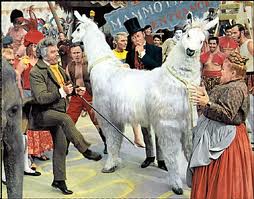
When you don’t feel good, look at what’s happening inside.  Think about where feelings come from.  It’s hard to use your brain to think about your brain.  (Read more at “Basic but Effective.”)  But what to do?  Doctor Dolittle‘s pushmi-pullyu’s might have been able to tell us something of our missed opportunities by not having two heads and two brains.  (Unfortunately they’re extinct!)

Feeling bad, irritable, guilty, sad, like everything is flat, nervous, emotions that are out of proportion or inappropriate to the situation or trigger?  These feelings might have nothing to do with “you” and everything to do with your brain.  At some point if you get tired of beating yourself for the holes in your purse, if you don’t understand why things feel the way they do, if you want to rest, think medical.

Fred came in with his father, hiding himself in his shirt, in his father’s shirt, like a mouse who couldn’t find his hole.  The teacher from his special education class came in to help give history and told me about everyone’s efforts to bring him out.  Skinny, Fred preferred not to eat in front of people.  He started shaking in strange situations and climaxed into a tantrum if pushed to transition too quickly.  He was vulnerable to physical contact and avoided anyone touching him.  When he was really upset, he banged his head so hard that he had to wear a helmet.  When I asked his parents if they thought he was anxious, they said no.  No he wasn’t nervous his teacher said.  Hmm.

I told Fred’s parents.  I restated to Fred’s teacher.  I just said back to them the story they had just told me.  I told them about Fred and asked them what they thought.  After hearing Fred’s story again, did they think Fred might be behaving this way because he was suffering on the inside?  

We can’t give what we don’t have.  Asking Fred to come out and play so to speak, wasn’t something he had to give yet.

After treatment takes effect, then Fred will be able to pull his head out of his shirt and he will do it without being asked to.  It doesn’t do any good for Fred or anyone else to push him to do behavioral changes if he simply can’t.  Fred is not a pushmi-pullyu.  He has no spare brain to offer when the other is ill.

I told Fred’s father that I thought Fred was suffering inside.  Something in his father clicked.  He teared up and nodded and said “Yes!  He is suffering.”  That meant a lot to Dad.  To know that much about his son.  To know that what had confounded him for so long came from somewhere.  It had a name.  This thing might be treated.  Fred might suffer less.

Self-Care Tip #76 – If you don’t feel good, think about your brain.  Be a friend to yourself.

Question: Do you every feel like you expect yourself to give what you don’t have?  Please tell me your story.

Get Treatment to Move On – Addictions

Molested by his cousin, neglected by his parents, he watched his intoxicated father beat his mother.  Thinking she would die too many times, he ran away, returned in a police car over and over again, as if wanting to get away was a crime.  He came back and raped his neighbor, more than once.  He spent a lot of time trying to get sex even though he knew it was ruining him and others.  He lost interest in almost everything else.  He suffered uncontrollable impulses.

He was 18 years old when he left it all for the safety of prison.  During the next fifteen-some years he was diagnosed, treated, and kept.  But kept for what?  For eating.  He gained weight, until he needed 2 seats to sit in.  Eating became his preoccupation.  He didn’t have sex.  He had food.

He was released to a home for sexual offenders, put on a diet and lost weight.  He lost it big and fast and felt in control.  He started purging and not finishing his meals.  He thought about purging all the time.  He knew he shouldn’t do it.  His voice was changing, raspy and his throat hurt but he still purged.  He wasn’t having sex.  He wasn’t over-eating.  He was purging.

For whatever reason, no one had yet seen the pattern.  Mostly everyone saw sex offender.  Me included.  I was trying.  I was trying to treat him with empathy, trying to get past the bile that comes when I think of rape, trying to consider the courageous things this man was doing now in life.

In one of my favorite scenes from the film, Rachel Getting Married, Kim played by Anne Hathaway argues with her sister about her own chances to have a future:

Rachel: Kym, you took Ethan for granted. Okay? You were high for his life. You were not present. Okay? You were high.
Kym: [Whispering] Yes.
Rachel: And you drove him off a bridge… and now he’s dead….
Kym: Yes, I was. Yes, I was stoned out of my mind. Who do I have to be now? I mean, I could be Mother Teresa and it wouldn’t make a difference, what I did. Did I sacrifice every bit of… love I’m allowed for this life because I killed our little brother?

I thought of this and somehow through all that trying, I did. And because I could empathize, a space opened up for me to be more objective.  That’s when I saw it.  I saw the pattern.

Addictions migrate.  Someone who may have started out as a food addict, might turn to gambling, and then later to alcohol.  Someone with sex addiction, might turn to food and then later to purging.

It can be like that game I used to play at Chucky Cheese, trying to hammer down the little animals that pop out of holes.  We need to treat the disease of Addiction regardless of how it’s dressed, or else it will keep popping up.  And like Kym, if we do, although perhaps terribly wrong in some unchangeable ways, we will still have a future.  If you’d like to read more about this “kainos” (Greek word for the opportunity to be made new,) read the post New versus New.

Self Care Tip #62 – Get treatment to move on.  Be a friend to yourself.

Question:  What do you think?  Please tell me your story.

A Little Bit is Not Enough – Claim Full Health

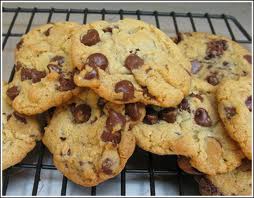
The good news is, I just ate 3 chocolate chip cookies.  You already know the bad news.  Has nothing to do with my post.  I’m just sharing it for the sake of your own

Schadenfreude 🙂

…Onward.  Question:

Does emotional disease get worse even while on medication therapy?  Sometimes.  It does so more often when the disease process is treated but only partially treated.  Read a little more about this in this post if your interested.  A primary care physician recently told me, “I think the term ‘Partial Responder’ is a marketing gimmick to get physicians to prescribe more medications.  I don’t think it even exists.”

There’s a lot to be said about interview skills in sussing out the partial responder.  If I asked someone if they felt better, many things play into their response. Everyone’s responses are biased of course.  We don’t have sterile minds.  For example there’s the patient who wants to please their physician.  “Yes I’m better!”  i.e. “Yes you’re a good doctor!”  There are the patients who don’t want to be patients and minimize whatever they’re going through.  There is the physician who leads the interview.  “So, you’re feeling better?”  “The medication is helping?”

Partial response means that at the end of a full treatment initiation period, there is some disease remaining but a reduction of disease.  For example, in depression, I may no longer be suicidal, but I still have trouble feeling pleasure in life.  In cancer it means that there is tumor reduction of at least 30%.

Now why would a physician presumably agree that there is a partial response in cancer, but not agree that it happens in mental health?  Anyways….  (Ahem.)  When we partly respond to mental health treatment and don’t push further for full response, about 70% will relapse.  Versus maybe 25% in those who reached their pre-disease baseline emotional health through treatment.

Don’t get lost in this.  The point is, get treated and get fully treated.  Mental illness is progressive and causes changes at the cell level.  The brain is connected to the rest of our body.  The brain is human.  A bit better, is not enough.

Self Care Tip #61 – Go all the way!  Claim health.  Be a friend to yourself.

Question:  Did you find this to be true in yourself or someone you know?  Please tell me your story.

If You Are Ill

The 'Glasses Apostle' in the altarpiece of the...

Image via Wikipedia

A reader commented on yesterday’s post, “Afraid of Meds,”

My fear, I think, would be not so much the dependence—but what would happen if I did need that medicine and it suddenly became unavailable, like I couldn’t get my prescription because of a natural disaster or something like that.  …Would going off of those meds cold turkey put me at a real disadvantage?

In my late 20’s I had similar fears, only for me it was related to my eye-glasses.  Because I didn’t tolerate contact lenses, I especially had vivid fears of getting into the driver’s seat of my car without my eye-glasses anywhere to be found.  Living on loans at the time, I took out extra money and got LASIK eye surgery.  Oh the joy when I woke up one morning and could see clearly, high-definition, no glasses to grope around for, freedom!

Unfortunately in neuropsychiatry, we don’t have the privilege yet of offering many curative options like LASIK surgery for emotional illnesses.  I don’t believe it’s too far off in the future.  It wouldn’t be wild to say our children may have those options some day.  For example, embryonic stem cells may offer a cure for disorders such as depression and schizophrenia.  However, until a cure becomes as available as Prozac or even LASIK eye surgery, the reader quoted above has a reasonable fear.  Medication becoming unavailable is a disadvantage.

Now I’m not great at twisting reasoning powers, so I’ll say this as best I can.  That’s like not getting eye-glasses because we are afraid of loosing them.

So to this reader quoted above and to you I ask,

Question:  What do you think?  Treatment or no treatment?  Please tell me your story.

Self Care Tip #53 – If you are ill, get as better as you can.  Be a friend to yourself.

Related Articles From FriendtoYourself.com

  • Mental Illness Relapses When Medications Are Stopped http://bit.ly/pA4kxo
  • Number One Reason For Relapse In Mental Illness  http://bit.ly/rt1qJf
  • Are Your Meds Safe?  http://bit.ly/lh1cBh
  • Say Yes to Medication And No To Drugs  http://bit.ly/oX12i0
  • Fears of Addiction To Medications for Brain Illness http://bit.ly/oWY8i4
  • Other Fears of Medication For Brain Illness  http://bit.ly/qdHksR
  • Afraid of Meds  http://bit.ly/rjt7wY
  • Full Treatment Response Means a Better Future  http://bit.ly/ph84ZU
  • When It Is Time To Take Medication   http://bit.ly/nbIYLT