Self-Care Does NOT Always Mean Doing What You Want

The Red Kangaroo is the largest macropod and i...

Image via Wikipedia

Self-Care Tip #132 – Remember, you are your own friend.

So today up up up like a ghoul that wouldn’t die, came this confusion over self-care v. selfish-care.  Somehow, intuitive, or what, we see that word “self” and throw up our hands.  There always seems to be that guy, or it could be that girl, let’s call her Terri, who acts like a two-year old, who can’t think about anyone but herself and does what she wants.  She is toxic to her family and throws her perceived needs in their face faster than they can turn their heads.  That’s not good for them or for her.  That’s not friendly.

Self-care may or may not be doing what we want, Terri.  If we are fortunate enough to have it be what we want, great.  If not, the end goal is still the same, and still great.  It is friendly to us.  Self-care does just that, cares for us responsibly.  We don’t need a mother or a police officer or the government to strong-arm us to do it, because we WANT to take care of ourselves.

Self-care may or may not be doing what is consistent with our temperament.  Achilles taught us that.  The grazer may never want to get in the barn, but in the end, find herself at the jaws of a wolf.  The barn animal may never want to graze and, well, you get it… fill up the barn with poop and such.  It’s just not good.

Barn

Image via Wikipedia

Let’s use sleep as an example.  Just as a generalization, grazers tend to enjoy the late hours.

I don’t get any time to play if I don’t stay up and that’s not good for me.  If I plan my play, it loses spontaneity and then it’s not play any more.

You don’t have to be a grazer to think this sounds delightful.  But here’s the thing about this.  If we don’t get our deep sleep, our sleep hours, do sleep hygiene, in short – if we don’t sleep well enough and long enough we don’t heal.  We don’t replenish our hormones and neurotransmitters which predisposes us to mental and physical illnesses and decreases our ability to respond to psychotropic medication.

Geochelone gigantea eating

Image via Wikipedia

I’ve seen regular, restorative sleep bring someone from a place of mental decline to no longer needing psychotropic medication.  Everything works better with sleep.

Ah today I drift some.  Point being, doing what we want is not the same as being friendly to ourselves.  It can be a VERY different thing, or not.

Questions:  How have you found that self-care has been what you wanted to do, or what you didn’t want to do?  How did you overcome those barriers to getting friendly with yourself?  Please tell me your story.

Still Interested In Self-Care?

Working for Peanuts

Image via Wikipedia

Self-Care Tip #131 – Start all your efforts and end all your efforts accountably with yourself.

Self-care is:

For many of us, we wonder what self-care is.  Obviously being subjective, it is something unmeasured and changes between us.  It doesn’t interest or make sense to many, depending on their religious biases, culture, temperament and other things.  But others of us, for maybe the same reasons, find self-care to be the place from which our axis swings.  We have together, here at FriendtoYourself.com, through the past eight-plus months, agreed on much of what self-care is and is not.

It is not selfish-care, alone-care, sacrilegious or Godless-care.  It is more than any one thing, for self-care flattens knowledge.  It is not weak but rather courageous.  It brings us to humble accountability for our lives, not erasing our history but still being free to start over any time.  Self-care is living consistent with the belief that the success of our health (emotional, physical, spiritual) begins and ends with Me.

Despite the chorus of boos, we say that we serve God and man better by taking care of ourselves first.  We attack guilt, we stand up to shame, we live as we choose despite stigma and we work harder than we ever have on perhaps the hardest job of our lives.  This is, Self-care.

Are you still interested?

Question:  How do you define self-care?  How is it played out in your life story?  Please tell us.

Number One Reason For Relapse In Mental Illness

The Sleep of Reason Produces Monsters (etching...

Image via Wikipedia

Self-Care Tip #230 – Remember why you feel the way you do.

Olive was doing well.

How are you doing Olive?

Oh fine.  Just fine,

Olive would say.  And she was.  A sense of rightness filled her when she thought about it.  Right with the world, her garden, her work and even her kids.  She wondered that there had ever been a time when she hadn’t been.

It was almost easy for Olive to forget about why she was better.  Almost, except for her probably thirty seconds of opening the lid, dumping the contents into her hand, tossing them, all of them into her mouth.  One swallow with water and it was over.  Thirty seconds she thought.  I’m doing it for my kids.

Then came the best reason she ever needed.  And despite knowing that she had done this before and had relapsed, something about the rightness of the reason made her feel like the relapse wouldn’t be allowed.  The rightness would keep it away.  After all, she was stopping her medication for her kids.  If she didn’t have medical insurance than she would be a huge burden financially and she would die before doing that to her children.

So quietly Olive stopped.

By stopping medication, many of us have this sense of eliminating the reason we started the medication in the first place.  Take medication.  Disease continues.  Stop medication.  We are superior.

When my son was about one year old, he learned that if he turned his head away from you, it was as good as denying your existence.  Turn.  You’re gone.  Turn back.  You reappear.  Turn.  And just like that, you’ve been eliminated.  Even now, remembering it delights me.

Not so cute however, is the number one reason for relapse in mental illness – stopping medication.  For Olive, she turned her head, and hoped her recurrent Major Depressive Disorder would not be there when she turned back around.

How are you Olive?

(Sigh.)  Fine.  Just Fine.  (Sigh.)

But Olive wasn’t.  Even though she knew she had been better on her medications, she couldn’t see any more, how much better.  Her face tightened up, her thoughts wandered and she exploded more.  Self-loathing of course followed and she felt like her suffering was unique to her.  No-one understood her, especially her ungrateful children.  She was doing this for them, just like everything she did through her whole unappreciated life.  This was all wrong.

Is this why I worked all those years and raised them?!

Readers, you may not agree with the crystal clear logic that emboldened Olive’s heroic stopping of her medications, but it’s not the only one out there.  This being the number one reason for relapse implies that there are many that seem to make really good sense.  So forget about they specific “why” of why Olive turned, and just know that many of us do.  Many.

Question:  What has helped you stay on your medication when it seemed to make sense not to?  What do you think about people who choose to stay on medications for life?  Please tell me your story.

You Bring Light

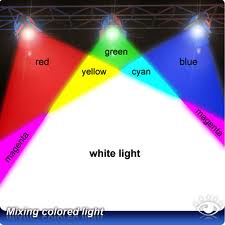
Tonight my eyes are heavy and I’m yearning to go exercise before the clock denies me the chance.  I’ve thought of you folk all day and your thoughtful replies to our difficult questions.  I sense that the difficult questions are not finished for us.  We wonder together, and that wondering in company with you has become my white light – many, perhaps small, particles of different colors and brilliance coming together into what we have.


ht. learn.uci.edu


Thinking about your comments, I remembered Marsha, a young adult who asked me, intelligently, hands flung open to the universe at large,

Who am I if I’m a different person just by taking these pills.  I’m so different!  I like that difference but I’m scared by it too.

She was so vulnerable sitting there, lip faintly quivering on her down angled face.  She asked as we ask together, as I believe God wants us to ask, to know that we have an essence and because that essence has an indestructible connection to Him, the intuitive fear falls into a more friendly perspective.

Good night friends who bring light.  Thank you.  Keep on.

Where Do You Think Behavior and Emotion Come From?

Animation of an MRI brain scan, starting at th...

Image via Wikipedia

Self-Care Tip #229 – See yourself as a friend by including biology in your self-perception.

In clinic, out of the clinic, here, there, if I were to pick one barrier to treatment anywhere, I’d pick the misunderstanding that behaviors and emotions come from somewhere other than the brain, and then from there, the outcropping of understanding why.

I don’t think most of us say it in so many words, but it’s intuitive. Maybe when pressed we’d say, “Where else do they (behaviors and emotions) come from?!” And then agree, the brain. But the connection that allows for self-care is missed. The connection that allows us to choose the freedom to feel good and behave well for our own sakes is lost in the shame of failing to do those very things.   The stance of courage it takes to be our own friend when we don’t even want to be in our own company, takes a lot to maintain.

The marvelous @MarjieKnudsen, tweeted a reference to a wonderful post by Sarah Boesveld, How ‘self-compassion’ trumps ‘self-esteem’. I enjoyed reading it very much as I felt it spoke to me and my generation with great perception… except! that it was without mention of biology, the brain; i.e. where behaviors and emotions come from.

In clinic, Naomi told me about her “failure” when ever she felt anxiety come on.

Why do I feel depressed when I feel the anxiety come?

I’m wondering what you think, reader, about this simply related story and the question.

I mirrored Naomi’s question,

Why do you think you feel depressed when that happens?

Today (similar to Naomi,) girl-crush, alias Rachelle Gardner, Literary Agent, wrote about feeling like a failure as well.  She asked at the end of her post the pithy questions,

What about you? How have you failed? What kind of wisdom has helped you deal with it (i.e. sense of failure)?

And I thought, how to answer? Here I am again “in the presence” of someone wonderful who in her post didn’t make it apparent that she was considering that this emotion might be a symptom of something biological.   We are willing to look under every rock, be in the space of our emotion and ponder reasons why.  We have the courage not to “run” even when we don’t like ourselves, but haven’t said it out loud to ourselves yet,

I might feel this way because my brain is dishing it out.   I might otherwise have not done anything to set this emotion or these behaviors in motion, other than being alive.

Girl-crush remains despite response.  So readers, don’t be scared to answer what you think.   If you even care, I’ll still admire the socks off you! – even if you think you are hyper every day since conception because you ate too much sugar.

Questions (In case you want me to write them again, which I’m really happy to do – anything you want so I can hear your responses): Where do you think your behaviors and emotions come from? …such as a sense of failure and/or a depressed mood? What has helped you deal with it? Please tell me your story.

Choosing Connections – Take The Good and Take Care of Yourself

Beit Nir, a kibbutz in Israel.

Image via Wikipedia

Self-Care Tip#228 – If we choose to have someone in our lives, if we choose that it is better for us than not, than take what is good and leave the rest.

We’ve all seen them, or been them at some point through life.  Those walk-outs.  Either choice, leave or stay, takes immense courage to do well.

Tonight however, I’m thinking about the courageous who stayed.  Those who stay despite the stink in life.  Those who stay when there are bad choices by “the other” that spill over and touch us.

We choose to stay in the relationship but do we have to choose to suffer with them?

Mandy comes to mind.  Her mom was old and disinhibited.  She said inappropriate things and had mood swings.  In their past together, Mandy’s mom was younger but had still said many hurtful things and done hurtful things.  However Mandy stayed connected because she wanted her mom in her life.  Many said,

I just choose to have her.  I don’t worry, as much as I can, about the things Mom does that I don’t like.  I take care of myself now.  I stay emotionally as safe as possible but still be present in her life and let Mom be present in mine.  As long as I want her.  As long as I know I’m safe.

Mandy was like a mini version of the kibbutz I remembered visiting in Israel many years ago.  The kibbutz’s members worked a thrifty irrigation system, had interdependent living combined with separateness in a romantic setting – something green and amazing in the middle of very dry hot and otherwise empty sands.  I wanted, even then, to bring their irrigation secrets home, which brilliantly used, not misused, precious water.  They lived in something that looked close to “plenty” in a place that seemed barren of natural resources.

But memories of the kibbutz in and out through the years brought questions too about connection.  What would be enough to turn our choices to resemble theirs?  Maybe at least some of the hardships many of them have suffered.  Maybe something like abuse or terrorism would make me “walk” out on the connections my community or an individual offered.  Others may also do it for temperament reasons but extroverted temperaments would never choose that unless they felt they had to choose to be walk-outs.

Why did Mandy do it – connectedness, interdependence combined with separateness?  She chose to.  She used but didn’t misuse her mother.  For Mandy, misusing Mom would have held Mom responsible for how Mandy felt.  Mandy preserved her precious connection with Mom by taking care of her Me, her own feelings, and her connections.

Questions:  How have you stayed connected to the one(s) you love?  When they made negative choices, how did you stay safe but still connected?  Please tell me your story.

Your Bridge Between Choosing and Being Chosen By Guilt

INNOCENCE/GUILT

Image by ~fyrfli~ via Flickr

Self-Care Tip #227 – Find out about your bridge between choosing and being chosen by guilt.

Guilt.

Sometimes we think people who do wrong should feel guilt.  But how many of us improve ourselves or others in response to guilt?  And because this is a self-care blog (wink), I have tooled around with what it is all about and if it is a positive self-service.  In my meanderings I remembered, Schadenfreude.  (Isn’t that a marvelous Americanized German word?!)

Schadenfreude is different from guilt, although often in the same company.  It is a natural response in which we find pleasure at observing another’s demise or suffering.  I speculate that when we see someone feeling guilty and suffering from that guilt, even against our better natures we experience a degree of Schadenfreude, i.e. pleasure.  Because we moralize things, we responsibly feel shame when insight dawns on Schadenfreude, but “it just is.”  It is a part of who we are in this time of humankind’s history.

However would we go so far as to say that we want people to feel guilty when they do wrong because of the motivating reward that Schadenfreude has on us?  For example, Mom is disciplining her children and just won’t stop until someone cries.  I remember hearing jokes about this in mommy groups when my kids were a bit younger.  …Mom thinks silently,

I’m suffering so I want to see you suffer.

Even though we maturely and grandly empathize (the counterpart to Schadenfreude) with the kids, there is a simultaneous “secret Schadenfreude” (a private feeling) that goes on at their failure.  The blend of both can be confusing.

As we continue to travel the bridge between voluntary and involuntary, we are learning more about how choice remains regardless which side we are looking at.  For example, if guilt and Schadenfreude are so natural, so biological, so reflexive, we look for our choice.

Cathy wrote on the blog-post, Choosing Perspective,

I become trapped in my own guilt. Yes it is about perspective but what to do when even changing your perspective provides no relief, only a different source of constraint?

Questions:  I can’t help but wonder what you think about this?  Where and what is your bridge between choosing and being chosen by guilt and other negative emotions?  How do you choose when guilt and other negative emotions come involuntarily and inappropriately to context?  Please tell me your story.

Where to Find Your Council On Self-Care Outside of Yourself

Not sure where to look

Image by quinn.anya via Flickr

Self-Care Tip #226 – Find your council for self-care outside of yourself with psychiatry.

Many may wonder why a psychiatrist would talk about being a friend to yourself.  People who know psychiatry involves medicine, who think psychiatry excludes psychotherapy, who think self-care is holistic (i.e. holistic they interpret as non-medical) or who don’t bridge the gap that voluntary choices and choices regarding what is involuntary is still self-care – these people may wonder…  It’s no fault or judgment, it just is, as we like to say.

After all, psychiatry has changed a lot in the last thirty-plus years.  This category of people I speak of includes even physicians.  It is not easy to keep up on each other’s specialties.

I make my case for “microphone-time” (taking liberties to speak on this) based on the Biopsychosocial Model.  I boldly say that because Psychiatry flattens the planes between biology, psychology, sociology, then Psychiatry should speak up on self-care.  It is a broad perspective and often with some affecting differences from religion, clergy, laymen, psychology or other therapies by reputation (I’m not speaking about individuals.)

The beautiful bridge linking voluntary behaviors and emotions with the involuntary, and how that relates to our choices, our self-care, our freedom, saying all health begins and ends with Me is an enormous step in friendship with oneself.

Questions:  Where do you find your own opinion on this spectrum of thought?  And why?  What has your experience been with this?  Please tell me your story.

Choosing Perspective

choose

Image by miki** via Flickr

Self-Care Tip #225 – If you can’t choose a better perspective on your own, it might be time to choose it via a medical route.

Feeling trapped?  Overextended?  Used and neglected by others?  It might be true.  But why do we get in these impossible places?

In the Wrinkle In Time by Madeleine L’Engle, towards the end of the story we find ourselves in a room with Charles and It.  Charles is trapped by It.  He has disconnected from his own thoughts and has given himself over to the control of “It.”

Charles’ sister, Meg, comes in and reminds him about Love and that changed the perspective of everything.  It reminded Charles about why he wanted to choose for himself, to have his own thoughts, to love and receive love.  And then, with that, Charles was reconnected with himself again, whole and sharing space with Love.

The changing perspective turned what seemed an impossible bondage into freedom.

When we feel disconnected from our personal journey, impossibly overextended and trapped, remembering our freedom to choose, freedom because of Love can make all the difference.  The perspective shifts.  The impossible becomes possible.  Magic.

Sometimes, choosing is thwarted by brain disease.  When we can’t extricate ourselves, when guilt plagues us, when we feel like things are about us that really aren’t, when the emotion jarring us is inappropriate to the context – we need to use that as a cue to choose to get “free” via medical help.

Questions:  When have you felt trapped?  When you did feel trapped, how did you find your freedom?  Please tell me your story.