Between Me and Thee While We Are Apart

apart

I woke up and thought, I love and am loved. I heard the birds. I recognized different songs. I know “our” birds outside our door. So grateful. The morning noises in the house, kids – This is what I pray about when I pray, “Be between me and thee while we are apart one from another.”

Every day takes us.  We go toward and away.  We connect and disconnect.  What do you hope stays close when you weave your pattern?  When you are taken into your day?

It may be a day.  It may be education.  It may be divorce, bankruptcy, or a change in condos that takes you.  It may be as simple as getting a haircut.

As hairstylist Jane said, “I see people come in here all day trying so hard to be unique, and I can’t believe that they don’t see just how un-unique they are.”  She was noticing that “unique” implies disconnect. Those of us in this condition may be grooming toward disconnectedness and missing that even the pursuit of this is inherently a connecting force between me and thee.

Let us acknowledge the connections, not fear them.

Back in the day, there was Laban and Jacob, who had shared space for many years.  When they separated, they artfully practiced connection.

Now therefore come thou, let us make a covenant, I and thou; and let it be for a witness between me and thee.And Jacob took a stone, and set it up for a pillar.And Jacob said unto his brethren, Gather stones; and they took stones, and made an heap: and they did eat there upon the heap….And Laban said, This heap is a witness between me and thee this day. And Mizpah (“watchtower”); for he said, The LORD watch between me and thee, when we are absent one from another.

Here, many centuries later, we remember our declaration of independence from Great Britain on July 4, 1776.  It is our watchtower of sorts, a time when we celebrate our freedom, beautifully crafted into what brings us together.  Freedom is not synonymous with disconnection.  It is the ability to choose, to move in and out, to live with boundaries that are made of ribbons rather than walls, to have distance and still remain close to where our heart is.

Questions:  What connections over Independence Day weekend are you celebrating?  Please speak out.  We need to hear you.

Self-Care Tip:  Let your uniqueness and freedom be a connecting force in your life.  Be a friend to yourself.

Love comes out of that?!

hope

Hello Friends.

I write to you so many times “in my mind,” which makes me a great writer! Wink.  But even there, I am grateful to have you to write to.

I just got done watching, Fault in Our Stars, with our local hospice team and, oh my word!  I had to breathe through it.  I was terrified I would lose it several times there.  Not being one of those damsels who cries pretty, I was seriously grateful to be sitting in darkness.

So where have I been?  Trying to figure out this friend to yourself thing.  Still.

I had one of my favorite discussions with a patient the other day on where and why good comes out of bad.  Do I love this conversation because it is about an epic force, an energy and a Truth that wins and kicks bad stuff, like, fungus armpits, dead children, divorce, broken friendships, finding yourself alone in a huge space, depression and a brain that you’d rather not be living?  Do I love this discussion because I feel so freaking right?  I do.  Do l love it because I need to participate in it one more time, now, and now?

Probably.

I’m hoping I’m not right though.  I’m pretty sure that even these eyes see dimly and the Truth is even better.  I’ve been told I don’t know it all.

The chat goes something like this,

(Context is status post some real, personal, bleak disclosure.  I’m facing them, and sometimes they look at me.  I sit in an erect chair with a lap desk and laptop computer between us.  Just enough.  Sometimes my service dog, Timothy is present.

One of us inevitably brings up a curving effort toward hope.  Maybe,)

…Love is stronger.

Yeah…

But I don’t know if there is a question mark or a period at the end.  It sits there in the room with us, like it is a squirrel scratching at its whiskers.  It can go in different directions.

Where would it go for you?

Does Love bring good out of bad as if it needs the bad, like dirt around its roots?  Does Love turn the bad into fertilizer, and grow into some apple tree?  We know Love is stronger than bad.  We know Love wins.  But we think, do I have to be loved like this?!  Rather not.

Tevye, the milkman in Fiddler on The Roof, said this view well,

  • [to God] I know, I know. We are Your chosen people. But, once in a while, can’t You choose someone else?

That is a pretty rough idea of Love.

Love is and Love brings good out of us in any context because where Love is, there it is. Think about presence.  Honest self-awareness.  When you found it was more important to still be able to walk than care if your t-shirt was inside out.  Love is more true than that.  It is more true than looking into her eyes, than hot water over skin.  Love is.

As Green says in the voice of Hazel Grace, “I hope this enough for you.  This is your life. And I love you.”

Question:  What is stronger in your life?  Why?  What happened to disclose such honesty?  Please tell us your story.

Self-Care Tip:  Love wins, even for you.  Keep on.

Sending a message to the hope out there, to the love I know exists, to the friend who knows me, the place I can always call part home, part critique, part play-fellow, counselor, walking stick.  Hello.

Caregiving and Selfcare

Fallen_tree2Being a caregiver is, well, …giving!  There is a need.  We respond to the need.  We give.  There is taking from what we give.

When we talk about this, some of us hear the tap, tap of a bookkeeper balancing ins-and-outs.  Tap, tap, take, take.  We feel dangerously close to objectifying what is Magical.  Objectifying what we get from giving loses at this point in our thoughts the bigger circle of love that motivates us.  Let’s acknowledge and respect that.  The bigger reasons are so worth aspiring to and treasuring.  You who believe in what is more than the numbers of our motives and behaviors, please continue to nurture us with this wisdom.  Be patient as we wander in the corners and cracks and in the places we don’t understand so well.

The point of giving, others pursuing the caregiver’s story later respond, is what we receive.  The love, the satisfaction of observing what our efforts contributed to in another’s rescue.  Perhaps, knowing we participated in saving a life.

Am I a caregiver?  Are you?  Well, maybe we think we are excluded from this category because we don’t liaison between one suffering life-being with the world around.  But are!  We all are caregivers by the definition of what is means to be living.  Living is connection.  We, each of us, are connected to the Universe and the different points from there to here where we stand.  Connection is inherent to living.  To live is to be connected.  To disconnect is to die.

This is somewhere along the philosophical thought experiment of, “If a tree falls and no one hears it, does it exist?”  I am told by those who might be wiser that it does not.  I don’t get it and what does that say about me? 😉

Observation vs. reality.

Connection is like that.  It is not perceived sometimes, and sometimes it is perceived.  This is important to Me.  To the part of each of us that is more than our senses.  More than Time and the condition of our health.  More than brain illness.  This is important to caregiving because by increasing our self-awareness of our role in connection, and thereby caregiving, we have an opportunity to increase our ability to combine the Magic of it with the “accounting ins-and-outs.”  Thereafter, we are lead to increase our transparency to others, increase our connectivity and increase our experience in Life Quality.

Magic is compatible with that which is known.  More even, they are not divided, whether we know it or not.  Magic and that which is known, just are.  We are arrogant people any way we turn the talk, of course.  None of us without agenda.  None of us without projectile pride.  But despite this, we have Grace and whether we hear the tree or not, Magic and knowledge have made allowance for us.

Caregiving comes with connection.  We give, we receive, and we do it with agendas.  Increasing our self-awareness through the process, although it feels at times like ringing out a cash register, and feels soiled by the sound of that which taking brings, – self-awareness of our agendas brings more freedom.  We are more free to give by choice rather than martyrdom.  We give without perceiving ourselves the victim to those to whom we give.  We are more free to give to our other agendas.  We are more free to consider our own needs as needs-of-value from one who is also Loved and valued, Me.

Question:  Might increasing our consideration of our “Me” increase our giving well to others?

Do you consider yourself a caregiver?  How so?  Please tell us your story.

Self-Care Tip:  Give well to yourself to give well to others.  Keep on.

What is The Difference Between Self-Care and Selfish Care

pencils

So what’s the difference between self-care and selfish care?

We hear this a lot here at, Friend to Yourself.  It is a question that can feel like an attack but also an opportunity.  Some people laugh when they say it.  Others do more of a huff.  Self-care shares with selfish care the condition of taking.  That has potential to be confusing.

Let us start with musing, what happens when we give to someone who doesn’t value themselves?  We give and give and they take and take but there lacks the receipt of value, only matter.  The person receives.  The person however doesn’t perceive the, Why?

Once there was Fred.  Fred asked Carl, “Hey man, would you please ask him for me?”

Carl has a childhood school friend he has stayed in contact with through the years.  Carl’s school friend, whom he used to call “Weasle”, is now Attorney at Law, Craig Anderson.  As Carl has nurtured the relationship through the years, sometimes it was easy and fun, and sometimes he nurtured it because it was just smart.  They worked in the same circles.  Once they had shared love of basketball and although they no longer meet on the court, they still meet up.  Carl saw in Craig someone worth investing in through the years, sometimes what Carl invested into Craig was intuitive and other times more deliberate.  Carl considered Craig a valuable contact.

Fred said to Carl, “I just need some information.”  How did Carl respond?  What Carl had with Craig is friendship.  However, he also has “social collateral.”

I remember when I was growing up trying to understand how much money my dad had.  I’d ask him about it, which I now realize is not completely appropriate.  He’d always tell me he was rich because of all the friends he had.  He said, “People are always the best investment.  The people you know, the friendships you have, will always bring you much more than money will.”  It was an early sight into “social collateral.”  I did not get it then.  I didn’t see the appropriate and natural intermingling of what is personal with what is bank.

Fred was asking Carl for his hard earned bank.  Before handing this over, Carl wondered, “Toward what purpose?” “What will that take from the social collateral I have?”  “What will I get from this?”  Fred had a sense of these concerns but he pushed the thoughts away.  He didn’t bring it up openly.  He asked without planning on accounting for what he was asking for.  Is Fred doing selfish care?

Let’s put Fred and Carl on the other side of this page for now.  Let us introduce Susan.  Susan is Lucy’s sister.  Lucy is known as “Floozy Lucy” amongst certain company.  Susan has rescued Lucy many times from life-threat, from financial ruin, from chaos.  Susan gives emotions, money, time, and once even her car to Lucy.  As Lucy continues to self-sabotage, however, we have a word for what Susan is doing – “enabling.”  What if Lucy valued herself more? How the dynamics between Susan and Lucy might be different.  Lucy taking from Susan would be more of self-care perhaps.

Our culture says we need to give give give and the taking is more whispered about.  It is not applauded like a big donation to the church.  It doesn’t consider what taking had to occur to allow someone at some point in their life to be in a position to give.

Over Easter this year at a small church in Corona, CA, I saw one of the best resurrection plays I’ve ever seen, including that compared to what I saw at the Crystal Cathedral years ago. The music, the props, the acting, all amateure.  However, the energy in the room, the connection between the congregation and the stage, and especially the awareness of our Higher Power was intense.  Out of all of this, what hit me the strongest was that the Judeo-Christian culturally celebrates everything about our God who sacrifices, who lives for others, who gives gives gives… but the whole point of what S/He did and does is Me.  Everything about God is His value for Me.  Without Me, that whole story is pretty mute.

Now put God in Carl’s position with Me.  Put God in Susan’s place.  Why would God want someone who gives to others but doesn’t take?  And take well, know they are a person of value.  The taking reflects quite a bit on the Giver.  The taking reflects quite a bit on the taker as well.

Take to grow your sense of personal value.  Take with increased self-awareness of your personal value.  Take to reflect on your connections well.  Take to be a better giver.

These are thoughts I’ve been rolling around.  What do you think?

questions:  What’s the difference between selfish care and self-care?  How do you take with a sense of your own value?  How does taking reflect on those you are connected to?  Please tell us your story.

Self-Care Tip:  Take to be a friend to yourself.  Keep on.

Know You Are Blessed

ulysses


Think of the worst of us.  Think of the worst about us.  Think of those with self-loathing.  Those with low self-awareness, the violent, and the violated, think of them.  Where is the blessing?

Blessed are the depressed and anxious.

Think of the healthy.  Think of the diseased.  The misunderstood, the ones who live miles apart from connection, who ever push like a dingy from the peer into waves and self-destruction, think of them.

Blessed are the poor and lonely. 

Where is the blessing when your real estate is brought low by the creeping up of low-life.  Where is the blessing when you get cancer just when you might retire, when your own body calls you stupid, when you lose your eyes after training as a surgeon?

Blessed are those whose bodies are dying.

Think of every corner, every shadow and open space and the turns you still don’t know about inside of your life.  Think of the unacceptable, the character you wrestle against to moderate away from extreme.  The rope you swing on and try to bring to rest, think of the grey you think you will never achieve.  This bit and chapter, this part of your construction, this surprise in how you deliver is Loved.

There is no aberration from the norm that can separate you from that Love.  There is no addiction or misdemeanor or illness or mutated cell that can lose blessing.

This is fact.  Our life is to live with it.

Blessed am I.  Blessed am, “Me.”

Question:  Where is the blessing in what you like least about yourself?  Please tell us your story.  We need to hear you! Keep on.

Self-Care Tip:  Be your own friend in adversity as in prosperity.  Know you are blessed.

Join us at, Seams of Gold!

The University Surgery Center, Department of ECT, and myself will be joining our community at Seams of Gold, where we will share life changing stories of ​resilience, restoration and hope.

Thursday, May 1, 2014  

​6:30 pm to 9:00 pm, Doors open @ 6:00 pm

“Event is Free”

PLEASE COME!  🙂


A Father’s Lament  contopolos

On May 29, 2010, we lost our 26 year old son, Nick, after a 14 year struggle to find long term, affordable, quality recovery and care from mental illness and addiction. During Nick’s brief life, both he and those of us who loved him were left with a fatal absence of hope while we struggled, as do many others, to navigate our society’s haphazard, fragmented “system of care”.

Months after Nick had died, I recalled a former broadcast on CNN with a woman who had suffered enormous loss after Hurricane Katrina. The interviewer was asking this lady how, in the face of such loss, she was able to continue on and now help others. She said, “at some point, I stopped asking “why me” and began asking “what now”. That statement, in conjunction with an honest admission from my pastor that “during Nick’s life, he had absolutely no idea how to understand nor how to help us”, was what led to the “what now” of Seams of Gold community service events.

Seams of Gold is named after the ancient pottery art of “Kintsugi”. In this ancient art form of Kintsugi we find the inspiration in how we respond to the fragile beauty that surrounds us.”

Seams of Gold is a FREE multi faith, multi denominational community service event. All are invited.

We are asking that all who have been affected by mental illness and addiction as well as those who love and serve them, to come and be inspired, informed, educated and equipped. Join us, as through the prism of our tears, we pilgrimage together towards a “better day” of empathy, compassion and care for those who suffer.

Recovery is Powerful, it is Possible and it is Beautiful! 

                                                                                                                                  –  Jim Contopulos


The beauty of the Santa Rosa Ecological Reserve in southern California provides the backdrop for a father’s lament. Seams of Gold founder Jim Contopulos invites the viewer to join him on a journey as he reflects upon losing his beautiful son to addiction and mental illness.

“Birthed from Pain… Inspired by Art”


http://www.youtube.com/watch?v=VGZ1ESOlvbM

Lupita Nyong’o Speech on Beauty – W-O-W! And, thank you.

“…and my mother again would say to me you can’t eat beauty, it doesn’t feed you and these words plagued and bothered me; I didn’t really understand them until finally I realized that beauty was not a thing that I could acquire or consume, it was something that I just had to be.”

This woman gets us. Friend to yourself. Keep on.

The Energy in Stigma, Yours for the Taking

unicorn

There are nothing like lightbulb jokes in the operating room to make you plume your feathers.  The other day, my nurse “enlightened” me with them.

How many psychiatrists does it take to change a lightbulb?  One, but the lightbulb has to be willing to change.

How many surgeons does it take to change a lightbulb?  One, because while he holds it, the world revolves around him.

How many nurses does it take to change a lightbulb?  If it’s during shift change, no one will touch it.

That is as far as we got, but please share yours, especially if related to psychiatry :).

Lightbulb jokes are common, clean, dirty, and fairly ageless. It does not take the brightest lightbulb in the room (Teehee!) to know that they are so because they capitalize on stereotypes.  Stereotypes, likewise, are widespread, and fairly ageless.  Even in something as objective as brain disease. i.e., The brain is carbon matter, a human organ, mushy grey stuff. The brain gets sick like any other part of the body, human organ, and people bits. Brain gets diseased, people behave and feel diseased.

A primary care physician’s assistant, “PA,” was sharing with me the other day about how she deals with stereotypes when she approaches patients who need treatment toward brain health.

I tell them about all the executives and professionals who get treatment ‘because the stress gets to them and they have nervous breakdowns.’  Then they don’t feel so bad about accepting treatment because they associate themselves with these successful people.

Stereotypes can be positive, negative, or neutral.  Everyone has them.  We clinicians, patients, grocers, those who want nothing to do with medical care, and even executives and other professionals (smile) have them.  But what, in dealing with stereotypes, is friendly to Me?  It starts there.  With Me, one little, or largely valued Me.

We stereotype ourselves and maybe that is why we stereotype others.  For example, this struggle of what to call illness of the brain is common, widespread, and fairly ageless. A Menninger Clinic blogger wrote eloquently about it recently, “Does reframing mental illnesses as brain disorders reduce stigma? by JON G. ALLEN, PHD.”  Most pithy, I thought was this,

…we should be skeptical of the view that regarding psychological problems as brain disorders will abolish stigma. Although the disease model decreases blame, this shift comes with a cost: It increases pessimism about recovery and might also contribute to perceived dangerousness.

I have never forgotten the Spiral Dynamics idea that in the magical level of consciousness, there is a sense of being disempowered. “Perceive dangerousness” is magical. Behind negative stereotypes, there is magical thinking.  We give over what is not to be given and take what is not to be taken.  We have fear.  We feel victimized.  We lose what is freely our own.  Disempowerment is terrifying. There is a lot more stigma out there than there is information but giving stigma and/or negative stereotypes power is our own choice.

A fellow blogger wrote to me how he approaches it,

Change brain illness to mental illness. Our problems really are brain illness from physical dysfunction but I can accept that my psyche is sick easier than my brain is sick.

Stereotypes may scare us but they can also inspire.  It is up to the individual, to Me, how to respond.  As in lightbulb jokes, we who are targeted by stereotypes can take pride in them.  They are not the same as “stigma” although there is overlap when negative.  Stereotypes can be neutral or even something to be proud of.

How many psychiatrists does it take to change a light bulb? None–the light bulb will change when it’s ready.

How many psychiatrists does it take to change a lightbulb? None. It’s their job to help people find their way in dark places!

There is nothing like the kind of energy in stigma and negative stereotypes to inspire us.  Such force, such Magic, these can get the punk in any of us to love who we are.

I used to be quite turned off by the beatitudes thinking I was supposed to want to be a wimp, and couldn’t quite make myself do it.  Now I realize, being a wimp is just what it is.  The blessing is what is inherently available to Me in my “condition.”

1 Now when he saw the crowds, he went up on a mountainside and sat down. His disciples came to him, 2 and he began to teach them, saying: 3 “Blessed are the poor in spirit, for theirs is the kingdom of heaven. 4 Blessed are those who mourn, for they will be comforted. 5 Blessed are the meek, for they will inherit the earth. 6 Blessed are those who hunger and thirst for righteousness, for they will be filled. 7 Blessed are the merciful, for they will be shown mercy. 8 Blessed are the pure in heart, for they will see God. 9 Blessed are the peacemakers, for they will be called sons of God. 10 Blessed are those who are persecuted because of righteousness, for theirs is the kingdom of heaven. 11 “Blessed are you when people insult you, persecute you and falsely say all kinds of evil against you because of me.

Questions:  How have you been able to use stereotypes and stigma as something toward friendliness in your life?  

What have you found is inherently blessing you from where you find the condition of life to be?

How might you use the energy in them toward being good to yourself?  Please tell us your story.

Self-care tip:  Use the energy available in Magic to empower you, rather than disempower.  

Tower-of-Babel Syndrome

COMPLETION-OF-THE-TOWER-OF-BABEL-GENESIS-XI9-2-Q6503

From time to time, I hear complaints that someone’s brain illness got better with medications and/or ECT, but just came back when they stopped. This almost always happens when a patient never transitioned to maintenance ECT and/or medication therapy.

I dub this, the Tower-of-Babel Syndrome.  We all suffer from it at some point in life, trying to be like God.  Or maybe a lesser god?  During this Tower-of-Babel Syndrome, after we have paid the price, after we have complied with the many hard tasks, after we have built ourselves up into something glorious, we are cured from illness. Right? Once we stop perceiving it, illness that is, we are closer to God, more like Him/Her, perhaps more perfect, when we feel better and do not need medical care. Little gusts of wind are all it takes to fill our wings and off we go, living life free from disease laden earth.

But this is a mistaken expression of freedom.

The number one reason for relapse is…? You remember.  Treatment noncompliance. Is relapse most often due to life stressors? There are so many. No. All those reasons for why we think we feel what we feel and do what we do, all those forces acting on us from the outside in, they are not the reasons we relapse most often.

There is something like a super-bug growing amongst us who engage in treatment on and off. We do it four or five months out of seven. We skip here and there and do not “over-react” if we do. “They don’t control me, after-all.” We apperceive the situation. We think we, by not being consistent with medical treatment, demonstrate our freedom. We are free when we engage in medical treatment or when we do not. We are free because we are human.

The super-bug in brain illness is a progression of disease process heightened and sharpened by treatment noncompliance. A growing resistance to treatment and an acceleration of our falls, how long it takes for us to drop into a relapse and how hard and far we fall.

Let us work together to take away barriers to consistent treatment.  You may laugh when you hear about the Tower of Babel.  You can laugh.  A bonus.

The Tower-of-Babel Syndrome is familiar to those of us who stop any variety of medical treatments on our own, excluding our treatment team members, (such as our physician, Wink! Wink!) in our decision to end treatment.

By stopping medical treatment, many of us have this sense of eliminating the reason we started in the first place.  Take treatment.  Disease continues.  Stop treatment.  We are superior.

When my son was about one year old, he learned that if he turned his head away from you, it was as good as denying your existence.  Turn.  You are gone.  Turn back.  You reappear.  Turn.  And just like that, you have been eliminated.  Even now, remembering it delights me.

Not so cute however, is disease relapse.  Maintenance ECT and/or medication therapy has a protective effect on the brain, prophylactic against further insult. It does not increase the distance between Me and God.  It does not increase a mislabeled dependency on treatment.  Maintenance therapy is part of our life journey.  It is part of our ability to be present with ourselves.  It is friendly.

Questions:  What keeps you in treatment?  Do you feel more diseased when taking maintenance therapy?  How do you manage that?  Please tell us your story.

Self-Care Tip:  Stay in maintenance therapy.

When I am an old psychiatrist

When I am an old psychiatrist, I’ll be looking at you through my purple eye folds, with my wrinkled pressed lips, eyeglasses pushed tightly to my face, pride propping up my several chins, incensed with the smells of my own medicated dying body.

Proud of you. Proud of me. Not the kind of pride that squashes humility. For what have we to be proud of if we live without Grace. We will still be receiving what we have done nothing to deserve. The kind of pride that says,

There is Love.

There is one who has suffered and healed and hurt and lived well.

We will have made a lot of mistakes. We will have made and continue to make amends.

The kind of pride that kids pressed shoulder-to-shoulder know of when the spinning roundabout slows down. We will be able to hear,

Here is one in whom I am well pleased.

We will hear that and not be ashamed.

20140125-105536.jpg

How do we get ourselves to actually receive Love?

Pick A Love!

Pick A Love! (Photo credit: theotherway)

Despite the distance he had come, he still controlled much in his acts of intimacy.  The timing, the moves, the style, Bernard was not always aware even of how or when he called the how and when, but he did, still, on occasion, like someone with a clipboard and whistle.

He was sincere in his love-making.  It was not false.  He was even in love.  At odd moments of the day, the wonder of it would come over him.  Without forethought, he would respond to the magic and he would call her, needing her voice to reassure him.  He was in love with her and she loved him back.  The backside of where he came from reflected in his rearview mirror like inky, murky swamp-mass and his sense of salvation swelled around him.  He knew he wanted to be connected.  This was right.

Then, Bernard would be working in his shop, pressed under a cabinet, where he could reach the corner spot and she would be there.  Home from work, she would sidle up and want to …What did she want?  He was dirty.  He was involved.  He was not prepared for that.

How do we receive Love?  It is not the wanting.  It is not the need.  It is not even the availability of Love that opens us up to receive it.  Receiving Love is a quandary.

So often I hear patients complain, “I shouldn’t feel this way.  Everything is really good in my life.  I have so much.  I should be happy.  I should be grateful.”  And then they list some of these happy-life-qualifiers, and peter out into a shrug or cry before they are done.  Before either of us are convinced about how great their life is.  This list of why they apparently should receive Love is not enough to actually bring it in.

Bernard wondered how this was happening to him.  “No!” he would scream to unknown forces.  ”I want Love.  Don’t leave me!”  Bernard hated being an island.  The Bernard Island.  It had its own name.  It was landscape.

How do we receive Love?

And the dichotomy of wanting Love, of needing Love, of Love being available, yet while not receiving Love would acidly crawl up Bernard’s esophagus.  It burned.

How do we receive Love?

Love loved us first.

Love, Love everywhere and nothing to drink.  Is that the way it goes?

I propose that receiving Love is more than the perception of receiving it.

It flows across all of the paradigms and dimensions known and unknown.  Love is.  Receiving it therefore does not depend on its availability.

Our need is constant, integral of course to life’s breath.  In deep.  Out.  Love is.  Receiving Love is not dependent on our need.

Wanting Love, now that depends on our perceptions.  Knowing this, we can return to our earlier discussions on where perceptions come fromthe brain and magic.  To know our want, we need both.  To receive Love, however, doesn’t depend on our wanting it.  Love comes because Love is.

Question:  How do you increase your Love quotient?  Please tell us your story.

Self-Care Tip:  Grow your Love intake.

Old and Dying – Why We Are Still Alive

geriatric lady

Sweaty, well-worn, in bike-ware, she was eating comfortably with her friend.  I kept trying not to stare and just had to fight it!  I wanted to imprint her shiny wrinkled yet blooming geriatric status and break down what I saw into categories of self-care moves to grow old by.  She looked really good.

I managed to finish eating at, (Oh my word! Yum! My new binge and bolt location,) Zinc Cafe, without ruining her appetite with a big hug and smooch from crazy-staring-stranger, me.  I almost congratulated myself, it was so hard not to do.  Nevertheless, when walking out I did stop and tell her she was beautiful and that I wanted to grow up to be her.  She bloomed even more, right there and then.  It was swell.  Good food.  Good role-model to remember.

We think it is our best years that people will identify us by.  But they do not just do that.  They think of us as how we are now too.  More importantly is how we think of ourselves – of Me.

It is different for everyone.  Why we want to be here.  Understanding why, is a universal interest.  It is the other side of value in the aging process.

My parents are getting old.  I am.  My patients and their parents are getting old.  We are dying.

My dad is old.  He just turned seventy-nine.  He is not wearing bike shorts.  He is not a blooming geriatric.  But I value him and saying why, well, I realize starts with “Me.”  It is not because of him thirty years ago. It is about his life these last thirty years.  It is about his Me, now.

The present does not prove nor negate the past.  Our value is more than that.

Sometimes I visit community practitioners.   Please visualize that all of this is in the middle of their busy clinic day, racing between exam rooms to meet patient needs.  I am standing at a nurses station perhaps, dressed in something über professional, (to hide the gypsy in me as well as I can.  But if it were you, you would not be fooled by the cut of my lapel!)  I catch the eye of the clinician and receive a strained smile, almost hearing her say, “Come on!  I’m dying here!  I have three patients waiting!”  But generally they do not actually say it, generally.  And sometimes, they are snagged by the magic of connection, take my elbow and draw me away into a private space where they can share their story.  In a matter of moments.

We are skilled at shaving moments here and there.  Skilled at putting as few words into a fat minute that can convey the large concept needed just Now!  We learn this over brow-beating years of managed care medical practice, personal choices, convoluted expectations and need to please – self, other, insurance or what not.  When clinicians share stories, we do it like we are late catching the train to heaven.

From these visits, I get more to my quality of practice.  I get known, and get to know.  Awesome.  It is a newer part of my “work,” that I have been doing this, and I am loving it.  I meet the people who are the other side of our patient’s treatment team.  I meet people who are both human and medical clinicians.  Realness surrounds them.  Life stories come from them.  In a fat minute I hear about their past, gain some understanding of their present and from that, I am given much.  One physician told me of his beloved daughter who suicided, another of her husband’s chronic brain illness and how their family struggles.  I shared how my young cousin hung himself and that part of me who is groping toward that space and time before he died.

To know who we are despite our changing emotions and behaviors, our changing identities, improves our understanding of life value.  Somehow, Dad has known that, without bike shorts.  He continues to mentor me in that.  I do not know about the beautiful geriatric at breakfast, but who is to say she does not know her value?  Not Me.  But I am going to explore my own, for my sake.  I am getting old.

Self-Care Tip:  Look and look some more for why you are valuable.

Questions:  What is valuable about you, even though you have lost so much in life?  Why are you still alive?  Please tell us your story.

Related articles


Get You Some Love

Cemetary

Cemetary (Photo credit: Vu Bui)

The ocean is like an untended cemetery, compared to my youth dives, with shoots of life breaking up the stone and dead coral.  A little family of forceps butterfly fish flutter around the tips of something brown.  I honk sounds through the water to my kids when I spy a trumpet fish, a big one, with some neon lighting up the gray long body.  My kids are so energized.

There are three turtles and I remember I have never swum with turtles before.  “Hey.  That’s cool,” I think.  I try to reconcile the turtles with the changes from when I snorkeled and dove reefs years ago, “Positive?  Negative?”  Something there in me wants to feed this info through my inner hope-machine to convince my other that when my kids swim another future day, the ocean will not be dead.  Foreboding.

I am starting to get disoriented by this and surface to get a grip. My husband pops up and I whisper to him, so our kids do not overhear and lose their energy to my negativity, “It’s like a tomb, Honey!  I can hardly stand it!”  And like a compass, he points to a better direction.  “It’s fine, Sana.  It is what it is.”  Interpretation can distort experience.

Thanks to husband and the reconnection of interpretation with presence, under water, I see this moment, this day, in the parrot fish, the coronets, and the puffers. And I, with more gravity, am able to enjoy what Love is giving now.  A solemn gift.  More informed, my appreciation is deeper and I can receive.

Receiving Love is not as easy as it sounds.  It is the work of a moment.  It is the work of a lifetime.  I am a spoiler, unable to love myself, unless I am able to receive Love from outside of myself and connect with it, in my pathway of Me-to-Me.

I am just starting to get this and am eager to understand and own more, because, this has been amazing.  This is something like how it goes so far; tense up, maybe angry Me, (reason or no reason,) pause, look, pray for it, pause, acknowledge, let it do its thing on Me. Start over. Again. Again.

In we who suffer brain illness, we who suffer cancer, we who are in the dying stage of life, in we who, we, we are in the right place to do this.  This is just where we need to be to receive Love.

Illness does not keep us from the ability to receive Love.  Poverty does not.  Dead coral and loss do not.  Nothing can.

Everything can be used by Love to communicate to us.  Illness can.  Poverty, dying, loss can.  Anything can be used to bring into our circle of Me-to-Me, Love.  Love is now.

I am glad, in age, that I am increasingly aware of the changeability inherent in everything, everything, positive, negative, everything.  This is one more way I am able to receive Love.  Age.

Being able to receive Love requires the process of changing.  It is not stagnant, stationary, unaging.  As far as we are able to understand, it is not.  We are creatures of dimension, creatures of space and time and until we are further created to receive otherwise, this is.

Question:  how do you increase your reception of Love?  How do you receive Love?  How does this affect your friendship with yourself.  Please tell us your story.

Self-Care Tip:  Increase your Love-reception.

Fatal Game of Playing Chicken

Stubborn in a game of chicken, who will win?

“The principle of the game is that while each player prefers not to yield to the other, the worst possible outcome occurs when both players do not yield.”

chicken race

As said by one avid chicken-owner at the UK World Championship Hen Races, “Listen birdbrain, you either perform for me, or perform for Colonel Sanders.”

Sometimes it is like that between the idea of, everything starts and ends with Me, that we hold here at FriendtoYourself.com and others who say, Love God first.

So, in the spirit of hoping, and “racing well,” let’s discuss.

If we could Love another first, that would just be great.  But we can’t.  (Hear the whine? 🙂  I suppose I have made those sounds before.)  We can’t.  I think that is the curse of Adam and Eve.  We can’t love anyone truly more than ourselves.  It always comes back to me.  We can be thankful for Jesus saving those Garden-of-Edeners, and the rest of us from that lonely circle.  Jesus inserted Himself into our round and round so first, we are never alone, and second, we have Love that is bigger than any catastrophe we think we were born into or happened upon along the way.

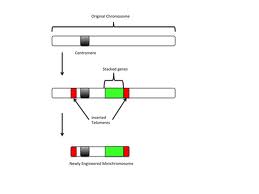
When I was a young-in, I studied at Rosario Beach.  We took samples from the ocean and did funky things to them and finally were tested and passed the class.  In this process we studied insertion genes.  These are awesome in their changing power.  This is how mutations happen in nature as well as how we now do genetic engineering.

insertion gene

None of us, like lined up chromosomes, can insert into ourselves the ability to start or end anywhere but with Me.  But, just like the stupidity of working out before you go to the gym, we do not wait for that to be inserted into Me before we pursue Love.   Love inserts in.  Until then, the Love part is foreign to Me.  It is a mystery.  Our life journey of beginning and ending with Me is changed from the one we started with.

Like weaving in magic into the common circle that everything starts and ends with Me,…  But we are not magicians.  I am no magician, although I have watched, “Now You See Me,” 🙂 and I understand that even magicians do not believe what they do is magic.

We have often said and heard others say, “Don’t love Me first, Love God first.”   We are not worth much to our neighbor though if we do not like Me.

So basically any time on our personal life journey, we might have enough insight to perceive the Loving of another more than Me, think Magic.  Someone did you an insert.  Now, even though your circle will still end with Me, your Me is changed and connected to Love.

It is a bummer that so many of us, with inherent self-recrimination, tell ourselves and others to, “Love God first,” when we might as well demand that we do our own gene engineering with Magic.  If and/or when we do love another first, by definition, that is not about Me.

“We love, because He first loved Me.”  ‘Member?  1Jo 4:19

We can, however, enter ourselves in for the insertion.  If we do not put our name in, it is harder to get called I would think.

Self-Care Tip:  Believe in Magic to treat yourself and others kinder, with less self-recrimination, and with more hope.

Questions:  I’m still growing on this.  What do you think?

Bank and Book-Keeping

Lathe operator machining parts for transport p...

Lathe operator machining parts for transport planes at the Consolidated Aircraft Corporation plant, Fort Worth, USA (1942). (Photo credit: Wikipedia)

We are like the national bank of our own nation.  If we do not invest and do book-keeping, we get the great depression.  But what does that mean?  What is investing in Me?  What is book-keeping?  “I am not an accountant and I am not good with numbers,” we say.

We are talking about putting it in and seeing into when it is running low.  Putting it in, well, it might be fun, intuitive, the best part of what makes life worth living, or it might feel like working nine to five.

How do we get money in our bank?  We work.  We work jobs we like, and ones we do not.  This is not meant to be a discussion on the employment crisis we are in, but rather our basic needs.   Basic needs, like energy, self-esteem, a desire to live, freedom, the ability to feel pleasure, think about those.

Have we considered them as our entitlement for being human?  Are they a choice?  Investing in me is the big and small, the easy and difficult of practicing accountability to Me.

One of the weaknesses of this primitive analogy is that it piggy-backs a cultural opinion of failure if we find our bank empty.  Without spending time today on that, please accept the premise that emotions and behaviors in this discussion are not moral qualifiers.

The behaviors that bring bank might be any number of things, exercise, diet, marrying God, sleep, taking prescription medication, ECT, using CPAP, avoiding violent content, Love magic, and so forth.  However, to do these things with most success.  Pursue them through the framework gifted to us via genetics, what came to us by way of temperament.  That is style, form, and inspiration.

Temperament provides for us, like a great uncle’s inheritance. Going with that style of personality will tap into what was put aside for us without any work on our part.  It is a fortune each of us have.  This is in compliment to what bank we work for, as described above.

There are many ways we receive that we do not work for.  Love, for example.  But the choice to receive may not come easy.  The choice to pursue what is freely given to us, to unwrap a gift, to open an envelope that carries our uncle’s will, to receive Love – the choice is ours.  The choice can be as difficult or more so than hours in a sweatshop.

How do we get money in our bank?  We work and we receive.

So this is what “bank” is and book-keeping at FriendtoYourself.com, and maybe it is as interesting as tax season but I thought revisiting it might lend balance.  Keep on.

Question:  What is your bookkeeping activity?  Please tell us some of your story.

Self-care tip:  Work and receive actively.

How do I become a friend to Me? Start with seeing.

magic mirror

“I like the way he sees me.  I have a lot of trouble seeing myself.”

Madge really had it going, as far as I was concerned.  In this one statement, she is insightful.

Juxtaposing being able to see into oneself with the self-declaration of not being able to see, is ironic.  It is lovely, like going toward anxiety to diminish its power over us.  It is complex, as are the many hues of gray.  A beautiful weed.  Great weakness.  Useful trash.  It is a pretty great irony to come to that place of wisely recognizing how little wisdom we have.

We have trouble seeing ourselves. Part of what makes it so hard to be friends is that doing that is like shaking our own hand.  When we try, we are a purse flipped inside out.  The crude insult, “Her head is stuck up her own a–!” comes to mind.

Many like bullet points to give a, “How to.”  For example, look at Yahoo!

How to buy, store, and cook watermelon

Cook watermelon.  I know someone is saying, “Made you look.”  And maybe when I say, “How to see yourself in these moves,” someone else is swirling their eyes.  But, as I am not about to say that I know better than Yahoo!, here’s my try:

1.  Origins, (God)

2.  Brain health

3.  Community

4.  Admit limitations

5.  And a big magic mirror

Mirror, mirror, on the wall, how do I see Me?

Maybe my list is out of order and maybe it is not a perfect step approach into the soul.  So be it.  Editors of Yahoo! feel free to instruct.

Madge, in one statement, covered community and limitations.  It was nice to be in her space.

Self-Care Tip:  How do I become a friend to Me?  Start with seeing.

Question:  How do you become a friend to Me with your site?  Please tell us your story.

Conditional Love With Me

frayed rope

We have a tenuous relationship with ourselves.  Very conditional, as if we were in a constant state of probation. Have you noticed?  Conditional love: part of the human condition.

I was reading the The Golem and the Jinni: A Novel, by Helene Wecker, and found myself getting into her golem-philosophy, that went something like this,

Since so many of us have it, can’t you just say it is the way things are, and not about freedom or fairness?

Wecker in such eloquence ironically describes the human condition from the story of two inhuman beings.

The New York Times, , describes it as,

When they are later confronted by the evil power who controls their fates, they discover that the ultimate expression of free will may lie in the embrace of limitations.

In considering our limitations in loving our own self, this idea can be useful to come to terms with the day in and out internal conflict of loving what is imperfect and distasteful, with what we would otherwise rather not identify with, and with the acts of friendship toward this seemingly inhuman part of our selves.  In embracing our limitations, we may find less conflict in loving Me, less conditioning, or perhaps a shorter probation each day.  We may experience the probation differently, Chava, The Golem, when we say, “It just is this way with all of us.  I have the community of humanity.

Getting into the space of where our “tenuous bond” between what we love and would otherwise not love about ME, in fact diminishes the frailty and increases the strength in our personal journey.  Rather than putting us into further danger of internal conflict and self-loathing, it allows us to experience what will happen from and in the company of the tension.

More specifically, in brain health, getting into the space of our conditional love for our self, allows us to do things like seek medical treatment when needed, ally with help, with medical treatments that once repulsed us, with something as formulated as putting a pill in our mouth seven days a week indefinitely.  Or another treatment, such as ECT.

We are conditional with ourselves.  It is part of our human condition.  That is pretty close to, “Normal.”

Question: How often are you aware of your own difficulty loving yourself, your Me?  What improves this?  Why does difficulty with loving Me recur and recur without end?  Please tell us your story.

Self-Care Tip:  Get into the tenuous space between the “good and bad” of Me where you are normal.


Getting Older and Getting Born

Sana_Set09_LeoChaves_032

Sana_Set09_LeoChaves_032 (Photo credit: LeoChaves)

Turned another year over. Forty one now. Sometimes I already feel like there is a toe tag on me. Other times I ride the consciousness of now and innocence, as if I have forever to do whatever it is I am living for. As if fear did not pulse around me, as if life held no shame, then I carry my 41 years as lightly as a daughter spatters kissies over her mother’s arms.

Getting older is all the hype now. I was not alive 100 years ago but I wonder if 40 was the “new sexy” then. Gwyneth Paltrow is lovely. Me and Gwyneth. We have so much in common.

Huffington Post featured 30 Celebs Who Are Aging Gracefully. Tina Turner, Sting, Sigourney Weaver, the list is full of real people sharing our life-space. Remember Working Girl? Boom.

I look at my parents, friends, patients, myself, strangers on the street and stories that symbolize a person’s life lived. I look and I think of someone who climbs Everest. I think of frostbite. I think of a long long journey. I think of death.

The day before my birthday, the excitement made waiting too much to endure. A small chocolate bar, a handmade card with misspelled words and two tightly folded dollar bills disregarded the calendar date. Neatly arranged on my night table, I was told by their giggling toe-toe hopping agents, “Happy Birthday tomorrow, Mommy! I’m so glad you were born!”

And I was born again. Just like that. Love labor.

Some women have birth the way it is supposed to happen and others suffer. After my third child, my OB-Gyn, I love that woman, told me with nothing more than fatigue and honesty, “Sana, you should probably stop at three. Pregnancy and delivery is just not easy for you.” My pregnancies and deliveries were not that easy for her either.

Our rebirths also come easy and come hard. We almost die. We cruise through as if we were made for it. “She was made to have babies!” (Dodge the loogie I cannot help but hurl. Damn those women with baby-making bodies!)

I know we think things like this about people without brain illness, (if they even exists.) Maybe we think they do not have the suffering we do. Maybe we think we have it worse. We think at least we are misunderstood, when we hear,

“Get over it!”

“Just calm down!”

“Would you relax?!”

Breath. Yummy. How we love that. The list of these is longer than the path up Everest. And so helpful. Who has actually calmed down when told? Notice the exclamation points. Exclamation points symbolize emotion, in case the mountaineering porters saying the helpful emotion-directives did not know.

During our long long or short journeys we get to be born once, twice, forty-one, or the last time, because of Love. We do not get a Love that is measurable liquid or linear, like Time. Love is not healthy or unhealthy. It does not curl into our DNA, and is not dispensed by privilege. Nor a jury of Sherpas. Calm down.

Love is. Love is, and Love offers us a newness over and over and over and over because.

We have different birthing experiences, but I am glad you were born. You are loved.

Self-Care Tip:  Allow Love to bring you new beginnings.

Questions:  How has birthing gone for you?  What have been some of the new beginnings you knew Love brought you.  Please tell us your story.

Talking about God in Medicine

train hopping
Why don’t you talk about God more?

This question is familiar to me.

People think that with as much as I see and am seen by, as a psychiatrist, I do not feel awkward.  Not so.  I can face all manner of dragon, beast, friend or foe, but put me with a Christian who wants to know why I do not talk about God as much as they think I should in my medical practice, and I become a wet-eyed girl again, hopping from foot to foot.

This would never have been a question someone would dare have asked Kreplin or Bleuler.  But then I am not Kreplin or Bleuler.  I get asked.  Kreplin and Bleuler would not be caught discussing psychiatry casually nor personally.  I do.  In the history of psychiatry, what has developed the culture of our practice, we have biases toward the practicing of medicine without bias.  I am biased otherwise.

Conversely, the culture of Christianity in our generation is that we do almost the opposite – nothing is not about Christianity.  Everyone is a creation of God so that makes it everyone’s business.

You can see how there is a tension between countries and I am a train hopping hobo.  You know the risk in train hopping, do you not?

Why don’t you talk about God more?  (Hop! Hop!)

I tried to explain this to my Dad.

“Dad, so many people, who have been hurt, perceive that the trauma related to God.  The Christian language, is for them, a wolf in sheep’s clothing and can be activating.  So many people are confused about God and I’m not to confuse them more.”  This is consistent with the culture of psychiatry and standard of practice.

It is uncomfortable on even a more personal level though.  Being Christian means that God and I are united, married, intimate and there is not much more personal than that.

We have discussed before the difficulty in describing behaviors without tagging them with a moral quality.  This is important in part because our emotions and behaviors come from our hard wiring, our temperament, not from a stick shift or consistently from choice.  We intuitively think that what comes naturally from our personality is a thing of rightness or wrongness.

We have explored that emotions and behaviors come from the brain, a human organ, and not Jerusalem, or the city of Oz.  Emotions and behaviors come from a human organ, tissue matter, and are symptoms of the health condition of that organ.   Emotions and behaviors sometimes come without invitation.   When our brain is not healthy, what we feel and do that is not friendly to Me or others are symptoms of that illness.

So now when we describe God, a very personal, intimate union in us, we oft affect our humanness.  If I describe my perception of God to another, there are huge personal implications.  Maybe that person does not want an intimate relationship with “Someone” who has my personality traits, my temperament, and as generated by the condition of my brain health.  Maybe that person might feel violated rather than be in a patient-doctor relationship.  Maybe that person might afterward, as I have felt when others described God to me, think they need to take a good hot shower or at least wash their mouth out.  Icky.  You think?

One of the reasons I love the writing of King David is that he just tells his story.  Not much more convincing than someone’s story.

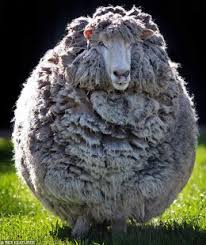
The Lord is my Shepherd.  I shall not want.  He maketh me to lie down in green pastures.  He leadeth me beside still waters.  Yea though I walk through the valley of the shadow of death, I fear no evil, for Thou art with me….

sheep

Nice.

When a patient is in treatment with me, there are unique moments that come and go when my story comes out, but it is not standard.

Why don’t you talk about God more?

So there you have it.  That is why, for now.  I hope to grow and assume this will not be my opinion nor practice forever.

And between me and thee, at Friend to Yourself, we are also still figuring this out.  Together.

Questions:  Do you wish your physicians talked about God more? or less?  Why?  How has it affected your treatment?  How do you wish it would change?  Please tell us your story.

Self-Care Tip:  When people talk about God, or hurt you and you believe Christianity or religion is involved, remember they are human, not God.

(Even me!  lol!)

RELATED ARTICLES

Live with an agenda

dionna, 1991.

dionna, 1991. (Photo credit: paul posadas)

The blue dragon lifted her head from near-sleep.  She knew.  Pouncing onto the rocky ledge gave her the advantage.  No one would challenge her.  The fresh corpse was for her alone.  As she ate the remains of Dionna, the red dragon who had never flown, the memories of Dionna infused her.  The blue dragon in this had saved those memories and would live them into the forwardness of time.  

Why is it that we repeat the mistakes of our forefathers?  It would be nice if we could somehow be able to capture their hard-earned life experiences.  If dragon lore were true, perhaps.

In Papua New Guinea, Congo, cannibals on the Disneyland Jungle Cruise and who knows where else, eating brain to preserve the life force, save your daughters or avoid the mistakes Dad made gets you a bad and yucky disease called, kuru.  Nothing good comes from eating brain.

And so the blue dragon, whose scales shone in the morning sun, began to tremble and seemed confused over the years.  Her brain got holes like a sponge and she laughed at inappropriate times.  

We just cannot get a leg up on wisdom and experience.  We are not made for it.  Each of make our own mistakes, have to work our own fingers to the bone, and other knowing clichés that in this case just are the darn truth.

What blue dragon and kuru are trying to tell us are that the agenda Love has for us is not to build up experiences like some sort of mental tower of babel.  It is not about the mistakes.  It is about our life experience.

We cannot help but wonder, though.  After working in psychiatry for these many years, I wonder what a joy it would be to give that experience, knowledge, skill of practice and such to my daughter some day.  Ah.  As if it had its own life force, passing it on to my daughter feels like a bit of immortality.

When I die, just eat my frontal lobe, darling.  Not the limbic system.

We are meant to live.  In that living, we inevitably repeat foibles and build up muscles and manage to survive all kinds of suffering.  In that living, we are beat up and rejected.  We are perfect.  We are flawed.  We are marvelous.

Maybe the agenda is not to get it better with each generation or to get it right.  Maybe the agenda is to live.

Question:  Have you ever been frustrated at how quickly your gains in life will be/are lost?  What is the agenda of your life?  Please tell us your story.

Self-Care Tip:  Live life with a quality-experience agenda.

RELATED ARTICLES