Between Me and Thee, Don’t Believe it

He felt blamed by his daughter.  It is one thing to perceive it.  Believing what we perceive might be separate.

There is a disease process named obsessive compulsive disorder.  In this illness, we perceive things that at some level we understand are not likely nor true. These fears are called “egodystonic,” when we can tell that our fears don’t make sense.  For example, it may preoccupy my thoughts that I fear I just ran over a pedestrian with my car, even though at some level I know I didn’t.  Not driving back and forth on the street to look for the victim where I fear the accident happened for hours is therefore terrifying to my core.  If asked outright if any of it made any sense, I’d say no.  We all have features of this disorder but don’t necessary to the full extent.  And that is where we got terms like “Step on a crack, break your mother’s back.”

It goes to reason that fears consistent with our inner selves are “egosyntonic.”  In its diseased states, we see this in disconnected thought form disorders such as schizophrenia.  The healthier examples are much easier for most of us to understand and relate to.  I fear if I speed, I will get a ticket.  Healthy and connected fear.

Now what was going on with the man I mentioned above?  Did his daughter ever say she blamed him?  Was he trusting his feelings?  His Jedi-intuition?  Was this egodystonic or egosyntonic?

Egodystonic fears in a much milder form include simple personalizations.  Making something about us that isn’t.  Your girlfriend makes jokes about you being irresponsible.  A friend doesn’t return your calls.  Your daughter is moving away.  You can see the potential fears building up.  Will we believe them?

Believing our perceptions depends on different paradigms.  There are our biological illnesses that predispose our perceptions (major depressive disorder, obsessive compulsive disorder, generalized anxiety disorder, etc…).  We have our temperaments to answer to.  Some of us are wired to be more suspicious v. trusting.  There are adjustment issues, related to stressors around us.  We have our own coping skills.  And how about poor self-care such as poor sleep hygiene and little exercise?  All of that will play on what we are going to do with our perceptions.

Truth is, generally very little of what we hear has anything to do with us.  Now there is the other extreme of course.  A personality disorder who has little insight into the way they are influencing the world around them and take little responsibility.  But that is the exception.  More often, we walk around licking wounds that came from a series of misperceptions and personalizations.  It takes up a lot of time and is a disconnecting force between me and thee and thee and thee.

Self Care Tip #72 – The best way to keep the space between us open, honest, healthy, connected – is take care of our own selves.  Be a friend to yourself.

Question:  What has happened in the space between you and the ones you love?  Please tell me your story.

Are Your Meds Safe?

A reader asked

…once one starts a medicinal path, would the symptoms become worse than they were before the meds if the meds were stopped?

There are many layers to this short question.

1.  Just the act of stopping the medication may trigger a relapse.  Cold turkey’ing is only good for stories.

Remember that relapsing in emotional illness threatens brain health.  For example, in depression, every time we relapse in the absence of the protective effects of medication (prophylaxis), we drop faster, we drop harder, and it is more difficult to treat.  It is more difficult to get a medication response.

Furthermore, some medications that once were effective in treating disease, loose effect if they are stopped and restarted.  Significant in psychiatry as we don’t have innumerable options to treatment.  In one move, a medication was eliminated from our treatment choices and we have to move on to others.  We now try a different medication with possibly more side effects than the one we discontinued.

Because of this, many people who have found effective treatment choose to stay on it as long as they can.

2.  Some medications are not treating disease process so much as they are treating the symptoms of the disease.

For example in anxiety, the class of medications called benzodiazepines (“benzos”) is often a favorite.  Common ones in this class include alprazolam, diazepam, clonazepam and lorazepam.  There are many more.

Benzos take the symptoms of anxiety away quickly.  They are famously called “tranquilizers” and hit the GABA receptor, the same receptor as targeted by

alcohol. Some people say that they are like taking alcohol in a pill.  They are not all bad or all good.  However, as pertains to my reader’s question above, the answer is yes.  The symptoms might be worse after stopping them than they were before using them.  If they have been used long enough for a tolerance to develop, and/or if they were being abused, much like alcohol might be abused, than yes.
Remember, symptoms are what we see or feel.  The disease process itself is often unseen.

Also, because this class of medications only treats the symptoms, we know that the disease process is likely still progressing.  Then when the medications are stopped, the symptoms show again.  However now that the disease is worse, so are the symptoms.  What the medications are doing in this example is called “masking the symptoms.”

3.  There’s more I could cover but that’s enough for any of us tonight I am sure!

Question:  Did any of this help?  Please tell me your story.

Self Care tip #63 – Take your treatment in comfort, but know what you are taking and why.  Be a friend to yourself.

A Little Bit is Not Enough – Claim Full Health

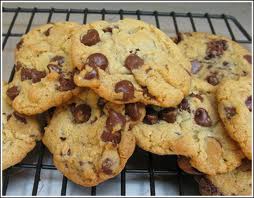
The good news is, I just ate 3 chocolate chip cookies.  You already know the bad news.  Has nothing to do with my post.  I’m just sharing it for the sake of your own

Schadenfreude 🙂

…Onward.  Question:

Does emotional disease get worse even while on medication therapy?  Sometimes.  It does so more often when the disease process is treated but only partially treated.  Read a little more about this in this post if your interested.  A primary care physician recently told me, “I think the term ‘Partial Responder’ is a marketing gimmick to get physicians to prescribe more medications.  I don’t think it even exists.”

There’s a lot to be said about interview skills in sussing out the partial responder.  If I asked someone if they felt better, many things play into their response. Everyone’s responses are biased of course.  We don’t have sterile minds.  For example there’s the patient who wants to please their physician.  “Yes I’m better!”  i.e. “Yes you’re a good doctor!”  There are the patients who don’t want to be patients and minimize whatever they’re going through.  There is the physician who leads the interview.  “So, you’re feeling better?”  “The medication is helping?”

Partial response means that at the end of a full treatment initiation period, there is some disease remaining but a reduction of disease.  For example, in depression, I may no longer be suicidal, but I still have trouble feeling pleasure in life.  In cancer it means that there is tumor reduction of at least 30%.

Now why would a physician presumably agree that there is a partial response in cancer, but not agree that it happens in mental health?  Anyways….  (Ahem.)  When we partly respond to mental health treatment and don’t push further for full response, about 70% will relapse.  Versus maybe 25% in those who reached their pre-disease baseline emotional health through treatment.

Don’t get lost in this.  The point is, get treated and get fully treated.  Mental illness is progressive and causes changes at the cell level.  The brain is connected to the rest of our body.  The brain is human.  A bit better, is not enough.

Self Care Tip #61 – Go all the way!  Claim health.  Be a friend to yourself.

Question:  Did you find this to be true in yourself or someone you know?  Please tell me your story.

Look Around At The Other Reasons – Depression

Flagellants mortifying the flesh, at the time ...

Image via Wikipedia

“I’ve done some bad things.”  Patient tells me she can’t sleep well, is nauseated, depressed mood, worried with perseverating thoughts about acts that shame her and ramifications, doesn’t feel as much pleasure in life, isolating, tearful and more.  I was alarmed!  What could she have done that deserved this kind of self-flagellation?  When she told me, I didn’t realize it.

I was still waiting for the rest of the story.  I got caught up in her own self-judgment and found myself sitting beside her “in court.”  Once I realized what I was doing, I was chagrined.  Here I was collaborating with her in her inappropriate guilt.  It took me too long to register that her reaction was not proportionate to the offense.  I told her I was sorry she was going through all this emotion.  She said, “It’s my own fault.”  Is it though?  We needed to start looking at additional reasons that might be influencing the way she felt.

Start looking at other paradigms when the emotional response is out of proportion to the event(s).

An analytical approach would look at unconscious reasons, such as other personal choices that conflict with a core beliefs.  Or perhaps, something like unresolved anger coming out in physical and emotional symptoms. Ask about our “closets,” peel away pretense and let your flawed self into the air.  Keep it real.

Another paradigm is medical.  Inappropriate guilt is a symptom of Major Depressive Disorder, a debilitating disease process of the brain that affects the whole person/body systems.  When distorting things out of proportion, personalizing too much, we must ask if there is a depression going on.  Ask yourself.  Ask others.  But don’t let it continue if at all possible.  Major Depressive Disorder is a progressive disease that does more damage to the brain the longer it goes untreated.  In other words, the brain is affected more over time, it is harder to treat and it is more dangerous to the person.  The average length of an episode is 2 years and the more times it returns, the more chance to have the disease process continue for life.  Treating sooner and for longer, decreases the chance of relapse.

Excellent for us are the many treatment options for this potentially devastating disease.  Even in the “lifer,” when staying on medications, the relapses are much easier to get through and shorter in duration.  The medication has a protective effect on the brain.  Prophylactic against further insult.

In the woman I told you about, there was another emotional spectrum disorder, anxiety.  Anxiety and depression are like brother and sister.  They often go together.  But for today, we’ll leave it on the symptom of inappropriate guilt and let it rest on the reminder that the brain is human, mortal, attached to our neck and not an aura.  When the brain gets sick, it shows how it is doing the only ways it can, often through emotions.

Self Care Tip #46 – Look at all the reasons influencing the way we feel.  Be a friend to yourself.

Question:  What do you think?  Agree or disagree?  What is your story?

Get to Know Yourself to Be A Friend to Yourself.

On the Threshold of Eternity

Image via Wikipedia

Let us put our efforts toward becoming who we can become, who we were wired to be, who we want to be, what gives us pleasure.

We can get beaten up by wanting.  Wanting to be someone who gets energy from being with people rather than from being alone.  Wanting to be someone who is a finisher rather than grazer.  Wanting to blend and lead and be chosen.

Some of this filters out as we age.  Aging fills our lives up with so many responsibilities that wanting to be anything more than someone who gets solid sleep hasn’t crossed our minds in a very long time.  Children get more of it right than us in this regard.  They have space to want more openly.  Our wanting muffles and cramps when we turn away from who we were genetically designed to be.

My patient came in depressed again.  Depression was familiar for him.  A psychiatrist works with a specific area of medicine.  So I get to see people after multiple medication trials before their primary physician refers them to me.  Well this patient hadn’t found lasting help from medications. He came to me with doubt.  I wish I could say we worked it out.  I can say that we are still trying.

What we are working on influences the way his genes express themselves.  We can’t change the genes but we can affect some of how and when they are activated.   We can do this by choices, such as medication therapy, sleep hygiene and exercise.  Choices are more effective when we know what and who we were wired to be.  What are our natural talents?  What are we interested in?  Feeling inner congruence when we are doing something points the way for this.

In Outliers, author Malcolm Gladwell says

“the biggest misconception about success is that we do it solely on our smarts, ambition, hustle and hard work.”

I don’t know if Mr. Gladwell recognized how closely his thoughts harmonized with Carl Jung‘s regarding temperaments.  Doing what is natural for us recruits our best through the path of least resistance – our interest, our attention, our creativity.  Rather than forced effort, drudgery and dragging feet, time looses some heaviness as we get caught up in inner and outer congruence.

Intuitively, we all surmise that when this happens, we have less stress inside and outside of us.  Ah.  What a relief.  This is what my patient is working on and when he is able to say he is doing what he wants to in life, he is less hopeless and panicked.

Self Care Tip #40 – Get to know yourself to be a friend to yourself.

Question:  What do you think?  Have you been using these tools?  Have they made a difference for you?