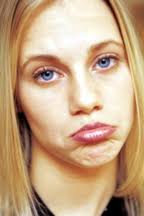
Using The Force – I Am An Emotions Jedi Diagnosing In Those Who Function “Fine”

Jedi Master Qui-Gon Jinn (right) and Padawan O...

Image via Wikipedia

Self-Care Tip #200 – Use your emotions to sense the emotions around you or in your own self to detect depression.

Teracina came in initially for some sleeping pills.  She didn’t come to tell me about her personal life.  She just wanted the pills.  It’s understandable.  What a pain really to unveil on cue, like planned sex it was too impersonal to get personal.  She was in the category of people who weren’t pining for diagnosis, for a hearing ear or connection.  She wasn’t even actively thinking about those things.  Pushing them at her turned her stomach.  Foreign foods and smells to her, a girl who liked home.

Hearing what she is coming in for is the first part of anyone’s exam.

So what brought you in today?

What can I do by you?

What are your druthers?

In Teracina’s case, I got an answer of what she perceived she needed.  It’s my job to see if I can get more than that first answer, the patient’s chief complaint.  So we negotiated as we chatted.  Pills for history.  Only enough pills to get her in to her next appointment in a week when we can talk further.  She’ll come back ready to let me take a history or she won’t.

We talked a little more while I was writing out her secure-prescription for what she came in expecting to get, Zolpidem.  It turns out that her neighbor shared some with her a few weeks ago and it “worked.”

I was watching her too, while I wrote, while we talked.  She didn’t have much expression on her face and her voice lacked inflection.  She gave off this aura that the ground was about to open up and suck us both under.

This is a short-cut I learned early in my psychiatry residency training.  I also had extra credit because I was already hard-wired to listen to my internal emotional milieu.  I call myself the “Emotion’s Jedi.”  (Go ahead and laugh.  With these powers, I see right through you.)  When we are with someone and feel like the ground is going to open up and swallow us, we have a ladder-chute to diagnosis –> depression.

Depression is sneaky; an ebb out of our unsuspecting selves it takes bits of our personality away.  More often, many of us don’t know that we have been changed.  We are doing well enough at work, or school or the daily chores of a care-giver’s work-load.

I’m fine.  Nothing’s changed.

Colloquially we call this, “functional depression.”  Doing well on paper but inside fading, body changing, sleep changing, interest and motivation – changing.

No.  I never have thoughts of wanting to die.  I’m fine.

(Insert famous swooshing sound of my lightsaber.  You can add music too if you like.)

But who cares if Teracina doesn’t come back next week to see me?  I’m not fighting her.  No I’m not.  And that’s why I care.

None of us are fighting each other.  We are fighting these diseases, here to be tools to be used by each other and by ourselves for each others sake.  Flip it back again.  For our own sakes.  We fight that dark melancholy and are not worth much more than our posture if we don’t.

Question:  What has helped you to detect depression in those functioning around you?  Or yourself, when “everything was fine?”

Just to Feel Pleasure

week-end-pleasure

Image via Wikipedia

Self-Care Tip #189 – Heal for yourself, and you’ll see that also, everyone heals.

The best thing I ever did was go on antidepressants.

Bianca sat, but her whole body was talking.  She was telling me about her changing life.  She had read some of her journal from a year ago when she pounded on herself for her behaviors.  She thoroughly grieved the time with her children when they heard her scream about small things that kids do.  She told me about her sons face when she was irritable.  He showed all the waiting tension that an open child will when waiting for Mom to lose it.  She was trying to push it aside and think rather about how she now could finally enjoy them.  Bianca said,

I just had no idea before how much better life could be.

Bianca’s face became tight and she didn’t make eye-contact,

There’s no way to describe what it’s like to not enjoy your kids – My own kids! – for most of their born lives and then wake up and experience something different.  I just can’t explain what it means to now actually like being with them.  I’ve always loved them but I didn’t feel the pleasure and I hate that.  I want that time back but I can’t have it and I can’t give it to them either.

I’m so scared it will end, the pills will stop working and I’ll lose this new life.

Before her medication, Bianca worked hard at taking care of herself.  She was a check-list of responsible self-care.  Bianca thought it was important that I knew this.

  • Aerobic exercise – check!
  • Healthy diet – check!
  • Sleep hygiene – check!
  • Bianca talked about God but things got confusing for her there.  She didn’t like to think about Him being on “a list.”  He was in her life and didn’t feel He failed her even though she couldn’t feel pleasure or joy.

Still, she continued to coil up and release hard punchy words at her kids and then hate herself for it.  She had prayed so much about this and wouldn’t even mind if God had to puppet her, if that’s what it took, in order for her to treat her kids better.  She could not stop herself from being what she called,

Crazy Mommy.

But now, after she was treated, Crazy Mommy was gone.

Aside from dropping the shame, the best thing for Bianca was knowing that her kids could trust her, felt safe with her and that she felt safe with herself.  Everyone was healing subsequent to Bianca healing.

How many of you have told us a similar story.  A similar rescue.  Yet, never-the-less others of us are afraid to go there.

Question:  How are you present with others who don’t understand your rescue story?  How do you stand beside someone who needs medical help for emotional illness but won’t accept it secondary to stigma?  Please tell us your story.

Get Out Of The Company Of Comparisons. Forget About Fairness.

Tail lights, lights, rain on my windshield, co...

Image by Wonderlane via Flickr

Self-Care #186 – Forget about fairness.

It’s raining here; herding us.  I don’t like driving at night, but driving in the rain at night is worse.  Driving in the rain at night, with a rabid sheepdog tailgating me is still worse.  However, I do love slowing way down when I’m tailgated.  That was nice.  And seeing some family, including my folks, made it all worth it.

My kids were in on it too.  They were doling out banana smoothie and repeating a favorite theme called, “Make it fair!”  In Parenting, the frequent reminder that life will never be fair for my kids, and wondering if they’ll ever get it, gives me almost as much pleasure as being tailgated at night in the rain.

“Make it fair,” isn’t far from any of our hearts desires.  It’s easy for me to forget humility and judge my kids, but when people aren’t looking, I’m also checking to see how much I got.

I met a girl in clinic, Britt, who was also working this out for herself.  She was holding it in her hands and turning it over; a foreign object.  Britt said,

It doesn’t matter what has happened to me, I’m still responsible for taking care of myself…

She said it many ways, and the tail of her pauses kept flipping up into question marks without actually asking,

With my abuse…?  No one else will…?

I could see her with all the rest of us suffering folk, checking the fluid line in our glasses, saying

With all the hurt I’ve received…

I was poor my whole life…

I just can’t seem to get a break!

For Britt, coming to a point of owning her self-care felt like losing social support.  She had for so long sipped on her succor as a victim in the company of her received wrongs, that she felt awkward.  Britt needed to find a new group of friends.  She stood there toeing the floor,

I have to take care of myself.

Britt will be alright.  She will be emotionally healthier and in better company very soon.  She will move past where so many of us are still gripping our goblets asking about why we didn’t get more.  She will say, without that question, self-care begins and ends with “Me.”

Britt hasn’t been able to do this without medical help.  For her, part of seeing herself as a victim to what life gave her was symptomatic of her major depressive disorder.  She was personalizing what wasn’t personal.  Not everyone will need medication.  Some of us will do well just recognizing that, “Life is not fair,” and will be able to move on.

Question:  How have you gotten out of the company of comparisons?  How has putting fairness aside been a form of self-care for you?  Please tell me your story.

It Is My Choice to Take Care of Someone, Even in The Context of Suicide

Detail of The Death of Socrates. A disciple is...

Image via Wikipedia

I was a teenager I think when a woman in our church suicided.  Dad pointed out the man sitting alone.

His wife just killed herself.

Dad asked me what I thought of suicide.  Imagine.  What a compliment really for a teen, to be asked her thoughts.  Being a “Feeler,” I oozed something empathic I’m sure, but still I only remember what Dad said,

I believe God has a special way of seeing these cases.

This was at a time when culturally most of the western world saw suicide as sin.  It was quite forward for Dad to say what he did again later to the grieving man in the pew.  I did not realize at the time, but now I see that people judged him and his wife for what she did.

Later in psychiatry training, my attending said,

Suicide is the most selfish act anyone can do.  It is the ultimate punishment aimed at those who still live.

I don’t know what you think, but I couldn’t help wondering.  I still do.  I think this may be true for some and not others.  I haven’t had a chance to ask them.  They’re dead.

Suicide is terrifying to a psychiatrist.  We all tremble at the thought.  Statistically we know women attempt it more than men, but men are more “successful” when they do try.  They use methods that are generally more lethal than women.  They don’t get a chance to realize that in a month or a day they will want life again.  Or an hour.  They could have lived.

In the intensive-care unit of a hospital, “unsuccessful” suicide attempts hover in life in a space where their self-injury placed them.  The nurses are kept running between medicines, treatments, physician orders and prayers for these lives that tried to die.  Sometimes, the “chronically suicidal” become familiar patients to this critical care ward and that has it’s effect on those who have spent themselves so heroically to save them.

A nurse once told me angrily about her patient who kept coming back.

I fought for that woman’s life!  I prayed over her!  I worked all night for several nights and didn’t know if she would live until much later.  And then she was transferred out to the step-down ward (to a floor where the patients aren’t in such a life-threatening condition), and that lady probably never knew what I went through to keep her alive.

Then later, she came back, and later again, almost dead but not dead.  She kept trying to kill herself!  Finally, when she was conscious again, I just told her how it is.  ‘Listen!  I fought hard for you!  You better go out there and live!  You better figure out what it is you want and go for it.  Stop trying to die!’

This lady-patient was hurting more than herself.  Suicidal thoughts and attempts are dangerous.

There was a patient who tried to use his bed-sheets as a noose before the nurse lifted his wet body from the door frame.  In the emergency room (ER) he was examined, x-rayed and determined fit to return to the ward.  Alive.  Talking to the ER physician, I learned that the reason most people die when they hang themselves isn’t because of suffocation.  It’s because they break their neck.  Done.  No more chances to choose life.  Even an hour.  My pulse was still beating on me to the rhythm of, “He could have died!  He could have died!”  This time, no broken neck.

Regardless of our culture, we are not the judges of these people who want to die.  Regardless of our emotions, their emotions before, any previous conflicts, regardless, we cannot measure their final act by degrees or intentions.

We fight together for their lives and they may or may not know about what that does to the rest of the world.  When we don’t want to fight for them any more, we should change jobs.  It is our choice, each of us.  Whether we are fighting as professionals or as a wife, brother, friend, volunteer or the hired tutor, we fight for their lives because we choose to.  If we cannot keep it up without judging, shaming, accusing the suicidal, we need to own that and take care of ourselves first.  “Can’t give what you don’t have.”

The truth is, suicidality is hard for everyone.  It is hard in ways and in people that aren’t talked about, such as the nurses or the x-ray tech who is the first to find the cervical fracture (broken neck) on film.  It is hard for the church parishioners, the person separated by seven-degrees or the grocer.  Suicidality is hard for all of us.  We give what we choose to give and remember to say, “I can’t control that,” when we can’t.  It is our choice.

Self-Care Tip #182 – Taking care of someone is your choice, even in the context of suicide.  Be a friend to yourself.

Question:  How has suicide touched your life?  Please tell me your story.

Waiting For Self-Care to Start

Self-Care Tip #176 – Don’t wait to start caring for your self.  

I’ll get to it when things slow down for me.

I can’t handle one more stress on top of the kids and all the people who take, take, take.

Don’t take this away!  It’s my only vice!

I don’t have time because I’m working so much.

There are so many good reasons to wait for self-care.  I don’t belittle them.  I do them too.  There’s a reason we here at FriendtoYourself.com call self-care the hardest work.  It is not for anyone who isn’t willing to go through the fire of putting themselves first.

“The fire,” you say?  Yes.  Fred taught me that.  He was down twenty pounds, working out almost every day with aerobic and anaerobic exercises, putting his ear-plugs in when sounds escalated his nerves, more motivated, interested and active.  Fred was growing again.  He said that it had been years since he’d done any of these things for himself and couldn’t believe what the world looked like when he felt so good.

Fred was sad though.  Not depressed.  No, he hadn’t been depressed for at least a year on his medication and even less so since he was taking care of himself physically.  But sad.  His wife wasn’t interested in his changes, she was disconnected emotionally, and more so every day it seemed to him as he began to change physically, emotionally and behaviorally.  His friends were growing distant.  He wasn’t interested in office politics either.  It was a simultaneous coming together of life in himself and a falling away of the life connection in his “previous life,” as he called it.  Surprisingly, the people he loved the most weren’t so happy for him.  Weren’t supportive of him.  He was sad for that.  There are never gains without losses.

This is not to forget the new relationships he was growing.  There was new life all around him and he still maintained hope for the connections he had before.  But those people who he had called his own for years were the ones who gave him all the reasons to wait for self-care.  He was way past waiting.  He was already on the other side enjoying the sun.

Question:  What have you overcome to get at your own self-care?  Is there anything your are still waiting to do?  Please tell me your story.

*Art work (assumed) courtesy of carldagostino.wordpress.com.

Listen to Your Mind and Body When Doing Something As Simple As Cleaning

I Heart Cleaning

Image by Valerie Morrison via Flickr

Self-Care Tip #170 – Listen to your mind and body when you do things like cleaning, even if it makes you feel better or worse.  Be a friend to yourself.

Whenever someone in the house can’t find something, I ask them to please just start cleaning and sooner or later they’ll find it.

Today my kids and I spent two hours cleaning their play room.  My daughters were amazed at all the treasures they found tucked under, over, this way and that way in their clutter.  Although there was a lot of crying and gnashing of teeth along the way, in the end everyone was happy and pleased with themselves.

One of the blog-sites I enjoy reading is “Earthquakes and Rattlesnakes” by Zahara.  The other day she said,

I have a lot on my mind.  It seems when my mind is in a jumble, my house is in a jumble.  Cluttered, disorganized.  Can I unclutter my mind by cleaning my house?  Probably.

According to BBC News, cleaning improves mental health through the exercise that is inadvertently done.

And as Louise Hay once said,

Cluttered closets mean a cluttered mind. As you clean the closet, say to yourself, ‘I am cleaning the closets of my mind.’ The universe loves symbolic gestures.

But there are times when this goes awry.  In Obsessive Compulsive Disorder, people may clean ritually and compulsively to avoid an egodystonic fear; a fear they know doesn’t make sense but still terrifies and overwhelms them.

Or in Major Depressive Disorder, the illness affects their brain and body so much so at times that they can’t do basic life functioning, such as cleaning their house or even showering.

So I’ll tell the mothers out there such as myself, the BBC News, Louise Hay and the rest of us that cleaning is good self-care.  The milieu around it is also a good indicator on when it is time to go get professional help.  Listen to your body and mind.

Questions:  When and how has something as simple as cleaning improved your mental state?  When has something as basic as doing your activities of daily living shown you that you or someone you love might need to see their doctor?  Please tell me your story.

Say, “I Can’t Control This” When You Can’t

Playing in the Sink

Image by Paul Mayne via Flickr

Self-Care Tip #169 – When there is negative chaos, remember and say, “I can’t control this.”

Carol had worked there for seven years.  The supervisor had just asked her for more hours and Carol felt almost good to be able to say she didn’t have any more to give.  Yet when Carol got the email that her job position was closing in a month, she was physically affected.  Her autonomics (“fight-or-flight” reactions) were on full alert.  If there was an attacking bear, she might have out run him.

Healthy Carol had been to enough 12-Step meetings to remember, “I can’t control this.”  She said it a few times and turned it over to her Higher Power.  She did not crave or relapse in her addiction’s disease.  Her pulse was still fast and her hands were still tingling for the next several hours but she didn’t “use.”  She went to her meeting and she pushed on.

When Carol thought about her future and the things she could do to prepare, she inevitably thought about the things she couldn’t do.  She said,

I can’t control this.

When Carol imagined what other people would think after hearing about her unemployment, she said,

I can’t control this.

In mental health we struggle with that a lot.  The emotions that grow self-loathing, the behaviors that distance us from our support and loved ones, and/or the physical changes that keep us from performing – are all confusing.  At what point do we say, “I can’t control this?”

I remember a Seinfeld joke about water faucets in  public bathrooms.  The ones that you have to hold down to keep the flow going.  I’ll spare you the misery of me trying to retell it and get to the point.  Why do they have those faucets?  It’s as if they think people will have a water party in there or take free sponge baths if they could turn the faucet on long enough actually to wash their hands.

baby elephant | playing in the water

Image by Adam Foster | Codefor via Flickr

When we say something like “I can’t control this” to the idea of emotions and behaviors, the general fear is that people will take wild liberties, – splashing emotions around and behaving like elephants after the summer Serengeti drought ends.  Mayhem will ensue and the staunch healthy-minded with dry pants will have to clean continually after us.  Not many people want to be sullied by the emotions and behaviors of others and this, “I can’t control” business is a boundary issue.  Maybe stigma is one of the ways we change out the faucet on others.

There are some very primitive characters and severely ill people who might say in fact that they cannot control all feelings and behaviors.  This is more than most of us armored with some healthy coping skills would believe or say.

“I can’t control this,” is not a free pass to vandalism, vengeance, volley-ball or any other very vexing behavior.  It is not there to hand over like a ticket to other people for their excuse, justification or condolence of our situations.  It is there for us to hold up to ourselves for the purpose of honesty, submission to our Higher Power, humility and healing.  No one can control the flow out of that.  That is free self-care.

Questions:  When have you felt like you had to explain to others your behaviors and feelings even when you didn’t have an explanation?  How did you bring it back “home” to your own self-care and get past the stigma?  Please tell me your story.

Choose Self-Care At Your Most Elemental Level

Buchenwald-100625-14486-Schwerte-hell

Image via Wikipedia

Self-Care Tip #167 – Choose self-care at your most elemental level.

Carl, who writes blog-site, StillFugue, said after yesterday’s post on self-care being for everyone,

Sometimes depression blocks this type of self-care regardless of how good our cognitive strategies are.

Carl reminded me of Dr. Lang.  He was a physician, a father, a man of high character who never had depression in his life.  Then after a series of life stressors depression expressed itself and he, who once was the warm-fuzzy in the hospital, the man who never lost his optimism, the man who turned anyone’s bad mood around – this man came to me under a black cloud, heavy with melancholy, and raining tears.  He cried all the time.  This giant of a man cried and cried on his wife’s shoulder, and she was bewildered by him.  She told me he had done this for a month now, although the depression started about four years ago.  He kept wanting her to read to him the book of Job and cried more barely hearing the words.  He had already been through a series of well-chosen medications, but still he sank deeper.  No form of treatment kept up with the leak in his ship.  What was self-care for Dr. Lang?

Did Dr. Lang have good coping skills?  Well he wasn’t coping well now even though he knew the strategies.  He didn’t understand why he couldn’t use the coping skills.  Did he have intelligence?  Yes.  Did he have resources?  Yes.  However, none of that is what this was about.  Asking Dr. Lang to cope with his feelings is the same as asking someone blind to see.  Physically, biologically he could not.  His brain could not.  Much of his ability to choose behaviors and emotions were drowned by illness.

So again, the implied question comes to us, – “Is self-care for everyone?”

Mr. Rick C. threw this life-saver out in response to our question,

During times when chaos ensues, either internally or externally, self-care seems to become the basis on which all other positive actions are built.

Sarah McGaugh also referred to self-care as “action,”

A call to action may also be a higher calling than one’s own self….

What action did Dr. Lang do?  He cried on his wife’s shoulder and read the Bible, i.e., he leaned on the support he had built up before the hard times came.  After failing medications, he sought another opinion and other treatments.  Sure, he couldn’t get out of bed otherwise even to bathe himself, but he had made it to my office.  What did Dr. Lang do?  He got electroconvulsive therapy (ECT) and in two months, along with his medication (only one antidepressant was needed at this point), Dr. Lang was no longer crying.  In four months, he was laughing again.  In six months, he stopped ECT altogether and maintained his emotional health with his monotherapy medication.  It’s been seven years since Dr. Lang went through all that and he has not relapsed yet.

I pick out so many points that I consider self-care choices Dr. Lang made.  They changed over time for him according to his needs and abilities, but he didn’t want to die.  Even at his worst, when he could barely remember why life was so important, that wisp of hope was enough to live for.  It was a higher calling to him, higher than his own dark wants.

That was Dr. Lang’s choice.  He chose self-care at his most elemental level.  It was his response to the call of hope.

Questions:  But what about you?  What do you think?  Is self-care for everyone?  Please tell me your story.

Taking Care of Yourself is The Best Part of Your Treatment Cocktail.

IMAG0142

Image by schmeezla via Flickr

Self-Care Tip #163 – Taking care of yourself is the best part of your treatment cocktail.

We often talk about partial or failed treatment in medicine, in each other, in relationships.  But those are only about 40-60% of the time.  There are many people who get full treatment response to medication and self-care.  Mindy is one of them.

Mindy has seen me for about four years in clinic for her depression.  She’s never been very anxious, which is less usual as anxiety and depression tag-team so often.  Mindy’s depression had lurked in her, stepping out in the light and slipping into the shadows, for years even before she started working with me.  We seemed to hit by chance or skill the right medication cocktail that had evaded her, and she was not depressed anymore.  However, she never told me she was great.  She was “pretty good.”  She was, “doing alright.”  She was, “you know, good.”  Mindy wasn’t great.  She was good.  We spent three and a half years like that.

Then about six months ago, Mindy came in looking hot!  (I can say that because I’m a girl.)  She had lost the mom bumps around the midline, dropped padding in the hips, her hair wore a fresh coat of glossy brown, and I could tell her outfit hadn’t been worn more than twice.  Mindy was smiling and sincere when she said,

I’ve never felt better!  I had no idea what taking care of myself would do for me!

Her eyes were telling me their own conversation.  They were so expressive saying,

I can’t believe this is me!

Mindy told me in testimonial fashion, about the strangers who now noticed her.  Being noticed was an elixir and she was drinking it as often as it was served, but not in an arrogant way.  Mindy was still very human.  She wasn’t manic or grandiose.  She was doing what Gary Vaynerchuk describes in his book, Crush It!

“Do what makes you happy.  Keep it simple.  Do the research.  Work hard.  Look ahead” (p 12).

Mindy said,

I used to think that what I got from life was good enough; from my husband and from the people out there.  I didn’t know I could get this by just doing what I wanted to do for myself all along.

Mindy was still taking her medication cocktail and had no plans of tapering any of them.  She thought the combination of these medications that took her out of depression, along with exercise and other self-care measures were just right.  Mindy had not forgotten her years of melancholy and sadness even though it was now four years since.

Questions:  1) What is your reaction to Mindy and the 40-60% of people who get full treatment response?  2) Do you have any questions you wish you could ask the “Mindy’s” out there?  3) Or something to say for the other 40-60% of people who don’t get full treatment response?  Please tell me your story.

Who Are The Sick? From Here to The Moon.

Michael Jordan, Slamdunk Contest, Chicago, IL ...

Image by cliff1066™ via Flickr

Self-Care Tip #162 – Know your need for self-care.

Question:  In FriendToYourself.com, am I writing to people who are sick?

I was speaking with Beth Jusino the other night, when she asked me this.  I thought I’d ask you in turn.  You readers might be interested in commenting.

What is mental illness?  Are you writing to people who are sick?

Beth is smart.  She’s heard of Major Depressive Disorder, Schizophrenia and such.  She didn’t ask me this question so I could read her the DSM IV-TR.  She was asking how far mental illness is allowed to go before it gets named.  And how about the space beyond?  Are there bits that aren’t named?  Does it drift along an arch between Crispy Health and Completely Ill?

What do you think?

One reason I like to write #mentalillness hashtags on @Twitter is because I have a theory that people who have allowed themselves to be named, who have accepted to any degree a need for help, who have released their history and claimed their future over and over again – well I have a theory about these people that explains why I write to them.

These people are more able to hear the knocking sounds of wanting.  These people are more available to grow.  These people accept the gift of health and any space between here and there where they find themselves, all the while pressing; a courageous forward effort to freedoms.  These people care about self-care and they know they are accountable for it.

I remember this,

It is not the healthy who need a doctor, but the sick.

It makes sense.  However, it isn’t as easy as calling a spade a spade, and not because I’m lacking honesty and directness.

I heard a variation of this analogy years ago and I don’t know who said it first.

If you ask me to compete in a slam dunk contest with Michael Jordan, competition would be over before it began.  I’d trip, travel, and carry my way to the net and not get air.  But move the basketball net to the moon, ask us to dunk and the competition is just as over.  The space of air between my shoes and the earth is not much different from the space between Mr. Jordan’s shoes and the earth when we are both shooting for a basketball hoop on the moon.

Maybe you get where I’m going with this.

What do you think?  What do you say to Beth or anyone on this?

Celebrate Insight, Choice, and Hope. Celebrating Can Be Self-Care.

A young paper wasp queen (Polistes dominulus) ...

Image via Wikipedia

Self-Care Tip #161 – Celebrate your insight, your choice, and your hope to be a friend to yourself.

I realize autism has taken over my life and I’m not sure how I feel about that.

When April said this, I jumped.  The insight into her situation, the implication of her own ability to choose, the hope of what those potential choices might do for her and her children – all these leapt at me, so of course I jumped.  Startled.

April was the parent of three lovely although autistic children.  She was wiping her face.  “I never cry.  I’m usually really strong.”

And then she said those words.  Her realization.  I don’t know how much thought she had put behind them.  She certainly didn’t have much time to self-actualize.  Getting only a couple broken hours of sleep every night.  Responding to complaints from the school.  Springing towards her son every time he tried to hit himself in the head to stop him.  April was busy.  Mostly all that I had been able to do so far in our treatment together was help her kids via medication therapy.  We were clearly still working on things in that department.  She was willing to wait for us to make our slow way towards her children’s health, even though she was falling apart in the process.

Go low and slow.

Nothing like a cowgirl psychiatrist in the saddle.  I try to keep my spurs off and make no more than one medication change at a time.  Then, when something happens, negative or positive, we know what we are looking at.  April’s children were taking their time getting to their therapeutic responses.  But at least we hadn’t done more harm than good.

We had made the changes to our plan of care that we were going to make, and April was about to leave.  She had just said what she said and my mouth was open.  Unfortunately for April, I’m not consistently articulate.

Yes April!

And then she left, while I was still bouncing on the chair.

I don’t know if she’ll celebrate that marvelous epiphany.  If she does, I know her kids will benefit.  I’m confident about that.  If she does what is not intuitive, that is self-care, she will still be able to do what is intuitive.  Taking care of our kids is the most natural instinct.  Wild dragons and other mythical or natural creatures could not keep us away from it.  Now taking care of them well, however, is something that definitely is more likely to happen when we as parents are healthy, too.

For now I will celebrate this.  April has insight.  She has choice.  She has hope.

Yes April!

Question:  What has your life been about?  Where is your choice and hope?  Please tell me your story.

No Matter Why, Where, or What Happens, Self-Care Starts and Ends With Me

Cover of "To Kill a Mockingbird: 50th Ann...

Cover via Amazon

Self-Care Tip #158 – No matter why, where or what happens, self-care still starts and ends with Me.

It’s no secret that I look at behavior through many paradigms.  Most of what I’ve shared on this blog is medical because I’m a physician.  That’s my specialty.  I’m not a physicist and don’t spend my posts on explaining how physics influences our behaviors – although I believe it does.  However, I don’t want you to think that I think behaviors and emotions exist within only the medical paradigm, even though that’s what you hear me talk mostly about.

According to Dr. Q, the roughly sketched breakdown of how stress intersects with medicine:

1.  Stress influences how we behave and feel. We “see” the stressors, and we see the emotional and behavioral responses, and we know their sources.  We know that emotions and behaviors are produced by a human.  Where else?  Anything magical or otherwise comes from Someone from another place.

2.  Stress influences our medical condition. Stress will awaken sleeping genes that carry the names of different diseases; cancer, major depressive disorder, schizophrenia, and so on.  Would those genes have awakened on their own without the external trigger flipping the switch?  We don’t always know.

3.  Because there are so many factors that influence the reasons a disease process demonstrates itself, we cannot say that it is causally related to the stressors.  Many people try to do this, and sometimes the disease’s labeled cause comes down to the jury’s decision.  But we don’t have to have read, “To Kill A Mockingbird” by Harper Lee to know that people’s opinions and judgments are biased.

4.  People try to find the reasons why.  This is natural and in my opinion appropriate.  However, where we look for the reasons for the feeling and behaviors is equally important.  Seeking accountability for how we feel and behave to come from outside of ourselves, to come from external reasons, to come from a source to fault is more often missing our chance to get friendly with ourselves.

“It just is,” as many say, and the 12-Steps would say “Surrender what is out of your control to your Higher Power.”  These are not inconsistent with owning that mental health begins and ends with Me.

Sure, there are the despicable situations of abuse, trauma, violence and other horrible biology changing events.  These are known to cause the one non-genetically related psychiatric disease process called post-traumatic stress disorder (PTSD.)  These are situations consistent with our previous post on not being responsible for our history but being responsible for our futures.

5.  Stress, other than in situations of PTSD, is not causal for the progression of mental illness.  Everyone has stress, but how we deal with it, how we cope makes the difference.  Even horrible events, such as losing ones wealth and the sequelae of it are not causal for the continuance of brain disease.

6.  Medications, lifestyle change, Love and various other therapies effectively influences the way genes express themselves, our biology, and our medical condition….

7.  …In so doing, medications, lifestyle change, spirituality and various other therapies effectively influence our emotions and behaviors.

Question: How has your understanding of how stress intersects with with how you feel and behave affected you?  Please tell me your story.

There is Less Space Between Emotions And Science Than We Think

The supermassive black holes are all that rema...

Image via Wikipedia

Self-Care Tip #147 – Bridge the gap between emotions and science.  Be a friend to yourself.

She had been through a lot – Aimee.  Lost her baby brother to medical disease.  Was in a stressful marriage and didn’t like her work.  There was more but you get the drift.  She found herself thinking that things would be different if things had been different.

Would they?

Readers, I am referring specifically to her medical condition.  Not to the fact that the universe is different because her brother died.

Madeleine L’Engle talked about death affecting the whole universe.  She compared it to the death of a star.  In death, the star creates a hole in space dark and large, enough so that the absence of it has its own gravitational force, a “black hole.”  L’Engle says that when any part of creation dies, we are all touched.  Life knows and the absence of that bit of creation leaves the surviving universe changed forever.

Aimee wasn’t talking about that.  Aimee thought her emotional illness was largely secondary to her life stressors.  Because this influenced Aimee’s choices regarding her medical treatment, I had to tell her no.  Gently.  It was hard for her to hear.  “Aimee, your sadness you feel now, four years after your brother’s death, your isolation and amotivation, your low sex drive, your difficulty feeling pleasure in other things, your sleepiness during the day – these things are not because you have suffered your brother’s death, nor because your marriage is hard.”

There are times when directly saying things is the more gentle approach.  No one going through what Aimee is going through wants to hear about how I feel about it.  Yuck.  There’s not much that is slimier than going to someone for objective feedback and getting their emotions and personal opinions all over you.

Aimee left saying she understood and with a new medical treatment for the medical illness propagating emotional and behavioral symptoms in her.  We’ll see if she did some days from now.  But what about you?  Do you believe that her emotions and behaviors were secondary to medical illness?

Readers, life stress will continue to happen.  What may change is how we respond to it.  If our response does change and it isn’t serving us or others well we need to think that we might not be interpreting how we feel objectively.  We might be having changes to our biology that “taste like chicken.”  It helps to get a physician’s opinion – someone who sees behavior as more than the spirit, the abstract, the puppet of our volition.

Question:  How do you bridge the seemingly abysmal distance between emotions and science?  Please tell me your story.

Live And Live Despite The Ongoing Loss

Red slipper

Image via Wikipedia

Self-Care Tip #141- Live and live despite the loss.  Be a friend to yourself.

The other day, my hair was barely pinned back in a knotty mass, when I arrived at clinic late with my house slippers still on.  I didn’t realize this of course until I heard this flapping sound echoing behind me as I hooned down the hall.  Distracted by myself, I seemed to suddenly come upon an old man.  He was lovely really, wrinkled, clearly handsome in his day, shuffling my same direction, and also in his house slippers.  It was less than a second when I took this all in and I suddenly felt very self-conscious.  Not awkward for the normal reasons that I should have been, like my nappy appearance, but I’ve never really thought I was “normal.”  No, I felt rude.  I’m much more sensitive to rude than ugly.

Do the younger seem rude to the older?  There with their supple joints, perky bodies and minds, hope, and shorter medication lists?  I felt rude.  Rude combined with awkward is not something most people are comfortable looking at, which is what I unfortunately offered up to this innocent man.  Walking fast felt wrong.  Not sure what to do, I sort of slowed, yet my tardiness to clinic didn’t let my gait relax.  Giving an uncertain smile, I managed not to make eye contact when I said “Hi there,” lest the eye contact lead to further tardiness.  Then off I galloped, luckily for both of us, only 3 doors down.

I didn’t spend more than a few seconds with that stranger, yet remember well what he symbolized for me.  I remember him when I get grumpy about not being able to eat as much as I did 10-years ago.  When I get resentful with my feet, (a size and a half HUGER since I had my first kid,) I see his lordosis (hunched back often from a collapsed spine.)  I wonder how he is doing with his losses.

There’s not much romance in growing old.  What is romantic is a beautiful person, who has been real with their losses and with the joys of life that are still available to them.  There’s no point in my denying that I can’t have cereal and pasta every day any more.  There’s no point in being angry about it.  I’ll just eat slower and force, er, I mean find more pleasure out of what I do eat.

I like to think that the old man in the hall made his and makes his peace with losses and is more glad than not for his life.  If so, maybe he was ok with my fast pace when he couldn’t.  Maybe it makes him more comfortable in a world in which he is becoming more and more of a stranger.  That is something to admire.  That is something that is worthy of life’s privilege.

After yesterday’s blog-post, a reader said it quite fine,

I did not know depression was progressive.  That’s depressing.  As is the realization that aging is progressive.  …On the other hand I can say I’ve had 61 more Christmas times than a new-born and perhaps that makes it worth it!

Question:  What losses are you struggling with?  How do you come to terms with your losses?  Please tell me your story.

The Process Of Coping With Triggers Such as Anger Includes Awareness

Two people in a heated argument about religion...

Two people in a heated argument about religion when Mahmoud Ahmadinejad spoke at Columbia University. Click the audio button found above and to the left to listen to them. (Photo credit: Wikipedia)

Self-Care Tip #132 – Awareness comes over and over again when you are a friend to yourself.

A reader posted in response to yesterday’s blog, When Someone Is Afraid Of You, You Don’t Have To Be Afraid Of Them. Just Be,

Sometimes it feels like any negativity dirties me up forever. I have a really difficult time dealing with any of the more negative emotions…. I am not sure how to “just be” with respect to those emotions…it always feels like anger whittles away my soul. Any ideas for coping through the times when we get really angry?

Taking care of ourselves requires awareness.  Just seeing it for what it is.  Being tuned in.  Having that degree of knowing.  Insight.

Awareness is sort of like “I love you’s.”  When we hear them, we might need to hear it again 5 minutes later.  There are no available stock options.  If the love doesn’t keep coming, than problems start.  Same with awareness.  We restore our own awareness how best we can, over and over again.  It slips and when new feelings come up, it may seem like it never happened.

My dad came over a week ago and spent the day with me and the kids.  The joy of just being able to spend a whole day with him was unique.  It was a different company than when he visits for an hour or on a timeline.  This day was all ours.  He left his car, and his cell phone behind.  He rode with me and the kids, sans detractors.  We were relaxed together.  Present.  There was a lot more time of just sitting quietly doing our thing but sharing even in silence our own selves.

Today he called, “To check on the tribe.”  He reminded me that it had been “just” a week since we spent that time together.  In my business of filling cereal bowls, the office, picking up dirty kleenex, training our dog where to poop – our time with Dad seemed like a long time ago.  I told him half jokingly, “Dad, we aren’t a bank account.  You have to keep coming.  You don’t accrue interest on what you put in.”

So is our own self-care.  It’s not that we are starting from scratch every time we take a bath.  It’s more that when we get into the flow of caring for ourselves inside and out, it becomes a regenerating, constantly investing rhythm that may at some times take thought and at others just happen because that’s who we’ve become.

One step of coping is that regenerating, repeating, purposeful process of awareness.  Our reader’s question about coping with getting angry put simply, requires awareness.  Because coping is soooo much more than just that, I’m sure it is too simple but it’s a start.  From there, come other bits of coping.  But without awareness, hmm.  Not much is going to happen.

Question:  What is your process of coping with triggers such as anger?  Do you think about it or is it cued subconsciously?  Please tell me your story.

The Biopsychosocial-How-to Be a Friend to Yourself

Marine of the United States Marine Corps runs ...

Image via Wikipedia

There is interplay between biological, psychological, and social issues that make us who we are.  You can work as a team not only  with your family, physicians, therapists, and whomever else is involved in your team approach to getting friendly with yourself – but you can also team up with yourself so to speak.

Think:

1.  Biology

Anything going on materially with my physical body?

Medical illnesses, temperament, sleep issues, diet, exercise, air, rash….

2.  Psychological

i.e., thoughts, emotions, and behaviors.

Things like lack of self-control, coping skills, catastrophizing, and negative thinking.

3.  Social

Such as socioeconomic status, culture, poverty, technology, and religion can influence health.

Think God, friends, marriage, parenting, work, unemployment….

We can do this not only with others who are here to help us, but also in our own thoughts.  We can start seeing ourselves as more than one part or another.  Separate and disconnected.  This might take some practice or it might be natural for you.  Just start wherever you are and run this through yourself.  When you’re stressed, break it down.  Take it apart to bring it back together.

Read more about this at “Forget About Divisions In Knowledge.”

Question:  How do you see the connections within yourself?  How has this played into your healing processes?  Please tell me your story.

Self-Care Tip #125 – See yourself as parts that make up your whole.  Be a friend to yourself.

The Great Lie.

One of the great lies of mental illness is that, “If things weren’t so stressful, I wouldn’t feel so bad.”  Look inside ourselves now and see them.  All the numbered and ranked stressors we tick off to explain how we feel and/or behave.  How about someone we love.  Do we tell them, “Of course you feel that way!  Look at all you’re going through!”

Because major depressive disorder (MDD) is mainstream enough, I’ll use it as an example.  Who, when they are down, doesn’t look for reasons why?  Say there is an additive effect of stressors such as home conflicts, financial duress, and poor sleep.  Since these events, you haven’t felt pleasure, you’ve felt sad and depressed.  You aren’t motivated or interested in your usual.  And where you normally would seek people out when you felt down, to get more energy, now you just want to be alone.  And so on.  You are able to say that you started feeling this way progressively since triggered with those stressors about 3 months-ago.  Before that you were “fine.”

Many people in your life, have told you that you are just going through a bad spell.  You have believed them but say, “Even if this is a bad spell, if it goes on much longer I think I’d rather die.”  Your best friend responds, “Anyone would be depressed if their boss was that evil!”

My answer, “No.”  Feeling down is appropriate to stress when it doesn’t disrupt your life for more than two weeks at this level.  And it is never normal to want to die.  Everyone has stress but not everyone responds to stress in the same way.  Not everyone if put under your same triggers would develop MDD.

Would you have developed this disease if you weren’t put under these stressors?  I can’t say.  We develop illnesses for many reasons.  One of the many reasons is external stress.  A hypothesis supporting this is that stressors trigger our genes for MDD much like we know cancer genes can be turned on by stress.  However, we do not have a direct correlation to the stressors as being entirely causal events.

Even if it were, none-the-less, we are left with the disease process in progress.  It is not an adjustment reaction to stress.  It is medical illness.

Feeling this way is not normal for what you are going through.  Telling yourself that it is, that is the great lie.

Self-Care Tip #118 – Don’t believe the lie if what you’re going through is affecting your function in life.  Be a friend to yourself.

Question:  What whispering lies are you struggling against?  Please tell me your story.

Pebbles to Diamonds


yourloosediamonds.com

Self-Care Tip #117 – Notice, you got diamonds out of stones!  Be a friend to yourself.

Cindy replied to yesterday’s post (that had some discussion on functional mental illness,) “I understand Miranda’s feelings completely.  Some days it’s all I can do not to down tools and scream ‘What about ME?’”

That is one of the lovelies that these illnesses bring to us.  In our honest moments, we can, like Cindy did, perceive our own traits that resemble them.  Perhaps, if we are lucky, that will lead to empathy, one of the great human experiences.  To be able to put yourself in the hypothetical place of someone else.  To imagine what they think and feel.  “If I were in your shoes…” and so forth.  If you’d like, read more on this at this post.

Illness is often considered a step in the dyeing process.  Others see it as part of the living process.  Of course, it is both.  We are all on level ground when it comes to having been born, coming into life, and knowing we will equally die.  Illness reminds us of our like-natured frailty and of course the opposite – resilience.  Whether seeing our own illness or someone else’s, we have this privilege of being blessed this way.

My Dad used to tell me a story (author unknown) when I was little.  It’s been a long time but I remember it this way.

Three travelers were walking when they heard a voice telling them to bend down, pick up pebbles and put them in their pockets.  The voice told them further that in the morning they would be both happy and sad.  The travelers did but not equally.  Some pockets were more full than others.  In the morning when they awoke, their stones had turned to diamonds.  Whoever gathered many stones were happy even though all of them wished they picked up more stones.  But whoever gathered few, well, they were not happy.  They still had diamonds but the comparison soured them and they finished their journey full of “what if” thoughts and not thoughts about the obvious.  They got diamonds out of stones!

We are all similar, with the opportunity to say thanks in seemingly off times, such as mental illness.

Question:  What have your “stones” turned into?  Please tell me your story.

When Suicide Almost Made Sense

Hello world. Please comment.

nancy says:
November 17, 2010 at 8:01 am (Edit)
I could write a book….but suffice it to say, to the day she died, my mother never even told her best friend that I had had a breakdown and was on medication, my sister said I couldn’t possibly be a Christian and be mentally ill, people at church have told me that they actually walked across pews to avoid talking with me when I was sick, and, even though I’m off all medications but Klonopin and seeing a therapist only every three or four months “just to keep in touch”, I can’t go anywhere or meet anyone new without feeling as if I’m wearing a sign saying “Mentally Ill” around my neck. My attitude about people with emotional problems? God bless them…and I pray that they have a really good connection with HIm. It (and the love of my family) is the only thing that kept me alive.

Question: aside from the obvious nausea and anger that stigma and prejudice bring on, what do you have to say? Please tell me your story.

Are You a Victim or What?!


Number Two of Bella’s List – victim or what!?:

Last night I took my 5 year-old daughter on a sleep-over date at a hotel.  Generous I thought …and boy was it!  To me!!  I couldn’t believe how much fun I had.  I quickly realized why I had done this.

A bit of me still wants to float away on wings of the modern-martyred-Mom, and I can, because it did take a lot of time and money and energy and….  But it’s not too friendly to me.  As attractive as that flight may seem, I’ll lose air at some point and take a big fall.  Ouch.  I might fall on my kid too which is against my intuitive effort here.

Being a victim is attractive at some level, no?  My story is a softer example, but we all have tougher ones.  Like Bella’s when “she spoke of her injury.”  The gravity of her injury was created by her perception of things.  Our perception makes our emotional success.  My story about last night with my daughter sounds pretty because that’s how I perceived it.  However, I have other stories that have negative power over me as Bella’s had on her and as yours have on you.

The key here is that when we take the victim role, we aren’t just telling our story or venting.  We are feeling self-pity. But venting is not necessarily self-victimization.  Venting can be healthy.  Venting can be done without taking a victim air-bus to no-where good.  Venting can be a way of being present in your suffering, of going where the pain is and letting it lose power over you.  Self-pity only gives the suffering more power.

The great novelist and philosopher, David Foster Wallace, who courageously lived and died with major depressive disorder, encouraged,

To be just a little less arrogant. To have just a little critical awareness about myself and my certainties.

The willingness to learn or grow is the foot-path away from victim-ville.  Could we even say that being a victim is “arrogant?”  We – Me, my patient Bella, you – have we taken steps to tell our story, to be present, to live with the humility it takes to look at ourselves and not escape/fly-away?

Whatever it is you are going through, it might help to vent it!  Grow and learn and get bigger than that experience.

Self-Care Tip #94 – Get in your own space to choose freedom from self-pity.  Be a friend to Yourself.

Question:  What barriers have you felt to telling your story?  What has made it difficult to be in the space of your own feelings?  Please tell us.