No Matter Why, Where, or What Happens, Self-Care Starts and Ends With Me

Cover of "To Kill a Mockingbird: 50th Ann...

Cover via Amazon

Self-Care Tip #158 – No matter why, where or what happens, self-care still starts and ends with Me.

It’s no secret that I look at behavior through many paradigms.  Most of what I’ve shared on this blog is medical because I’m a physician.  That’s my specialty.  I’m not a physicist and don’t spend my posts on explaining how physics influences our behaviors – although I believe it does.  However, I don’t want you to think that I think behaviors and emotions exist within only the medical paradigm, even though that’s what you hear me talk mostly about.

According to Dr. Q, the roughly sketched breakdown of how stress intersects with medicine:

1.  Stress influences how we behave and feel. We “see” the stressors, and we see the emotional and behavioral responses, and we know their sources.  We know that emotions and behaviors are produced by a human.  Where else?  Anything magical or otherwise comes from Someone from another place.

2.  Stress influences our medical condition. Stress will awaken sleeping genes that carry the names of different diseases; cancer, major depressive disorder, schizophrenia, and so on.  Would those genes have awakened on their own without the external trigger flipping the switch?  We don’t always know.

3.  Because there are so many factors that influence the reasons a disease process demonstrates itself, we cannot say that it is causally related to the stressors.  Many people try to do this, and sometimes the disease’s labeled cause comes down to the jury’s decision.  But we don’t have to have read, “To Kill A Mockingbird” by Harper Lee to know that people’s opinions and judgments are biased.

4.  People try to find the reasons why.  This is natural and in my opinion appropriate.  However, where we look for the reasons for the feeling and behaviors is equally important.  Seeking accountability for how we feel and behave to come from outside of ourselves, to come from external reasons, to come from a source to fault is more often missing our chance to get friendly with ourselves.

“It just is,” as many say, and the 12-Steps would say “Surrender what is out of your control to your Higher Power.”  These are not inconsistent with owning that mental health begins and ends with Me.

Sure, there are the despicable situations of abuse, trauma, violence and other horrible biology changing events.  These are known to cause the one non-genetically related psychiatric disease process called post-traumatic stress disorder (PTSD.)  These are situations consistent with our previous post on not being responsible for our history but being responsible for our futures.

5.  Stress, other than in situations of PTSD, is not causal for the progression of mental illness.  Everyone has stress, but how we deal with it, how we cope makes the difference.  Even horrible events, such as losing ones wealth and the sequelae of it are not causal for the continuance of brain disease.

6.  Medications, lifestyle change, Love and various other therapies effectively influences the way genes express themselves, our biology, and our medical condition….

7.  …In so doing, medications, lifestyle change, spirituality and various other therapies effectively influence our emotions and behaviors.

Question: How has your understanding of how stress intersects with with how you feel and behave affected you?  Please tell me your story.

Celebrate Your Imperfections

Perception_is_Everything_-_Rusland_Beeches.jpg

Image via Wikipedia

Self-Care Tip #153 – Celebrate your imperfections and adequacy.  Be a friend to yourself.

Chrystal came in.  Years with degrees of depression pulling her up and down leave her hoping to reach euthymia (steady level mood).  Chrystal and I frequently find ourselves talking about the grief that comes with this.  But not so much today.  She was hopeful after a new medication trial gave her a week with less melancholy.

In depression, even a few hours of relief from the dark inability to feel pleasure or interest, even a few hours when hope slips in can be enough to remind us what it is about life that is worth living for.  Chrystal has stood in and out of that shard of hope many times.  Each time it returns, she turns her face into it.  Hungry.  Wanting.  Alive still.  Responding to what any of us do, as any of us would, when hope is on us.

Celebrating a little together this lovely hope, she was nevertheless aware that it might sneak off again.  She said, “We’ll see.”  I said, “We’ll see.”

And then I remembered.  “Why can’t we celebrate your flaws?  Who says we can’t?”  They have beauty.  They have depth and shape and the loveliness that comes only from pain.

Chrystal looked at me doubtfully.  “Really?  I’m not so sure about that.”

I remember Someone perfect.  Last I heard, He had some pain and scars too and it didn’t change His status, value, or essence.

If we can’t celebrate our imperfections, we can’t celebrate anything because that is who we are.  Imperfect, all of us, except for One.  All of us adequate.

Adequate.  I celebrate that I am adequate today.  Adequate to live, to love, to do what I do.  “Adequate” implies a personal balance between perfection and flaws.  It implies a presence with both poles.  It does not quantify.  It does not mean that we don’t continue to grow or hope.

I’m not sure about everyone’s opinion about my self-perception, my attitude, or my effort at life.  However, I am growing surer of my own and am getting glad about that.  I’m wondering if Chrystal can celebrate her flawed self as much as she celebrates the hope of escaping her suffering.  What about you?

If each of us in turn were as pleased with ourselves as that, still hoping, still growing, still hurting, still suffering, what then?  Let’s celebrate together, alone, healthy, ill or wherever we find ourselves.  Let’s celebrate our imperfections and adequacy.

Question:  How do you live with your adequacy?  Please tell me your story.

Your Personal Fight For Emotional Freedom

crochetingingeorgia.blogspot.com

Self-Care Tip #151 – Fight to be a friend to yourself.

My friend Carl, after reading yesterday’s blog-post, introduced me to this gorgeous song.  I found it on YouTube connected to a slide show of our soldiers.  Thank you to our courageous American troops fighting for the freedoms we enjoy and take and take and take.  We know that when you fight, there are losses.

We all are soldiers of sorts, fighting in life for our own selves for so many reasons.  But it’s not about the reasons or motives.  God takes care of those.  So regardless of why, thank you to all of you out there fighting for your own selves.  You who want your own emotional freedom.  The good that comes from this courageous fight ripples on the life-waves and reaches us.  Thank you.  We know that when you fight, there are losses.

Carl, thank you.  Your personal fight, your courage, touches all of us.  What you do is self-care, is care for us, is care.

Let There Be Peace on Earth, by Gill Vince

Let there be peace on earth
And let it begin with Me.
Let there be peace on earth
The peace that was meant to be.
With God as our father
Brothers all are we.
Let me walk with my brother
In perfect harmony.

Let peace begin with Me
Let this be the moment now.
With every step I take
Let this be my solemn vow.
To take each moment
And live each moment
With peace eternally.
Let there be peace on earth,
And let it begin with Me.

(child)
Let there be peace on earth
And let it begin with Me.
Let there be peace on earth
The peace that was meant to be.
With god as our father
Brothers all are we.
Let me walk with my brother
In perfect harmony.

Let peace begin with Me
Let this be the moment now.
With every step I take
Let this be my solemn vow.
To take each moment
And live each moment
In peace eternally.
Let there be peace on earth
And let it begin with Me.

Question:  How do you see your personal fight for emotional freedom rippling into the space of others?  Please tell me your story.

When You Are Hurting – Suffering Just Is

Daughters of a father who was trapped in a col...

Image via Wikipedia

My dad, excellent in his suffering, has shown how to lose, how to spend the time it takes to grieve it and enjoy the rest that makes life worth living.  My dad should have a medal in suffering. If I knew where to get them I’d send word.

Some of his suffering, he played a causal part in, but who cares.  It doesn’t have a qualifying relationship to “deserving” empathy and the spiritual nod.  Those come because of Love, not our performance.

None of us are foreigners to suffering others, ourselves, cause, accident, defined and ignominious explanations.  For reason and for lack of reason we suffer.  No, the etiology of suffering isn’t why we care about its abuse.  Sure we hope not to repeat mistakes that lead to suffering and that makes it’s etiology worth reflection, but not as
a qualifier to caring.

So no.

Between one grief and another, between this fault and that fault, the loss “Is.”  It just Is.  That’s Dad’s presence I’m talking about.

In a culture counting and studying our wrongs and our rights for the purpose of squeezing currency out of it, we need presence.  Presence allows for all the rest.  The healing.  The forgiveness.  The grieving.  The hope that remains.  Presence allows for us to continue valued.

Presence allows us to live for what is still worth living for.

After writing blog-post “When You Are Hurting, Remember Why You Want To Live, And Live For That,” I heard from someone suffering via his fabulous on-line monthly journal “Psyche’s Flashlight.”  He said,

I read this after a recent stint in the hospital, and I can’t tell you how much it resonates with me. This is what saved my life.

Suffering Is.

Question:  What has helped keep you away from qualifying your suffering or that of others?  Please tell me your story.

Live And Live Despite The Ongoing Loss

Red slipper

Image via Wikipedia

Self-Care Tip #141- Live and live despite the loss.  Be a friend to yourself.

The other day, my hair was barely pinned back in a knotty mass, when I arrived at clinic late with my house slippers still on.  I didn’t realize this of course until I heard this flapping sound echoing behind me as I hooned down the hall.  Distracted by myself, I seemed to suddenly come upon an old man.  He was lovely really, wrinkled, clearly handsome in his day, shuffling my same direction, and also in his house slippers.  It was less than a second when I took this all in and I suddenly felt very self-conscious.  Not awkward for the normal reasons that I should have been, like my nappy appearance, but I’ve never really thought I was “normal.”  No, I felt rude.  I’m much more sensitive to rude than ugly.

Do the younger seem rude to the older?  There with their supple joints, perky bodies and minds, hope, and shorter medication lists?  I felt rude.  Rude combined with awkward is not something most people are comfortable looking at, which is what I unfortunately offered up to this innocent man.  Walking fast felt wrong.  Not sure what to do, I sort of slowed, yet my tardiness to clinic didn’t let my gait relax.  Giving an uncertain smile, I managed not to make eye contact when I said “Hi there,” lest the eye contact lead to further tardiness.  Then off I galloped, luckily for both of us, only 3 doors down.

I didn’t spend more than a few seconds with that stranger, yet remember well what he symbolized for me.  I remember him when I get grumpy about not being able to eat as much as I did 10-years ago.  When I get resentful with my feet, (a size and a half HUGER since I had my first kid,) I see his lordosis (hunched back often from a collapsed spine.)  I wonder how he is doing with his losses.

There’s not much romance in growing old.  What is romantic is a beautiful person, who has been real with their losses and with the joys of life that are still available to them.  There’s no point in my denying that I can’t have cereal and pasta every day any more.  There’s no point in being angry about it.  I’ll just eat slower and force, er, I mean find more pleasure out of what I do eat.

I like to think that the old man in the hall made his and makes his peace with losses and is more glad than not for his life.  If so, maybe he was ok with my fast pace when he couldn’t.  Maybe it makes him more comfortable in a world in which he is becoming more and more of a stranger.  That is something to admire.  That is something that is worthy of life’s privilege.

After yesterday’s blog-post, a reader said it quite fine,

I did not know depression was progressive.  That’s depressing.  As is the realization that aging is progressive.  …On the other hand I can say I’ve had 61 more Christmas times than a new-born and perhaps that makes it worth it!

Question:  What losses are you struggling with?  How do you come to terms with your losses?  Please tell me your story.

The Presence of Stress Doesn’t Make the Disease Process Any Less Important

sciencealive.wikispaces.com

Self-Care Tip #135 – If it’s medical, call it medical and not stress.  Be a friend to yourself.

New to me, Stacy came because of her problems with violence.  She was enormous.  5’11” and 200 pounds, she was just too big for her parents to handle her any more.  She was precious to them, their only child.

Taking Stacy’s history, I asked, “Does your family have a religion you practice at home?”  Stacy’s parents were giving her history since Stacy was disabled and used very few words.  Mom looked at me, and asked, “Why?  Why are you asking about our religion?”  She was sensitive.  Worried that I was packaging her up in a religion-box, she personalized my question.  I explained that religion is part of family culture and the question was simply part of getting to know them.  She relaxed a little and then said, “We have more of an ‘Autism’ home-culture these days!”

Mom looked tired although still very much engaged in her daughter’s life.

It often happens, when someone see’s me in clinic for the first time, that my questions take them by surprise.  They aren’t used to someone so directly and objectively asking and speaking about them and to them.  So it went with Stacy’s mom.  Question after question, she seemed to be in a mild state of wonder.  It wasn’t gun fire but she might have felt like it was.

“Does anyone in your family have emotional illness?  Any depression, anxiety, suicide, drugs, alcohol…?”  Why do I want to know about the family? her face said.  “No!  No one.”  I was just ready to move on to further history when she said, “Well I… I have been depressed a little on and off but I don’t have depression.  Who wouldn’t feel depressed with this stress?!”  And then Stacy’s case manager said, “Who wouldn’t feel stressed in your situation?!” and smiled and laughed with her to put her at ease.  Stacy’s case manager is a nice person.  She is bonded to the family and cares about each of them.

We completed our history and formulated a treatment plan together.  Stacy had sat mostly quietly through the hour and her parents were now at ease.  Before they left, I was able to share with Mom a couple of sentences on taking care of herself.  On seeing herself as important and in doing so, was giving Stacy the best gift she could.

What I would like to say to Stacy’s mom and to her case manager is that thinking depression is because of stressors is a great lie.  There might be some initial correlation but it is often not the point .  The real issue is medical.  I wanted to tell Stacy’s case manager that she should know better than to promote this.  I wanted to tell Stacy’s case manager that helping Stacy’s mom not minimize what she was going through was friendlier.

Stacy’s mom is not my patient, but I did pick up that she is sad, fatigued, personalizes things that aren’t about her, anxious, a little hypervigilent and suspicious, and that something biological was likely going on.  Everyone has stress, but not everyone reacts the same way.  Some of us get ill for biological reasons.  Using the stressors as decoy to the disease only preserves the state of suffering.  And it affects everyone.  Mom was part of Stacy’s recovery too.

Question:  How do you see the relationship between stress and mental illness?  Please tell me your story.

When You Are Hurting, Remember Why You Want To Live, And Live For That


greaterlearning.org

Self-Care Tip #133 – When you are hurting, remember why you want to live, and live more purposefully for that.

My daughter has a viral upper respiratory infection.  She is laying on the floor in her sleeping bag that has the stuffed puppy dog head for a pillow.  She just wants to be near me today while I work.  She wakes up and coughs, I check her out and dose her if she’s febrile.  She goes back to sleep.  Awakens.  Trundles up to drink some mango juice, water, eat 3 noodles, comes down again and lays there, pink in the cheeks, red eyes and chafed upper lip.

Sometimes when one of the kids is sick they stay home if I’m here.  It usually stresses me out but I’ve been getting better at believing more that we can take what comes and still get the work done.  Today, in-between patients, I laid down beside her.  Face-to-face.  She leaned in, opened her eyes and smiled!

She is one of the most delicately framed little people I know.  My nuclear family has never had small bones so this must be from someone on my husband’s side.  My daughter swung that tiny arm, warm with fever over my neck, put her face on mine, and fell asleep.

Lying there, thinking I’m so glad I could do this for her, suddenly felt wrong.  It flip-flopped over in my mind and I realized that I was glad.  But for me.

Having her near me while I work is a connecting force.  To both of us but maybe more for me.  My family has been exchanging this virus for 2 weeks now.  It hasn’t been hell but it has not been a delight.  Yet here I find myself delighted.  I wonder how long I’m going carry this gladness around.

Come what may in this world, it is these surprising moments that convince us about the rest.

In psychiatry, I’m required to ask each patient if they have thoughts of wanting to die.  Then I ask, “What do you want to live for?”  That catches some people off guard and I’ve gotten looks that could defend anyone in war.  But we aren’t at war and eventually they tell me why they want to stay alive another day.

At some level we all answer that question even if indirectly.  Everyone suffers.  If I were asked, my daughter’s smile would be on my list.

I am often amazed by good things that come out of bad.  Knowing that, gives hope.  But it also gives purpose and we can choose to angle ourselves more purposefully towards that rather than passively.  We can choose to live for the reasons we think worth living for.

My husband prays, “God please turn my posture toward you today.”  I’ve always loved that.

Question:  Why do you want to stay alive?  What are you living for?  Please tell me your story.

Toughing It Out! …Is Not What You Think.

Mental Health of our Military

Image by Truthout.org via Flickr

Self-Care Tip #114 – Tough it out.  Be a friend to yourself.

Trying to tough it out is good it’s just not what most people think.

Many people think that toughing it out means staying med-free and getting through melancholy, anxiety, emotional chaos with gritted teeth.  They gather a degree of commendation from weathering out the behavioral and emotional problems until they either feel better or don’t.

This is not the kind of toughing it out that I’m calling worthy of our life efforts.  It is in fact the opposite.  Toughing it out is doing what may be socially and culturally counterintuitive.  Getting medical care sooner than later.  Not waiting to see what will happen before getting medical care if it is indicated.  Believing the medical data, the physician you trust, the knowledge that mental illness is medical, biological and often PROGRESSIVE over time.

Waiting means you are getting more ill on a cell level and at higher risk for your future and waiting is not being tough.

Toughing it out is digging into your courage bank every day to take that pill when you feel ashamed of it.  Toughing it out is fighting for your brain’s future.  Toughing it out is sacrificing what ever you need to, to give your loved ones and yourself the healthiest you possible.  Even if that means talking yourself into it, going up against your fears, ignoring prejudice, ignoring opposing recommendations from your favorite sources.

picasaweb.google.com

This calls for thick skin.

Candace tells me she still intuitively can’t believe this, even though her mind tells her it is true.  She takes her medication but it still hurts a little every time.  Like she’s betraying herself.  Like she must grieve for herself.  Candace says the apparent calm, decrease in anxiety, improved relationship with her children, and the flowering hope eases her inner psychic pain.  Candace is drawing strength every day from the growing evidence of health.  Candace is tough.

Question:  What are you getting tough with in your life?  How do you do it?  Please tell me your story.

Forgive to Get Friendly With Yourself


Professional baseball bats are typically made ...

Image via Wikipedia


Self-Care Tip #80 – Forgive.  Be a friend to yourself.

A reader wrote yesterday

Always intrigued by the possible connection between empathy and forgiveness….

Great progression of thought.  From both an anecdotal perspective and some biological considerations, David Mullen PhD and Everett L. Worthington Jr. PhD, are two of my favorites.  Other than Jesus, they have and do say it better than just about anyone.  I heard Dr. Worthington speak when still a resident-physician in psychiatry.  The story he told of his mother’s murder and how he came to forgive her murderers seared into my memory and has ever since been a reference for me in my personal life and medical practice.

The call came on New Years Day, 1996. His brother’s voice was shaky. “I have some bad news,” he said. “Mama has been murdered.”  …Their mother had been beaten to death. Rage bubbled up in him like lava. He heard himself saying, “I’d like to have that murderer alone in a room with just a baseball bat. I’d beat his brains out.”

Here’s where the empathy came in

…He tried to picture the crime scene. He imagined how a pair of youths might feel as they stood in the dark street preparing to rob the house. Perhaps they had been caught at robbery previously. They would have been keyed up. The house was dark; no car was in the driveway. No one’s home, they must have thought. Perhaps one said, “They’re at a New Year’s Eve party.“ They did not know that Worthington’s mother did not drive.  …Worthington imagined their shock when her voice came from behind. “What are you doing in here?”

“Oh, no!” one must have thought, “I’ll go to jail. She is ruining my life.” He lashed out with his crowbar, slamming his mother three times. Panicked, the youths went crazy, trashing the house, both for having their plans ruined and for the shame of having murdered.

This is part of the process that led Dr. Worthington to forgive the murder.  You can read more in his book, The Power of Forgiving.

There is an interplay, between choice and biology/non-choice.  It’s uncomfortable to think and talk about.  I can feel the hackles on the necks of my readers start to stand up just writing it and I humbly acknowledge my limitations in sharing this concept.  It is what I have tried to describe through many of my earlier blog posts.  This unlikely union between such polar concepts.

Being a Christian, I have awareness of the culture that frowns on taking bad behavior out of the church and into the laboratory.  When I think of empathy and forgiveness, I see party-hoppers moving in and out of those very places irreverently perhaps in some people’s minds.

Some other time we will broach further the idea of self-care being Christian v. scientific.

Self-Care Tip #80 – Forgive.  Be a friend to yourself.

Question:  Does any of this resonate with you?  Please tell me your story.

It Might Be Your Brain

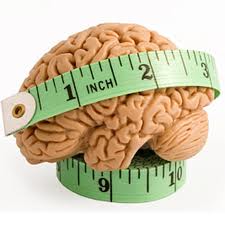
How are you feeling? If it’s not good, it might not be “you.” It might be your brain.

When you don’t feel good, look at what’s happening inside.  Think about where feelings come from.  It’s hard to use your brain to think about your brain.  (Read more at “Basic but Effective.”)  But what to do?  Doctor Dolittle‘s pushmi-pullyu’s might have been able to tell us something of our missed opportunities by not having two heads and two brains.  (Unfortunately they’re extinct!)

Feeling bad, irritable, guilty, sad, like everything is flat, nervous, emotions that are out of proportion or inappropriate to the situation or trigger?  These feelings might have nothing to do with “you” and everything to do with your brain.  At some point if you get tired of beating yourself for the holes in your purse, if you don’t understand why things feel the way they do, if you want to rest, think medical.

Fred came in with his father, hiding himself in his shirt, in his father’s shirt, like a mouse who couldn’t find his hole.  The teacher from his special education class came in to help give history and told me about everyone’s efforts to bring him out.  Skinny, Fred preferred not to eat in front of people.  He started shaking in strange situations and climaxed into a tantrum if pushed to transition too quickly.  He was vulnerable to physical contact and avoided anyone touching him.  When he was really upset, he banged his head so hard that he had to wear a helmet.  When I asked his parents if they thought he was anxious, they said no.  No he wasn’t nervous his teacher said.  Hmm.

I told Fred’s parents.  I restated to Fred’s teacher.  I just said back to them the story they had just told me.  I told them about Fred and asked them what they thought.  After hearing Fred’s story again, did they think Fred might be behaving this way because he was suffering on the inside?  

We can’t give what we don’t have.  Asking Fred to come out and play so to speak, wasn’t something he had to give yet.

After treatment takes effect, then Fred will be able to pull his head out of his shirt and he will do it without being asked to.  It doesn’t do any good for Fred or anyone else to push him to do behavioral changes if he simply can’t.  Fred is not a pushmi-pullyu.  He has no spare brain to offer when the other is ill.

I told Fred’s father that I thought Fred was suffering inside.  Something in his father clicked.  He teared up and nodded and said “Yes!  He is suffering.”  That meant a lot to Dad.  To know that much about his son.  To know that what had confounded him for so long came from somewhere.  It had a name.  This thing might be treated.  Fred might suffer less.

Self-Care Tip #76 – If you don’t feel good, think about your brain.  Be a friend to yourself.

Question: Do you every feel like you expect yourself to give what you don’t have?  Please tell me your story.

The Price of Manure

In yesterday’s post I asked “What has happened in the space between you and the ones you love?”  A reader responded,

Think of being loved but not being able to be touched. …Rituals above spontaneity. Of having Lysol applied to everything you touch. Lysol applied to children’s legs and shoes. Not being able to hug your kids after work until after a bath and your inside-clothes on. The tirades. Most things literal and not humorous. Any cabinet or freezer needing to be as stuffed as possible.
As a young person it seemed very personal and hurtful. …All the lost years….  After all those years now on the mend.

It doesn’t matter how old we are, it takes courage to live.  There are many astounding parts of this story, but today I draw attention to “the lost years.”

I don’t know if any of you readers saw the episode last week from the musical comedy, Glee.  It irreverently tossed together a potato salad of high impact emotions.  (Delicious potato salad!)  The best part was as usual the great Jane Lynch.  That woman is brilliant.  She shows us anger, resentment, and personalization through spitting words.  She contrasts this against her thick velvet love for her older disabled sister. Sue Sylvester (Lynch’s on-screen character) has festered the insults she absorbed on her sister’s behalf, ever since she first realized her sister was different.  It was only until her sister, with a still-waters affect told Sue that she didn’t care what others said about her.  Her disabled sister was whole inside.  Sue started to heal too.

Being present with our dark history, can summarily be our gain.  Especially if in the end we found love, became connected with our journey and with others, and forgave.  It becomes rather an education of sorts.

When I was struggling with my ambivalence about vocational choices, my dad told me, “Education is never a loss.”  I plunged forward with that as a talisman.  

Education is never a loss.  Even our school of suffering?  Look at it as a currency of sorts.  It’s all perspective.  Even manure helps you know.  We had to pay $100 the other day for a truckload of chicken-poo for our farm trees.

Self Care Tip #73 – Find the value in your suffering.  Be a friend to yourself.

Question:  Do you agree or not?  Please tell me your story.

Fewer Choices

We have infinite choices in life but they aren’t necessarily the same choices. I don’t know at what age that starts making sense. It reminds me when J.K. Rowling‘s 9y/o Luna Lovegood witnessed her mother killed, which enabled her to see Thestrals. In story form, saying suffering brings sight. Choices can bring us suffering, which in turn might bring us sight. It’s true that we always have a choice but it’s not true that we can choose the same choice again. Nor is it true that we will have the same quantity of choices.

My sister-in-law Joana Johnson, neuroscientist, says we recruit more areas of our brain as we age but use less brain matter to problem solve and think creatively. We can generally multitask better than we could when we were younger although our short-term memory is less available. It is a biological example of renewed options all the while earlier options are no longer available.

As we mature, the beauty is that we have a greater capacity to work with our options. It is obviously not that we have a greater number of options. But isn’t that marvelous!

Scott Anthony, president of Innosight writes, “You can’t do more with less unless you understand what more means.” Hopefully there comes a time when each of us will look into our choices daily for all they can become. Think plate of chocolate lava cake in front of you. Will we get the gift of sight? Anyone can.

Self Care Tip #25 – Get the gift of site. Be a friend to yourself.

Sunshine

My daughter came out of her room. “I can’t sleep Mommy. I feel lonely.” Part of me wanted to run the shadows down, throttle them and take revenge. Another part of me, stopped at what I saw in her eyes. It was as if she was saying, “Am I ok?” And I felt happy with the question. I knew there was my sunshine.

Am I ok? Am I the only one who feels this way?

My husband and I went to hear Rob Bell talk about suffering. He had us all write down on cards “I am not alone.” Then he asked us questions about suffering. “If you have loved someone who has died, please stand.” “If you or someone you know has had cancer, please stand.” “Who here is struggling with their finances?” “If you…,” and the questions went on. Pretty soon, there wasn’t anyone in the many hundreds of people attendance not standing. We looked at each other, exposed and awkward. Our crusty’s and defenses barely in place. Then Rob Bell asked us to give our card to someone we didn’t know. He did this over and over until we realized materially, that none of us were alone. I don’t know who’s writing is on my card but it reminds me that someone(s) out there share my suffering and I theirs.

For now, my daughter is small. For now, I hold her card. I knew what to say, and it felt like sunshine.

You are not alone. Many people feel that way all the time and feeling that way is normal. But you can’t trust your feelings. When you feel lonely, remember what you know to be true. You are not alone.

My daughter, looked at me and I saw that I got it right for once! We connected through something like a sliver of magic. I was so glad. She nodded, hugged and kissed and went to bed. It was dark outside but there was light in my heart.

Self Care Tip #19 – Share your card and take one – You are not alone! Be a friend to yourself.

The Paradox

On my mind today are the unfortunate kids I have seen in clinic. One in particular whom I have treated for several years. I now realize the horror of his situation. I’m angry at myself because I have treated him for this long and didn’t realize till last week in clinic that he was being trafficked. I now understand that other kids I work with are also. He’s suffering emotional neglect in his home. It looks like his family despises him. Last week I told his Mom that I wouldn’t see them again in clinic if she didn’t go to parenting classes. I’ve also been recommending regularly that he go to a group home until things get better. I finally heard the reason that for years, she has refused. She said, “If he goes to a group home, we’re going to be homeless.” Ouch. She and hers are living on the government support they get for “taking care” of him.

Upset, I told my husband about this form of child trafficking and he said he’s seen something similar in his profession. Whole families become homeless once their mother (government supported), dies. They don’t want her to die. It’s not the same though similar. It would be more similar if they were neglecting or abusing their mother while “taking care” of her through the dying process. That probably happens too in other families.

To make matters more complicated, I found out from my nurse, that now the government requires the families to pay part of the group home placement to offset the costs. And if CPS is called, they just ignore it. She cited one case when CPS was called 13 times, each time stating that there was insufficient evidence. Apparently the funding to CPS has also been cut down significantly.

Today in my son’s church school after collecting offering, the teacher prayed, “May this money go to help all the children who need You around the world.” I found my prayers were for these people. A handful of coins and dollars to help. And prayer.

My husband‘s friend, Emilio Russ, quit his work a couple of years ago and went to the Philippines to fight child trafficking. He started a home and school for those prostituted and enslaved kids – “My Refuge House.” When he came back with his pregnant wife and 3 kids, he didn’t have a job. But they were uncomplaining and loud mouthed with praise and hope. Many months later, my husband’s friend has a job and those kids in the Philippines still have their home and school. Wow!

Madeline L’Engle, says that we’ve forgotten how to walk on water. I’ve seen skeeters do it and I don’t think it’s that many steps away from me being able to do it. But I’ve forgotten how somehow.

“Madeleine L’Engle understands that real art is only created when the artist gets out of the way and allows himself to be worked through, which, paradoxically, requires work on the artist’s part.”

AIDAN GRANO

These states of horrible suffering call for something amazing to happen. All great work, even on our own selves allows for what I call magic. Magic of letting go, but at the same time giving all your passion and muscle. I am angry at myself for not seeing what is around me. I think in this case, that is the beginning or maybe the continuation of something magical in me. I plan on getting my water feet yet.

Self Care Tip #15 – Embrace the paradox. Be a friend to yourself.