A Little Bit is Not Enough – Claim Full Health

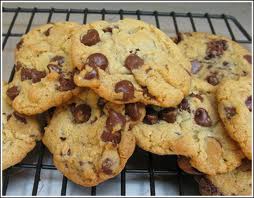
The good news is, I just ate 3 chocolate chip cookies.  You already know the bad news.  Has nothing to do with my post.  I’m just sharing it for the sake of your own

Schadenfreude 🙂

…Onward.  Question:

Does emotional disease get worse even while on medication therapy?  Sometimes.  It does so more often when the disease process is treated but only partially treated.  Read a little more about this in this post if your interested.  A primary care physician recently told me, “I think the term ‘Partial Responder’ is a marketing gimmick to get physicians to prescribe more medications.  I don’t think it even exists.”

There’s a lot to be said about interview skills in sussing out the partial responder.  If I asked someone if they felt better, many things play into their response. Everyone’s responses are biased of course.  We don’t have sterile minds.  For example there’s the patient who wants to please their physician.  “Yes I’m better!”  i.e. “Yes you’re a good doctor!”  There are the patients who don’t want to be patients and minimize whatever they’re going through.  There is the physician who leads the interview.  “So, you’re feeling better?”  “The medication is helping?”

Partial response means that at the end of a full treatment initiation period, there is some disease remaining but a reduction of disease.  For example, in depression, I may no longer be suicidal, but I still have trouble feeling pleasure in life.  In cancer it means that there is tumor reduction of at least 30%.

Now why would a physician presumably agree that there is a partial response in cancer, but not agree that it happens in mental health?  Anyways….  (Ahem.)  When we partly respond to mental health treatment and don’t push further for full response, about 70% will relapse.  Versus maybe 25% in those who reached their pre-disease baseline emotional health through treatment.

Don’t get lost in this.  The point is, get treated and get fully treated.  Mental illness is progressive and causes changes at the cell level.  The brain is connected to the rest of our body.  The brain is human.  A bit better, is not enough.

Self Care Tip #61 – Go all the way!  Claim health.  Be a friend to yourself.

Question:  Did you find this to be true in yourself or someone you know?  Please tell me your story.

Get to Know Yourself to Be A Friend to Yourself.

On the Threshold of Eternity

Image via Wikipedia

Let us put our efforts toward becoming who we can become, who we were wired to be, who we want to be, what gives us pleasure.

We can get beaten up by wanting.  Wanting to be someone who gets energy from being with people rather than from being alone.  Wanting to be someone who is a finisher rather than grazer.  Wanting to blend and lead and be chosen.

Some of this filters out as we age.  Aging fills our lives up with so many responsibilities that wanting to be anything more than someone who gets solid sleep hasn’t crossed our minds in a very long time.  Children get more of it right than us in this regard.  They have space to want more openly.  Our wanting muffles and cramps when we turn away from who we were genetically designed to be.

My patient came in depressed again.  Depression was familiar for him.  A psychiatrist works with a specific area of medicine.  So I get to see people after multiple medication trials before their primary physician refers them to me.  Well this patient hadn’t found lasting help from medications. He came to me with doubt.  I wish I could say we worked it out.  I can say that we are still trying.

What we are working on influences the way his genes express themselves.  We can’t change the genes but we can affect some of how and when they are activated.   We can do this by choices, such as medication therapy, sleep hygiene and exercise.  Choices are more effective when we know what and who we were wired to be.  What are our natural talents?  What are we interested in?  Feeling inner congruence when we are doing something points the way for this.

In Outliers, author Malcolm Gladwell says

“the biggest misconception about success is that we do it solely on our smarts, ambition, hustle and hard work.”

I don’t know if Mr. Gladwell recognized how closely his thoughts harmonized with Carl Jung‘s regarding temperaments.  Doing what is natural for us recruits our best through the path of least resistance – our interest, our attention, our creativity.  Rather than forced effort, drudgery and dragging feet, time looses some heaviness as we get caught up in inner and outer congruence.

Intuitively, we all surmise that when this happens, we have less stress inside and outside of us.  Ah.  What a relief.  This is what my patient is working on and when he is able to say he is doing what he wants to in life, he is less hopeless and panicked.

Self Care Tip #40 – Get to know yourself to be a friend to yourself.

Question:  What do you think?  Have you been using these tools?  Have they made a difference for you?

Own It. Our Life’s Work.

We can control what others do about as much as we can control the Democratic government.

My patient asked me if her medications were changing who she was.  After asking her more about where that came from, she disclosed that her husband was blaming her medications for the emotional distance between.  He was not blaming his daily alcohol intake nor that he see’s her as “The Patient” and not himself.  This is after she has spent years investing in herself through medications, some counseling, and regular exercise.  This woman had courage.  Yet she still bought into what her husband was telling her.

We personalize things that have very little to do with us.  Sometimes we know we’re doing it, but more often we don’t.  In this woman’s case, I had to think, how much of this was about her versus the accuser, i.e. husband.  We came to understand together that either way, true or not, the only person in her relationship she could better, is that same person she’s been attending to so well for so long.  In the end we were talking about going to CoDA, Al-Anon, or local support groups through NAMI.  She focussed on herself, excited about her opportunities to grow some more.  She wasn’t thinking so much about her husband getting passed up by his own opportunities.  Nor about the accusations.

Talking to a friend who recently shed 15 unwanted pounds, we did a celebration whoop!  She wasn’t perseverating on her husband who was smoking again. She was hurt by it, but used the energy in that emotion to motivate change in her own life.  Who knows.  Maybe her husband will grow from wanting what he see’s in her.  Courage, self-respect, inner congruence, hope, and so many more great things that come when you fight hard for your precious self.

Not taking things personally though can be much easier said than done.  If you try over and over but see that it continues to get the best of you, consider getting an opinion from someone you trust.  Get a “third-party” opinion to bounce your perspectives from.  Maybe this is something biological and medical as well. Personalization is a familiar problem in medical illnesses such as Affective Spectrum Disorders or Anxiety Spectrum Disorders.

Self Care Tip #35 – Own it.  Be a friend to yourself.

Question:  What do you think?  Please tell me your story.

An Honorable Goal

“I feel things I had no capacity to feel before!  I can’t believe how much better life is for me.”  She was 2 months into medication therapy and she felt like she was back to whom she wanted to be.  Who she thought she really was.

Before medications, she was “making it.”  Although she was irritable, easily activated by simple triggers, edgy, she was mostly not acting on it. Making it to the end of the day every day was a victory.  Now she realized that if someone told her the difference before treatment began, she would have never believed them.  She hadn’t perceived how rough things were for her.  Now that she knew, she felt joy and sadness.


Getting well is never all good.  There is the daily reminder that you need help.  Every time you take a pill, you have to argue down all the reasons not to.  Sometimes that argument doesn’t last long.  Sometimes you spend more time than any one looking at you would guess.

The justifications for medication don’t only come from ourselves.  We have others “in the know” saying how much better we are.  Or what ever their opinion is.

Some of us are entirely on our own.  Hiding our pills so we don’t have to hear it.  When something goes wrong, the pills are to blame.  It reminds me of menarche and listening to the boys saying empathic things like, “She must be on the rag!” Things said about us when we behave or feel in a way others don’t think we should, can be just as humiliating.

Is there anything that draws more public opinion than behavior?  Being your own advocate may be easier said than done.  However, difficult as it is, it has to be done.  It starts with “me.”  If I don’t fight for my own self, choose for my own self, …well, it results in so many things.

What is surprising is how things look so different once we do take action.  Sticks and stones make more sense.  We have the confidence that inevitably comes when we gave our best towards an honorable worthy goal – a healthy self.

Self Care Tip #33 – Accept help.  Be a friend to yourself.

Question: What do you think?  Agree or disagree?

Courage to take medication

So when is a psychiatrist going to get around to talking about medications already? Nobody really wants to take medications. But it turns out in this world that our brains are just as human as the rest of our bodies. When they get sick, what does it look like? Behaviors and emotions. Our brains are not hovering over us like a supernatural aura. When our brains get sick, our behaviors are in the fist of control about as much as our liver function is.

The people I see in clinic are some of the most courageous people I know. We find each other at an amazing time when they are aware of their plight, that of being disconnected from their journey. They are humble people, willing to consider that behavior is more than something the “will” or “force of character” can control. They use as many healthy means they can to get healthy. They believe that you can’t give what you don’t have, even to yourself.

Counterintuitive to culture and prejudice, taking medication is an act of courage.

Self Care Tip #11 – When your emotions and behaviors are messing you up, think of the many modalities to getting healthy, including meds. Be a friend to yourself.