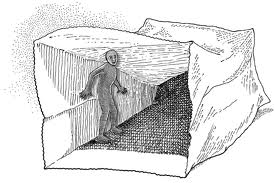
Having Mental Health Means Sleuthing Magical Perceptions Sometimes

Black Magic (comics)

Image via Wikipedia

Self-Care Tip #134 – Looking past the dark magic in your life might require medication.  Be a friend to yourself.

Much of what psychiatrists do at work is help with misperceptions.  Seeing something one way does not make it true.

In Scientific America, there was a great article, “Magic and the Brain: How Magicians ‘Trick’ the Mind,” By Susana Martinez-Conde and Stephen L. Macknik | November 24, 2008 | 17.  It tells us that we misperceive things so easily, that people use that quality to entertain others.  Magicians use it to entertain and exploit the limits of cognition and attention.

Magicians aren’t the only ones to exploit that.  We do.  We exploit ourselves.  Tsk.  Not too friendly and not generally as entertaining.

How is having our misperceptions a form self-exploitation, you say?  Because we nurse them and drive our own selves into the ground with them.  No one else is doing it when down to the last trick.

It comes to me that when we feel disconnected from others, we are mistaken.  Some magic turned us awry and we don’t see the gazillioin links touching us all around.  When we feel worthless, when we think we are despised, when we feel singled out for suffering, that be black magic my friends.  When we think our lives our so hopeless that we would be better off ending them, look for the mirrors.  Look for the rabbits and top hats.  We aren’t seeing things right.

When I move the curtains across my clinic day, I often find medical diagnosis hiding behind.  Some sort of biology giving us the slip.

My dad often told me, “Things are never as bad as they seem.”  I realize he was talking about this kind of magic.

Question:  How have you gotten past self-harmful misperceptions?  How have you seen another do it?  Please tell me your story.

The Healing Process Can Be Confusing.

Self-Care Tip #127 – Because feelings can be confusing during self-care, keep connected to someone(s) objective.

A colleague told me the other day about his patient.  Of course he didn’t name him, but I’ll call him Brent.  Struggling with melancholic depression for many years, Brent started medication therapy.  He began feeling better emotionally.  But at the same time, he started to believe that he didn’t love his wife any more and started a dialogue with her about possible divorce.

It’s tempting to judge Brent.  Easy to say, “What the…!?”  Still, because we don’t know the full story, nor his thoughts, nor consider ourselves his Judge, we won’t.

Self-care can be a tricky road.  It’s not all ah-ha moments and nirvana.  Have you been there?  Confused by your feelings as you heal?

A common reaction to improving is associating the things in our “ill” life – when we were feeling terrible – with other elements that may not have had anything to do with our bad feelings.  Perhaps Brent’s wife was guilty by association and at some level he may have connected her to the dark emotions he so desperately never wants to feel again.  Bits of this idea are also in a previous post about panic disorder and grief.  For example, someone may change her profession because she believes her previous work is causally linked to the way she felt when ill.  Maybe Brent wanted a change in spouses for the same reason.

When we are going through the healing that self-care brings, we might not find our new emotional baseline for a while.  During that time, and because feelings are often not trustworthy, stay connected to the support network, confidants, the trusted few who can be our third-party advisors.

Although taking action on for our own health involves lifestyle changes, knowing when and how to get feedback is key.

Question:  What has confused you about your healing and self-care journey?  Please tell me your story.

Go Toward The Pain To Get Connected

dailymail.co.uk

Audrey came in looking fresh.  Better than before for sure.  She had an aura that brought to mind the moment just when tearing off wrapping paper.  It was nice to see her.

I am doing better.  I’m able to let more of the little things go, like the house doesn’t bother me as much when it’s not clean.

She was more able to do self-care with less forethought.  What did take her by surprise though, was her guilt.  She could see that it was inappropriate but insight didn’t entirely remove what shouldn’t be there.  She said these thoughts and feelings were something her husband likely never struggled with.  She didn’t think he was worried about her home doing dishes when he was at work.  However, the reverse for her was true.  She gave a coughing laugh.

I do!  I feel bad when he does the things.  It doesn’t make sense.  If he wasn’t washing dishes when I was working he’d just be watching TV.  But I still feel bad.

For her, working her job, taking her jogs, and attending Mommy groups were all in a grey category of “extras” for life.  Not necessary but bonuses she was spending their retirement on.  However, despite this, she looked the champion she was when saying,

I still am able to take care of myself.  Even though those thoughts come.

Audrey, by thinking about, talking about, and materially man-handling these thoughts, she was able to join her personal journey.  These things became connecting forces in her life.  They drew her closer to her family and not away.  Resentment dissipated and she was able to take part in her available positive emotions and thoughts.

It could have been different.  It had been different at other times, before medications and other positive deliberate choices in her life.  But it wasn’t now.  The could-have-beens trickled away together, the other near misses that sometimes we know about and sometimes we don’t.  There they go…

Going toward the pain in life, not averting from it, is a connecting force in our lives.

Question:  What have you been avoiding?  What has it done for you when you went toward the pain?  Please tell me your story.

Self-Care Tip #124 – Go toward the pain to feel connected.  Be a friend to yourself.

Put The Struggle Down and Take 3 Steps Back

I almost gave up on tonight’s post.  But after taking a Glee break watching Kurt get bullied, get defended, then get out of his school, I felt more refreshed.  Go figure.  What I have to tell you about self-care tonight is to go back to the basics.

When you become inundated with all the good things out there to do, go back to the basics and let it rest.  Get your sleep.  Take your omega 3’s and vitamin D.  Take your medications regularly and step back from the struggle not to.  In fact, if possible, put all struggles down and take 3 steps back.  There is time enough to pick them back up when ever.  Go to sleep and sleep well.  If you don’t think you will, take something to help.  Something safe that will protect your deep sleep.  Then, get up, worship God, exercise and see what’s next.

Any time you want, any time you need, any time, you can go back to the basics any time.  These are mine.

Good night folks.

Self-Care Tip #120 – Get basic with yourself.

Question:  What are your basics?  Please tell me your story.

You Are Enough.

Self-Care Tip #119 – Remember that you are enough.  Be a friend to yourself.

Forrest Gump (after watching his girl Jenny throw rocks at her childhood home of abuse,)

Sometimes, I guess there just aren’t enough rocks.

That movie grabbed almost everyone’s heart-strings.  And when I saw my patient Sarah, I kept thinking about Jenny throwing rocks.

Sarah started crying.  I’d never seen her do that in the 8 years we’d worked together.  She was one who talked in spurts.  Sometimes saying nothing for many visits, and then she’d start questioning me about foods, diet questions, or parenting.  Then quiet some more.  Today out of the blue came her tears and words.

When she started on her disclosure, I tensed up thinking, “What am I supposed to say?  She’s never done this before!”  I realized that being a psychiatrist, I should know the answer to that question and got even more insecure because nothing came to mind.

Her lovely face crumpled over the story of her “stupid” father.  He never let her go to school.  He was violent.  Sarah is now teaching herself how to read; and more tears, her lovely face trembling.  She is a mother and there are no books in her home for her children because she is ashamed of herself.  “My dad is an idiot man.”

Post traumatic stress disorder (PTSD) can last a lifetime.  The horrors that are relived by the survivor can be unspeakable for them.  We never know what people are going through really inside.  They could be a survivor like Sarah or Jenny.

So far, I hadn’t said other than a few “psychiatry-sounds” like “hmm,” and “Oh.”  Don’t be too impressed but I remembered someone somewhere wiser than me put it this way,

Sometimes it’s better not to say anything.

And I really didn’t.  She did.  And she did it wonderfully.  We ended up talking about authors she hoped to read eventually.  She’d heard of Isabelle Allende and wanted to get to her books some day.  We hadn’t even started talking about medications yet.  Sarah left after saying that when she stopped learning and growing, she would be dead.

What hit me was that Sarah wasn’t looking for more than me.  I searched, wanting to give her more and came up with what I hoped was an appropriate facial expression.  In a way, by not speaking much, I was able to receive and be blessed by her story.  I might have missed that.

My mentor, author of blog CreatingBrains.com, encouraged me when I was unsure about teaching others.  She said, “Look at your life and who you are.  You would be surprised.”

When we are insecure about something, it helps to remember that we are enough for the task at hand.  As individuals.  We have in us all the days that came before, the experiences, the generations that handed us down, the God who made us and as per my belief, never leaves us.  We have so much.  Considering all this, be still and know.

Question:  When have you been amazed at all that was inside you?  Please tell me your story.

The Great Lie.

One of the great lies of mental illness is that, “If things weren’t so stressful, I wouldn’t feel so bad.”  Look inside ourselves now and see them.  All the numbered and ranked stressors we tick off to explain how we feel and/or behave.  How about someone we love.  Do we tell them, “Of course you feel that way!  Look at all you’re going through!”

Because major depressive disorder (MDD) is mainstream enough, I’ll use it as an example.  Who, when they are down, doesn’t look for reasons why?  Say there is an additive effect of stressors such as home conflicts, financial duress, and poor sleep.  Since these events, you haven’t felt pleasure, you’ve felt sad and depressed.  You aren’t motivated or interested in your usual.  And where you normally would seek people out when you felt down, to get more energy, now you just want to be alone.  And so on.  You are able to say that you started feeling this way progressively since triggered with those stressors about 3 months-ago.  Before that you were “fine.”

Many people in your life, have told you that you are just going through a bad spell.  You have believed them but say, “Even if this is a bad spell, if it goes on much longer I think I’d rather die.”  Your best friend responds, “Anyone would be depressed if their boss was that evil!”

My answer, “No.”  Feeling down is appropriate to stress when it doesn’t disrupt your life for more than two weeks at this level.  And it is never normal to want to die.  Everyone has stress but not everyone responds to stress in the same way.  Not everyone if put under your same triggers would develop MDD.

Would you have developed this disease if you weren’t put under these stressors?  I can’t say.  We develop illnesses for many reasons.  One of the many reasons is external stress.  A hypothesis supporting this is that stressors trigger our genes for MDD much like we know cancer genes can be turned on by stress.  However, we do not have a direct correlation to the stressors as being entirely causal events.

Even if it were, none-the-less, we are left with the disease process in progress.  It is not an adjustment reaction to stress.  It is medical illness.

Feeling this way is not normal for what you are going through.  Telling yourself that it is, that is the great lie.

Self-Care Tip #118 – Don’t believe the lie if what you’re going through is affecting your function in life.  Be a friend to yourself.

Question:  What whispering lies are you struggling against?  Please tell me your story.

Who Cares What Your Diagnosis Is?

Wheelchair basketball at the 2008 Summer Paral...

Image via Wikipedia

Self-Care Tip #115 – If it’s not serving you well, don’t waste your time on it.  Be a friend to yourself.

Trixie Hidalgo, advocate to end violence in America, tells me that many of the people engaging in gang crimes tell her that they are put in their life positions (poor, stereotyped, impoverished) by the people who have the power, to keep those people in power and to keep them down.  They have some credible arguments we’ve shared before in history relating to oppression such as race, color, gender, money, or status.  Are these people victims?  Sure, why not.  But is that the point here?

The victims reminded me of a clinic I was in the other day.  I was working with Marcus and his father.  The father was torn about where to go to get his disabled son, Marcus, treatment.  Marcus was disabled with both brain illnesses and severe psychosocial stressors.  Currently we found Marcus, 2 years into treatment with me, and as of yet, father and mother (divorced without amicable terms) had yet to engage in treatment with me.  They wanted to know why Marcus was the way he was.  Father pointed at Mother and Mother pointed at Father.  They blamed other things as well, the schools not providing the right services, the medications for not working, his genes, and more.  Meanwhile, Marcus is tearing up his classroom and his own life.  He is barely functional socially.  Moody and volatile.  Anxious with physical symptoms.  He was having multiple medical work-ups going successively for various physical complaints.

Before I let them go, I told his parents, “Who cares what his diagnoses are?  It’s not about the diagnosis.”  The purpose of a diagnosis is to serve the patient.  The patient doesn’t serve the diagnosis.  Right now, Marcus was serving the quest for his diagnoses.  If all they can see is that, and they miss the fact that their son isn’t functioning, he’s depressed and anxious and violent and no one can stand to be around him, Marcus is worsening continually while they go on debating – they’ve missed “IT.”

They’ve missed it.  And so have we when we waste time counting up the offenses we’ve directly or indirectly suffered.  We miss it when we increase our injury by holding ourselves responsible to our history.  I asked Marcus’ parents what the point of what they were doing for Marcus was.  I ask the victims of America, what the point is when they point to history to answer for their present condition.  If it’s not serving you well, if it’s not doing something good for you, than what are you doing with it?  Do good things for yourself.

For the victims, for Marcus, and for Marcus’ parents, 1st make sure we weren’t missing something medical that was keeping them from having life quality.  You can’t give what you don’t have.  Then move on to the psychosocial issues and spiritual and so on.  What ever we ran into that missed our point, we’d walk past it together and on to something that served us well.

If you’d like to read more on this topic, read more in “It’s Time to Grow Up” and “The Whole World Becomes Blind.”

Question:  How have you managed to move past things that weren’t serving you well?  Please tell me your story.

Toughing It Out! …Is Not What You Think.

Mental Health of our Military

Image by Truthout.org via Flickr

Self-Care Tip #114 – Tough it out.  Be a friend to yourself.

Trying to tough it out is good it’s just not what most people think.

Many people think that toughing it out means staying med-free and getting through melancholy, anxiety, emotional chaos with gritted teeth.  They gather a degree of commendation from weathering out the behavioral and emotional problems until they either feel better or don’t.

This is not the kind of toughing it out that I’m calling worthy of our life efforts.  It is in fact the opposite.  Toughing it out is doing what may be socially and culturally counterintuitive.  Getting medical care sooner than later.  Not waiting to see what will happen before getting medical care if it is indicated.  Believing the medical data, the physician you trust, the knowledge that mental illness is medical, biological and often PROGRESSIVE over time.

Waiting means you are getting more ill on a cell level and at higher risk for your future and waiting is not being tough.

Toughing it out is digging into your courage bank every day to take that pill when you feel ashamed of it.  Toughing it out is fighting for your brain’s future.  Toughing it out is sacrificing what ever you need to, to give your loved ones and yourself the healthiest you possible.  Even if that means talking yourself into it, going up against your fears, ignoring prejudice, ignoring opposing recommendations from your favorite sources.

picasaweb.google.com

This calls for thick skin.

Candace tells me she still intuitively can’t believe this, even though her mind tells her it is true.  She takes her medication but it still hurts a little every time.  Like she’s betraying herself.  Like she must grieve for herself.  Candace says the apparent calm, decrease in anxiety, improved relationship with her children, and the flowering hope eases her inner psychic pain.  Candace is drawing strength every day from the growing evidence of health.  Candace is tough.

Question:  What are you getting tough with in your life?  How do you do it?  Please tell me your story.

Grieve to Be Present With Yourself


Maria Yakunchikova "Fear" 1893-95

Image via Wikipedia


We grieve when we get sick.  And we grieve again when after getting well, we get sick again.  Then the grieving can be even more terrible because you know what’s coming.  In Pearla’s case, she didn’t know she was grieving but she knew she was sad and terrified at the same time.

I asked her if she thought that staying in bed, loosing interest, isolating, crying jags out of the blue might be related her grief about getting sick again.  She said no at first and then said, “I’m disappointed.  I thought this was over for me.”  All over, she couldn’t trust herself.

Pearla was afraid. And that fear was always there.  Now she couldn’t put it out of her mind.  “What if I have another panic attack?  I can’t take it!”  “What if,” was always on her mind.

Readers, a panic attack is more terrifying than just about any immediate experience.  If you’ve never had one, it is almost impossible to imagine the depth of terror it causes.  It is so horrible, that people even change professions because of it.  I remember a surgeon who actually went back to residency and studied a new specialty because he linked his panic to his profession.  That’s another 4 years of grueling work, readers.  That’s the kind of fear panic produces.

Pearla was not only in the throes of this fear, she was also in the throes of grief.  This is a deep sadness any of us who have lost a beloved hope can relate to.  Pearla didn’t know that was why she didn’t want to get out of bed.  All she knew is over the last 2 weeks she was loosing herself and in exchange, getting something she desperately did not want.

Somehow though, after hearing about her sadness from her own mouth, Pearla agreed.  She saw the grief and after seeing grief, she could be more present with it.  It was almost like her face materially came out from hiding.  Grief lost some hold on her.  She was a little less sad and a little less afraid.

Self-Care Tip #111 – Let yourself grieve.  Be a friend to yourself.

Question:  How do you grieve?  Was it worth it to you?  Please tell me your story.

Branding and Branded. Stigma Goes Both Ways.


mentalhealth.wa.gov.au


Oh, the struggle to understand that behaviors may have something to do with the brain! I shake my fist at stigma! I shake my fist at prejudice!

Now, I can go on a little calmer and say, if you are struggling with this yourself, you are not alone. Even if you are the one propagating it. You stand on the shoulders of others.

In Jesus’ own words:

Father, forgive them for they know not what they do.

He was talking to me, I know, and you.   We have all been rude and ignorant in our own time and our own place.   We find ourselves holding 2 positions, accuser and accused. The context of our various roles changes with knowledge, coping skills, experience, maturity, pain, mental capacity and so on.   But that we hold both roles in some space of time and place will never change in this world.   Even in heaven when we “see face-to-face” we won’t be completely informed.  We know we will continue learning timelessly. What will change is the abuse, the prejudice, the judgement.  Once and for all, we will finally let that go and believe at a chromosomal level that God is and deserves to be the only Judge.

There must be a genetic component to our double lives in this world. This tendency towards stigmatizing. We know there is a lot that isn’t genetic and for that we fight to grow ourselves and grow others for our own sakes and for theirs. The benefits reciprocate as much as the pain does. And even though being branded feels personal, it is not.

For more relating to this, read the blog posts Forget About Divisions In Knowledge, and Forgive to Get Friendly With Yourself.

Self-Care Tip #109 – Don’t take it too personally when people sneer. Be a friend to yourself.

Question: How do you keep yourself objective when prejudice hits you or someone you love? Please tell me your story.

When Suicide Almost Made Sense

Hello world. Please comment.

nancy says:
November 17, 2010 at 8:01 am (Edit)
I could write a book….but suffice it to say, to the day she died, my mother never even told her best friend that I had had a breakdown and was on medication, my sister said I couldn’t possibly be a Christian and be mentally ill, people at church have told me that they actually walked across pews to avoid talking with me when I was sick, and, even though I’m off all medications but Klonopin and seeing a therapist only every three or four months “just to keep in touch”, I can’t go anywhere or meet anyone new without feeling as if I’m wearing a sign saying “Mentally Ill” around my neck. My attitude about people with emotional problems? God bless them…and I pray that they have a really good connection with HIm. It (and the love of my family) is the only thing that kept me alive.

Question: aside from the obvious nausea and anger that stigma and prejudice bring on, what do you have to say? Please tell me your story.

When It Is Time To Take Medication

"Yard with Lunatics"

Image via Wikipedia

When is it time to use medications for mental illness?

It is time to consider a medical cause for your behavior and mood when:

1.  you can no longer control them

2.  they affect the various areas of your life

3.  you start having other physical symptoms not accounted for through medical exam and studies, such as:

  • sleep changes (Pearl:  Sleep is known as the vital sign in psychiatry.)
  • change in energy
  • gastrointestinal – stomach upset, nausea/vomiting/diarrhea, change in appetite
  • neurological – headache, numbness, tingling, shaking, change in response time physically or verbally

I’m sure I missed a few things, but roughly, these are guidelines that can apply to most mental illnesses on multiple spectrums, such as anxiety, mood, psychosis, addictions, and even character pathology.

According the numbers count done by NIMH:

…about one in four adults — suffer from a diagnosable mental disorder in a given year. When applied to the 2004 U.S. Census residential population estimate for ages 18 and older, this figure translates to 57.7 million people.  …mental disorders are the leading cause of disability in the U.S. and Canada.

When you next go outside and walk in a crowd, count them.  One, two, three, mental illness.  One, two, three, mental illness.  And so on….  If you suffer from mental illness, you are not alone.

If you buy any of this, if you see these things in yourself, consider seeing a physician for further evaluation and possible medical care.

Self-Care Tip #108 – Take medication if it’s medical.  Be a friend to yourself.

Question:  How has your definition of mental illness affected your ability to get treatment?  Or how has it affected your interaction with those who are in treatment?  Please tell me your story.

Related Articles from FriendtoYourself.com
  • Mental Illness Relapses When Medications Are Stopped http://bit.ly/pA4kxo
  • Number One Reason For Relapse In Mental Illness  http://bit.ly/rt1qJf
  • Are Your Meds Safe?  http://bit.ly/lh1cBh
  • Say Yes to Medication And No To Drugs  http://bit.ly/oX12i0
  • Fears of Addiction To Medications for Brain Illness http://bit.ly/oWY8i4
  • Other Fears of Medication For Brain Illness  http://bit.ly/qdHksR
  • Afraid of Meds  http://bit.ly/rjt7wY
  • Full Treatment Response Means a Better Future  http://bit.ly/ph84ZU

Your Life. Your Choice. Why Are You Still Negotiating?


Self-Care Tip #102 – Take what is yours and live.  Be a friend to yourself.

Cheri came, still dressed in work scrubs, with her 2 daughters, 8 years old and 3 years old.  Having finished their dinner date, they were swinging by for her appointment before going home.  Cheri told her kids, “Get out now and go sit in the lobby!  If you don’t listen to me I’ll….”  Turning to me, she said, “It’s never enough!  I just took them to dinner and they do this to me!  No matter what I do…!”

1.  Cheri tells me she’d like to cope better with simple stressors such as redirecting her kids

2.  We talk at length about her perception of her kids abusing her.

Cheri is married.  Her husband laughs at her for “…having to take those drugs to be normal!”  “…But he just sleeps his problems away.  He doesn’t deal with them like I do.  He has no idea!”

3.  We talk more about her perception that her husband is responsible for her place in life.

Cheri believes if she doesn’t take more than 2 pills a day, she is less “dependent” on drugs.  She says, “I don’t want to go on like this!”  Her tears continue talking when her voice stops.  She is ashamed.

4.  The concepts supporting taking care of yourself as being the kick-off point to caring for anyone else comes up.

5.  We talk some more about who is “The Why” for what we do or don’t do.

Cheri feels less shame, but it’s still there.  She is willing to give a new medication a try but clearly doesn’t buy it all yet.  She’s going home with her girls to her husband with new pills.  And hope?  Yes.  It is all connected.  It all pulses together and is a living negotiation of sorts.

Disease <–> behavioral/emotional negative symptoms <–> victim role <–> self-neglect <–> greater crisis <–> seeking help <–> responsible self-care <–>  healing <–> fewer behavioral/emotional negative symptoms <–> emotional abuse from husband may continue but is no longer seen as responsible for personal choices and self-care <–> less shame <–> further healing and so on….  (Lub-dub…Lub-dub…)


hbofamily.com


Cheri is still negotiating her deal in life.  She doesn’t realize that it’s already hers for the taking.  Her life.  Her choice.

The deal is already made.  Take it or leave it.  Your life to live.

Question:  How are your negotiations?  Do you see them as still in progress or settled.  Please tell me your story.

Getting Away From All-Or-None Thinking

IMG_1738
Image by DanaMums via Flickr

Self-Care Tip #98 – Getting out of all-or-none thinking may mean getting medical help.

Number five on Bella’s list:

“The day has been ruined!” Bella said.  Her eyes sparkled and flashed as she spoke of her injury.  Bella was not so pleased with her labor’s reward.  She was not so satisfied with being accountable for her children‘s behaviors, when they thwarted her every effort at having a good family experience.

A reader eloquently commented what I now want to write on my mirror, about her walk through and away from all-or-none thinking:

..really only part of my day was ruined – the part when I was hurt or angry or frustrated or depressed, etc. – and, even then, only PART of me was totally miserable. I was still able to think about other things, get things done around the house, talk to a family member or friend. It’s really calming to know that I can hurt and still function because there are so many pieces of me and my life that are still okay. Suddenly, everything seems to be easier to deal with.

In an earlier post, “Adequate,” we talked about the truth being in the gray.  As my Dad so often told me,

Things are never as bad as they seem.

I had a hard time believing that at times when I was a kid, and now that I’m old-er 😉 I buy it cognitively but find I often doubt is at an emotionally intuitive level.  However, things do get much much much better for all of us after good sleep, exercise, water, and if medically needed, medication.

All-or-none thinking, extreme thinking, catastrophizing isn’t just about coping skills.  It can also be about our medical condition.  It’s very difficult to modulate emotions when you are emotionally ill.  I’ve heard so many confounded people say that they just couldn’t stop themselves from going into extreme emotions.  They struggled with reactions way past what the experience warranted.

A kid doesn’t listen to words and Dad is kicking a hole in the door.

A couple argues over levels of intimacy and the girl finds herself in the bathroom with a cutting tool.

Work is another day of punitive treatment by an employer with lesser intelligence and she’s vomiting up food.

In these examples, we reflexively coddle the person, saying, “Anyone would be upset if….”  However that is not true entirely.  Enabling someone’s illness is easy to do.  Bad things happen to everyone.  But not everyone responds in a way that is repeatedly unhealthy to themselves.

In order to treat ourselves well, we need to take care of our physical/biological/medical needs.  Say hypothetically that we are getting our sleep, and all that good stuff, yet still have involuntary inappropriate extreme emotions, think about an organic reason.  Give yourself a break.

I have told my Dad, “True, things are never as bad as they seem, but only as long as you get out of their current seeming-reality.”  Getting out of that reality, may mean getting medical help.

Be a friend to yourself.

Question:  How do you stay “adequate?”  Please tell me your story.

Recipe for Treating Panic Disorder, According to Me


shoponline2011.com


Recipe for Treating Panic Disorder, According to Me:

1.  If it’s taking you to the emergency room feeling like you’re going to die, or your spouse can’t peel you off with your phone calls and new needs – you have a medical illness.  Get medication.

2.  If you are afraid of being humiliated by an episode so much that you avoid public places, or if you are more fearful than not – you have a medical illness.  Get medical treatment.

3.  If you are panicking out of the blue, without something setting you off/triggers like finding your husband in bed with your dentist – this is biological.  Get a medical physician’s opinion.

4.  If you are awakening from sleep in a panic attack, when you feel like you have to get out of bed and escape and the episode lasts for about 10+ minutes before you recover yourself – this is not because you’re not trying hard enough.  Get on a serotonerigic therapy and a sleep aid(s).

5.  If you are drinking more alcohol to relax and out of fear of going to bed – get suspicious and get smart.  Medication therapy or alcohol?  It stumps me when someone says they don’t feel comfortable with taking medication that has beed studied in double-blind studies on thousands of people and reviewed and analyzed and more… but they do feel comfortable with alcohol.  That’s not friendly with yourself.

6.  If you think you are going crazy and realize your fears and suspicions don’t make sense; if you think you are possibly going psychotic over and over – you’re having a medical illness of the brain and body called panic disorder.  Get to your nearest treating physician and trust them.


juno.cumc.columbia.edu


7.  If this is you, don’t go get insight or supportive psychotherapy at least until you have been on medication therapy for 6-8 weeks.  What you are going through is not because your mom yells at you too much.  It doesn’t have to have a reason.  It is medical.  Treat it medically.  If you go to therapy too soon, you will see that you can’t give what you don’t have.  (I may have offended some people saying this.  Sorry.)

8.  If you don’t get treatment, expect that depression may likely follow soon.  Anxiety and depression are bedfellows and can’t be apart for long.

    Self-Care Tip #92 – View Panic as a medical illness.  It is.  Be a friend to yourself.

    Question:  Have you or someone you known used a similar recipe or a different one?  Please tell me your story.

    Get Gangster on Your Shame


    Photo by Wesker


    Shame.  Ah what a cloaked villain!  In this post I’m going to tell you about why shame is not an enemy you want to ignore.

    “Michael Corleone” in The Godfather Part II was not the 1st to say it, but maybe was the first to make the quote famous

    Keep your friends close and your enemies closer.

    Not many people would at first think that keeping shame close might be a good thing, but I’m here to tell you that it is.

    Meet Bill the highway patrol.  He’s been seeing me for melancholic depression.  Sometimes he feels a little better, but those times even still are not so great.  Bill has told me about where he thought his anxiety and fear came from.  His story made sense to him.  This wouldn’t be too much of a problem except that he thought about it often.  Very often.  He was running in sprints away from it.  Somehow after all the time he’d spent reluctantly in the presence of his fears, he hadn’t realized that shame was connected.  Shame of being treated the way he had been.  Shame of being misused.  He hadn’t faced his fears because he was always angled away from his thoughts of shame.

    If we don’t go where the shame is, we won’t be free from its effect on us.  Fear is a big bad bully.  Until you turn around and say stop, you’ll be running for a long time.


    We all need to be a bit “gangsta” at times.  Ignoring shame is not.  It’s not emotion-street smart.  I’m waiting for Bill to think, “What’s the worst thing that could happen?”  And sit in the feelings that come with those thoughts long enough to realize that he’s still ok.

    In obsessive compulsive disorder, there is a psychotherapy treatment called “exposure and response prevention.”  In this treatment, the person with the ego-dystonic fear exposes themselves to their fear for a progressive amount of time.  They realize that after going where the fear is over and over and materially seeing that nothing bad happens, the fear looses more and more control over them.

    This is effective in any anxiety condition, including shame.

    Self-Care Tip #83 – Get gangster on your shame.  Be a friend to yourself.

    Question:  Has shame bullied you?  Please tell me your story.

    Connect With Others to Get Friendly With Yourself

    Self-Care Tip #81 – Connect with others.  Be a friend to yourself.

    So you have bought into the famous, “You are not alone” stock.  After 2 months on psychotropics (medications for emotional illness,) you finally have an interest in people.  You are at least a little motivated and less afraid of things that move.  You don’t feel like you are the reason for original sin and more often than not, you think happiness might be more than what shopping can offer.  What is this strange and unfamiliar sensation?  And what to do with it?

    It is time to connect.  Many of us get to the point where we no longer want to hide, we don’t hate ourselves, and we don’t hate others.  We get to the place of showing our under-belly just a little to the big wide world and are shocked that the only thing we feel is the wind as everyone is rushing by!  Just when we start wanting what we spent so much time hiding from, we seem to have forgotten how to connect with others.

    It is no secret.  America is culturally impoverished.  We have little of cobblestone streets to meander down, dressed in clean clothes after a days work, checking up on neighbors and gossip.  We have few degrees of activity between full throttle and dead/no heart beat.   Come now!  How to connect in a world where our parents expected us to pay rent when we turned 18years old?

    If you find yourself in something of this situation try on one of these basic tools and see what fits.  You can’t expect them all to.  So if you strike out a few times, keep on!

    1.  Volunteer – for example, and in no particular order…

    2.  Meetup.com – an awesome site to find people interested in what you are interested in.  e.g. book clubs, skiing, small business, Italian

    3.  Support groups

    4.  Write!  Although this at first thought may appear isolating, it is not necessarily.

    • Blog!  🙂
    • Journal

    5.  Toastmasters

    There is so much more.  Please let me know your thoughts and I’ll keep adding to this list!

    Self-Care Tip #81 – Connect with others.  Be a friend to yourself.

    Be Empathic to Others to Get Friendly With Yourself


    Drawn by early 20th-century commercial cat ill...

    Image via Wikipedia


    Self-Care tip #79 – Be empathic to others.  Be a friend to yourself.

    Yesterday I wrote about considering intent and context when comparing self-care with selfishness.  That carries over to the people sharing life with those of us who have mental illness.  Do they see us as selfish?  For example, how is the spouse of the Panic Disorder going to make sense of the 40 phone-calls he gets while at work?

    Mary’s husband told me that she’s been calling him “all day,” terrified she was going to die.  Checking to see when he was coming home.  She couldn’t go to the market because people would laugh at her.  Afraid.  Afraid.  Just plain afraid.  Really, everything had become about her.  She was like a scared kid.  Frankly it was annoying.  He was in a stressful work situation with the economy slumping.  People he knew were being laid off.  The other day he had to leave in the middle of an important job to go home and reassure her.  She was sobbing in the living room.  Sure she was going crazy.  He realized that he might have to tell his boss what was going on but what was going on?!  Who had his wife turned into.

    In yesterday’s blog, we spoke about the ability to abstract v. concrete thinking.  Being able to abstract helps with empathy – connecting emotional content between people.  To put yourself in someone else’s shoes, as if you were them.  This is a critical part of relating, i.e. being in a relationship.  Many different mind illnesses affect our ability to abstract, including panic disorder.

    In Mary’s case, she was not empathic when she was anxious.  She was thinking about herself.  Understandably, if you read the part about her believing she was going to die or go crazy.  But when you’re married to her, empathizing with her gets old.  It’s not so easy when it seeps into your work life, you haven’t had sex for months, and you have to do everything that has anything to do with going outside of the home.  Some part of you knows it’s not true, but another part of you screams, “Get over it you selfish child!”

    Is Mary selfish?  Some might be able to answer even after all the phone-calls and unrecognizable behaviors, no.  Mary is not selfish.  They can do this specifically because they can abstract.  They can empathize.  They can consider the context of Mary’s disease and the intent of her behaviors.

    Not everyone does this.  Not everyone is able to let “It” be about someone else.  Not everyone doesn’t have to have “It” be about them.

    The best thing for those in relationships with someone emotionally ill, is to view the way they are behaving as biological.  When treated medically, than Mary or whoever it is in your life can do their own self-care.  But until then, staying in their lives requires maintaining an empathic view that considers intent and context.  It also means furthermore, doing your own self-care individually.

    There are over-lapping flaps to our lives.  Scales on the back of an armadillo.  Me as encased by my body.  Me, that includes the space between me and you.  Me, that includes you, because you will always be a part of me.  Self-care really involves all that by degrees.  A chain-link.

    So the question is, can empathy be chosen?  With money in the bank and wisdom, yes.

    Self-Care tip #79 – Be empathic to others.  Be a friend to yourself.

    Question:  Does any of this ring true for you?  Please tell me your story.

    Intent and Context Matter


    A Beautiful Mind by Sylvia Nasar

    Image via Wikipedia


    Self-care is selfless, but doing things for yourself is not always self-care.

    A reader commented, “I believe that if I’m NOT taking care of myself and feeling joy, then that IS self-centered….”  Too eloquent.  Love it.

    Some of our confusion comes from the changing scenarios of self care.  The intent sometimes gets blurry.  The intent is hard to tease apart.  Sometimes what feels like taking care of ourselves is in fact, selfish.  For example, let’s say “hypothetically,” my husband, who is a palliative care specialist, chooses to work on twitter #hpm, play chess, or play guitar.  This is potentially positive and friendly to the self.  However, it depends on intent.  Sometimes we don’t know our own intent though.

    There is also the context of what is happening.  Let’s say we were all fighting, and then my husband goes off to read Oscar Wilde.   Is this self-care or a way of abandoning and taking himself out of the present?  Self-care puts us into the present.  Whereas selfishness takes us out.

    In another context, taking yourself out of the present is necessary to ultimately put yourself back in.  Doing this requires thought processes that can abstract and empathize (connect emotional content).

    I rely a lot on intent! (Ahem!)

    There is a mind disease called schizophrenia.  This disease is famous for hallucinations, hearing voices that other people don’t hear, seeing things that other people don’t see.  However the core symptom of schizophrenia is less famous.  It is the thought form, concrete and disconnected.

    Concrete thinking is named well, unlike many other medical conditions.  (Think diabetes!  Who would know what that has anything to do with!?)  But concrete thinking is plain, hard, and flat like my sidewalk.  For example, if I asked what does the parable mean, “A bird in the hand is worth more than two in the bush?”

    1. Concrete thinkers might say, “Birds make a mess so we don’t want a lot of them.”
    2. Further, if their thoughts are also not connected, they might say, “Birds migrate in the winter and the bush is wet.”
    3. Contrast this to connected thought that abstracts, being able to answer, “If I have an opportunity to take something good, it’s better to take it than gamble for what I might not be able to keep in the end.”

    Different emotional illnesses have trouble abstracting, but fewer have disconnected thoughts like schizophrenia.

    If you are in a relationship with someone who has trouble abstracting (traumatic brain injury) and/or connecting emotional content (ADHD for example,) you might misinterpret his or her behaviors as selfish.  Being able to empathize after all is part of most Disney fairy-tail romances.  What more do any of us want?  Right?

    Wrong.  The capacity to empathize doesn’t matter much if the intent is missing.

    Wrong.  The ability to abstract doesn’t connect if the intent to connect us is not there.  The knowledge does not matter.  It is the context.

    In the film, A Beautiful Mind, Russel Crowe plays a character that suffers from schizophrenia.  The woman who loves him, struggles to understand the way he loves her back.  His disease steals his attention.  His disease takes his time.  He seems selfish.  Their love survives when she discovers his intent in context.  He stays present in the relationship, despite all his limited capacity to relate.  Further, agreeing to the treatments of his generation, limited that they are, he is doing selfless self-care.

    At the end of the day, I’m a grateful piece of dirt who means well.  Saying that up front immediately lets you get very familiar with me.  (I could have said “grateful piece of sh–,” but that would have been selfish.  The s-bomb is just playing with the word to have fun!)  Part of why I believe in God is because I know He goes for the losers.  He goes for the piece of craps out there.  That’s what the beatitudes are about.  He pours it on. (Intent and context, baby!)  At the end of the day, we are neither angel nor beast.  We are just human to Him.

    Self-Care Tip #78 – Keep self-care selfless.  Be a friend to yourself. 😉

    Question:  What do you think?  Please tell me your thoughts.  Please tell me your story.

    Choose, Gladly, Using Resources

    Being a friend to yourself includes choosing, being glad that you can, and using resources to make your choice a good one.

    Mrs. Smith told me with a barely noticeable arch in her back that she was still planning on God healing her daughter.  I don’t know if Mrs. Smith thought about how her daughter felt about that.  Was Kristy personalizing her illness?  Did she think God rejected her?  The problem of her continued illness must show something more than a physical flaw in her perhaps.

    Will we know it when we are healed?  Until then, what to do?

    Years ago, I met Fran.  She was pulling her hair out.  Her annoyed husband disrespected her for it.  Fran kept willing herself to stop.  She said,

    I’m doing it less now I think.

    The good news for Fran is that she responded well to fluoxetine.  Her anxiety decreased and she almost stopped pulling out her hair.  She’d wear her growing bristles pressed down with bobby-pins and hide it with her long hair.  As her hair grew longer, she had fewer bobby-pins and I knew she was taking her medication.  There were other problems between Fran and her medications.  Taking medication shamed her.  And, she blamed her fluoxetine for her weight gain and rash on her face.  She felt uglier than ever in her husband’s eyes.

    I don’t pull hair any more.

    Fran stopped her fluoxetine and half her head went bald.  She did not lose weight and she still had a rash on her face.  Fran went back on her fluoxetine and she has cycled on and off of it this way over the years we’ve worked together.  Somehow despite all our time together, Fran does not believe me when I tell her that when she is better symptomatically, she is not healed.  Fran does not grasp that her behaviors come from something at a genetic level.  We can treat her, influencing the way her genes express themselves, but in her case, not cure her.

    We are a team.  She and I, and sometimes her husband, and sometimes her sister.  I give her medications when she thinks she needs it.  I don’t leave her when she doesn’t.  Either way, we keep trying.  It is very hard for Fran to know that she has not been healed.

    I don’t have many clear examples of treatment-to-cure in psychiatry.  The statistics vary between diseases as to their rates of recurrence.  The brain being human, we can yell at the serpent for our insanity.  However, in the end, here we are.  As Billy Joel says in his great ’70’s hit song “My Life”

    Either way it’s okay to wake up with yourself.

    The opportunity to choose our own answers, to decide what to do about it, and believing if we are sick or not sick  – is all our own.  These can be hard decisions but until we lose capacity to choose, we own them.  Decision making capacity of course is a medical decision.  But competency is a legal decision made in a court of law.  Having the right to choose is a beautiful privilege.  This does not mean to ignore counsel, evidence, data.  On the contrary.  That would not be a friendly thing to do to yourself.

    Self Care Tip # 75 – Choose well and be glad you can.  Be a friend to yourself.

    Question:  What do you think?  Agree or disagree.