Are Your Meds Safe?

A reader asked

…once one starts a medicinal path, would the symptoms become worse than they were before the meds if the meds were stopped?

There are many layers to this short question.

1.  Just the act of stopping the medication may trigger a relapse.  Cold turkey’ing is only good for stories.

Remember that relapsing in emotional illness threatens brain health.  For example, in depression, every time we relapse in the absence of the protective effects of medication (prophylaxis), we drop faster, we drop harder, and it is more difficult to treat.  It is more difficult to get a medication response.

Furthermore, some medications that once were effective in treating disease, loose effect if they are stopped and restarted.  Significant in psychiatry as we don’t have innumerable options to treatment.  In one move, a medication was eliminated from our treatment choices and we have to move on to others.  We now try a different medication with possibly more side effects than the one we discontinued.

Because of this, many people who have found effective treatment choose to stay on it as long as they can.

2.  Some medications are not treating disease process so much as they are treating the symptoms of the disease.

For example in anxiety, the class of medications called benzodiazepines (“benzos”) is often a favorite.  Common ones in this class include alprazolam, diazepam, clonazepam and lorazepam.  There are many more.

Benzos take the symptoms of anxiety away quickly.  They are famously called “tranquilizers” and hit the GABA receptor, the same receptor as targeted by

alcohol. Some people say that they are like taking alcohol in a pill.  They are not all bad or all good.  However, as pertains to my reader’s question above, the answer is yes.  The symptoms might be worse after stopping them than they were before using them.  If they have been used long enough for a tolerance to develop, and/or if they were being abused, much like alcohol might be abused, than yes.

Remember, symptoms are what we see or feel.  The disease process itself is often unseen.

Also, because this class of medications only treats the symptoms, we know that the disease process is likely still progressing.  Then when the medications are stopped, the symptoms show again.  However now that the disease is worse, so are the symptoms.  What the medications are doing in this example is called “masking the symptoms.”

3.  There’s more I could cover but that’s enough for any of us tonight I am sure!

Question:  Did any of this help?  Please tell me your story.

Self Care tip #63 – Take your treatment in comfort, but know what you are taking and why.  Be a friend to yourself.

Get Treatment to Move On – Addictions

Molested by his cousin, neglected by his parents, he watched his intoxicated father beat his mother.  Thinking she would die too many times, he ran away, returned in a police car over and over again, as if wanting to get away was a crime.  He came back and raped his neighbor, more than once.  He spent a lot of time trying to get sex even though he knew it was ruining him and others.  He lost interest in almost everything else.  He suffered uncontrollable impulses.

He was 18 years old when he left it all for the safety of prison.  During the next fifteen-some years he was diagnosed, treated, and kept.  But kept for what?  For eating.  He gained weight, until he needed 2 seats to sit in.  Eating became his preoccupation.  He didn’t have sex.  He had food.

He was released to a home for sexual offenders, put on a diet and lost weight.  He lost it big and fast and felt in control.  He started purging and not finishing his meals.  He thought about purging all the time.  He knew he shouldn’t do it.  His voice was changing, raspy and his throat hurt but he still purged.  He wasn’t having sex.  He wasn’t over-eating.  He was purging.

For whatever reason, no one had yet seen the pattern.  Mostly everyone saw sex offender.  Me included.  I was trying.  I was trying to treat him with empathy, trying to get past the bile that comes when I think of rape, trying to consider the courageous things this man was doing now in life.

In one of my favorite scenes from the film, Rachel Getting Married, Kim played by Anne Hathaway argues with her sister about her own chances to have a future:

Rachel: Kym, you took Ethan for granted. Okay? You were high for his life. You were not present. Okay? You were high.
Kym: [Whispering] Yes.
Rachel: And you drove him off a bridge… and now he’s dead….
Kym: Yes, I was. Yes, I was stoned out of my mind. Who do I have to be now? I mean, I could be Mother Teresa and it wouldn’t make a difference, what I did. Did I sacrifice every bit of… love I’m allowed for this life because I killed our little brother?

I thought of this and somehow through all that trying, I did. And because I could empathize, a space opened up for me to be more objective.  That’s when I saw it.  I saw the pattern.

Addictions migrate.  Someone who may have started out as a food addict, might turn to gambling, and then later to alcohol.  Someone with sex addiction, might turn to food and then later to purging.

It can be like that game I used to play at Chucky Cheese, trying to hammer down the little animals that pop out of holes.  We need to treat the disease of Addiction regardless of how it’s dressed, or else it will keep popping up.  And like Kym, if we do, although perhaps terribly wrong in some unchangeable ways, we will still have a future.  If you’d like to read more about this “kainos” (Greek word for the opportunity to be made new,) read the post New versus New.

Self Care Tip #62 – Get treatment to move on.  Be a friend to yourself.

Question:  What do you think?  Please tell me your story.

A Little Bit is Not Enough – Claim Full Health

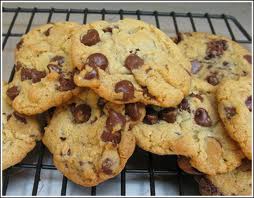
The good news is, I just ate 3 chocolate chip cookies.  You already know the bad news.  Has nothing to do with my post.  I’m just sharing it for the sake of your own

Schadenfreude 🙂

…Onward.  Question:

Does emotional disease get worse even while on medication therapy?  Sometimes.  It does so more often when the disease process is treated but only partially treated.  Read a little more about this in this post if your interested.  A primary care physician recently told me, “I think the term ‘Partial Responder’ is a marketing gimmick to get physicians to prescribe more medications.  I don’t think it even exists.”

There’s a lot to be said about interview skills in sussing out the partial responder.  If I asked someone if they felt better, many things play into their response. Everyone’s responses are biased of course.  We don’t have sterile minds.  For example there’s the patient who wants to please their physician.  “Yes I’m better!”  i.e. “Yes you’re a good doctor!”  There are the patients who don’t want to be patients and minimize whatever they’re going through.  There is the physician who leads the interview.  “So, you’re feeling better?”  “The medication is helping?”

Partial response means that at the end of a full treatment initiation period, there is some disease remaining but a reduction of disease.  For example, in depression, I may no longer be suicidal, but I still have trouble feeling pleasure in life.  In cancer it means that there is tumor reduction of at least 30%.

Now why would a physician presumably agree that there is a partial response in cancer, but not agree that it happens in mental health?  Anyways….  (Ahem.)  When we partly respond to mental health treatment and don’t push further for full response, about 70% will relapse.  Versus maybe 25% in those who reached their pre-disease baseline emotional health through treatment.
Don’t get lost in this.  The point is, get treated and get fully treated.  Mental illness is progressive and causes changes at the cell level.  The brain is connected to the rest of our body.  The brain is human.  A bit better, is not enough.

Self Care Tip #61 – Go all the way!  Claim health.  Be a friend to yourself.

Question:  Did you find this to be true in yourself or someone you know?  Please tell me your story.

Claim Your Brain

My mind, like rusted gears, was not moving well.  It hadn’t been really since my 1st pregnancy 8 years ago.  There are few things that dumb us down as much as pregnancy and children!   Hormone changes, lack of sleep, fluctuating from 145-200-145 pounds three times, and then the subsequent growing beloveds around me to contribute to mental dissociation.  Simple sensory overload from talking, yelling, crying, petitioning, inquiring kids factors in.  You may read more about sensory issues here.

Daily writing, like a staunch governess, found my brain under cobwebs, bug carcasses, and musty stench.  (Hello old friend!  There you are!)  This helps to explain the joy gripping my hand, like girlfriends on the playground, when I sit down to write!  The world is active to me, including rather than excluding me. My in-between moments used to hang like an old woman’s breasts.   Now much more time full of nourishing thoughts bless me.  I am in awe.

My patient came in sighing deeply.  He wasn’t better.  No, he said.  He lacked motivation and interest and connection from the world.  He felt selected out to suffer.  A dumping ground for misfortune and misunderstood.  Efforts through medication, after medication changes were like looking for love in all the wrong places.

We talked about cognitive distortions, tapping into things that used to make him happy, road-blocks in poorly designed neurological grooves – volunteering at the library or animal shelter, journaling, sharing his life story with others, exploring his spirituality.  No.  No good.  Nor could he consider psychotherapy as he’d been through too much of it already to consider it again.  And he just couldn’t get interested in groups such as through NAMI.

His brain, assaulted by stressors, disease, and disuse was growing silent.

Being a friend means yelling, fighting to reclaim your journey, finding something to connect you to your process of life.  My patient was letting squatters take his property simply by being absent.

Self Care Tip #60 – Claim your right to health.  Be a friend to yourself.

Question:  What has helped you connect with your own journey in life?  What do you think?  Please tell me your story.

Let it Make You Strong

She is young, golden, blushes easily, bright solar eyes, with graceful speech, not rushed or loud.  Like so many others, she doesn’t believe her beauty.   She came to me to get help.  Crippled by anxiety that hits out of the blue, like a hooded man grabbing her in an alley.  She feels during those times like she is dying or going crazy.  She started avoiding public places and became fearful looking over her shoulder for the next attack.  She was humiliated on all accounts by her uncontrolled emotions and thought people could see how crazy she was just by looking at her.  Branded and tortured.

When Nathaniel Hawthorne wrote The Scarlet Letter, he made plain the cultural pressure to define what is apparent, seen, and interpreted.  But more importantly he made plain the ability of an individual to define themselves on their own terms regardless.  Hester Prynne wore her letter A at first by mandate and then by choice, letting it represent who she was, where she came from, and where she was going.  She wore her letter and when people tried to change its meaning to something culturally less scarlet, “A” for “Able” she made it clear that she is the one who will decide the meaning of her life’s events.  Her and God and no one else.

When anxiety hits, we are scrambling to understand why.  We think, “What could we have done that is so terrible to have brought this kind of torture on?”  As Hester Prynne began her scarlet letter days bewildered by the force of emotion behind her angry neighbors, so victims of anxiety are bewildered by the level of shame and wild fear they presume must be linked somehow to this judgment upon them.  It becomes their life’s work to determine the meaning of a life with this.

Nathaniel Hawthorne writes,

The scarlet letter was her passport into regions where other women dared not to tread. Shame, Despair, Solitude! These had been her teachers—stern and wild ones—and they had made her strong…

Suffering is a schoolhouse for the courageous.

After some months of medication therapy this twenty-something woman said

I’m not so uptight about things.  …I didn’t know my anxiety was that bad until I got out of it.”  What amazed her even more was how better the rest of her body felt.  “Even physically I feel much better.”  No more chest tightness, body aches, and shakes.

She has the rest of her life to figure out how to say what this disease means and how it plays into the way she defines herself.  She will decide I hope.  Not her family, future husband, church, or Brook Shields.  I hope she will take what it teaches her and let it make her strong.

Self Care Tip #57 – Let it make you strong.  Be a friend to yourself.

Question:  What do you think?  Please tell me your story.

If You Are Ill

The 'Glasses Apostle' in the altarpiece of the...

Image via Wikipedia

A reader commented on yesterday’s post, “Afraid of Meds,”

My fear, I think, would be not so much the dependence—but what would happen if I did need that medicine and it suddenly became unavailable, like I couldn’t get my prescription because of a natural disaster or something like that.  …Would going off of those meds cold turkey put me at a real disadvantage?

In my late 20’s I had similar fears, only for me it was related to my eye-glasses.  Because I didn’t tolerate contact lenses, I especially had vivid fears of getting into the driver’s seat of my car without my eye-glasses anywhere to be found.  Living on loans at the time, I took out extra money and got LASIK eye surgery.  Oh the joy when I woke up one morning and could see clearly, high-definition, no glasses to grope around for, freedom!

Unfortunately in neuropsychiatry, we don’t have the privilege yet of offering many curative options like LASIK surgery for emotional illnesses.  I don’t believe it’s too far off in the future.  It wouldn’t be wild to say our children may have those options some day.  For example, embryonic stem cells may offer a cure for disorders such as depression and schizophrenia.  However, until a cure becomes as available as Prozac or even LASIK eye surgery, the reader quoted above has a reasonable fear.  Medication becoming unavailable is a disadvantage.

Now I’m not great at twisting reasoning powers, so I’ll say this as best I can.  That’s like not getting eye-glasses because we are afraid of loosing them.

So to this reader quoted above and to you I ask,

Question:  What do you think?  Treatment or no treatment?  Please tell me your story.

Self Care Tip #53 – If you are ill, get as better as you can.  Be a friend to yourself.

Related Articles From FriendtoYourself.com

  • Mental Illness Relapses When Medications Are Stopped http://bit.ly/pA4kxo
  • Number One Reason For Relapse In Mental Illness  http://bit.ly/rt1qJf
  • Are Your Meds Safe?  http://bit.ly/lh1cBh
  • Say Yes to Medication And No To Drugs  http://bit.ly/oX12i0
  • Fears of Addiction To Medications for Brain Illness http://bit.ly/oWY8i4
  • Other Fears of Medication For Brain Illness  http://bit.ly/qdHksR
  • Afraid of Meds  http://bit.ly/rjt7wY
  • Full Treatment Response Means a Better Future  http://bit.ly/ph84ZU
  • When It Is Time To Take Medication   http://bit.ly/nbIYLT

Afraid of Meds

A colleague told me,

I want to get off my sleep meds because I don’t want to be dependent on anything.

Dependence.  Lazy, pass-the-buck, unimaginative, immoral, chemical abuser.  Maybe even doctor-shopper depending on who is speaking.  When someone says it, before we talk about medication use, biology, etc… we need to know what is behind that word.  Working with the tip of an iceberg of prejudice might sink us before navigating much treatment.  Even physicians after 25+ years of education and more of medical practice, find it hard to shed these cultural prejudices about psychotropics (medications used in psychiatry).  What does the word dependence mean to you?

To psychiatrists, substance dependence means that the body has become accustomed to something.  We don’t get as much physical or emotional boost we used to using a substance, such as to nicotine, alcohol, illicit drugs, or prescription medications.  We now need more to get the same effect we would have gotten before with less amount.  It includes physical and emotional cravings – like sweating, shaking and yearning.  A lot of time is spent to do whatever it takes to get it.  Can’t cut back.  Keep doing it even though spilling into personal and professional space.  Keep using even though aware body and mind are worse for it.

Was this a description of my “dependent” colleague?

How about abuse?  Substance abuse is when we do dangerous, mean, and/or irresponsible things when using.  Was he hitting his wife when he was under the influence of a sleep medication?  Was he taking sleep medications when he was at work because he liked how they made him feel?  Driving with them?  You get it.

This guy is no dummy.  Yet he felt guilt and shame about appropriately using a medication for a medical reason.

I was seeing a woman for the first time in my clinic.

“Doctor is this medication going to make me addicted?”

We spoke about her fears.  Turns out, she thought her medication would prejudice the world against her.  Change her personality.  Make her crave it if she ever wanted to stop.  Steal from her geriatric mother and eventually, who knows?  Panhandling?  Now how am I supposed to work with that?  How she ever got the courage to come and see me in the first place with all that on her back, must be pure grit.

So here’s the dirt.  Some medications have no dependency risks.  Some medications do.  Some people abuse any medication they can get their hands on.  There are rave parties where there is a kitty – a bowl full of whatever pills anyone in attendance donates to.  They take them out randomly and swallow to get whatever surprise awaits them.  Is one class of medication more often abused than another?  Yes.

As a prescribing physician, I have sworn to not intentionally do any harm.  As a patient, you contract with me to take your medications as prescribed and safely. We’re in this together.  We will talk about any recommendations and you will hear the risks and benefits to treatment.  You will decide.  There is no conspiracy to turn Americans into bad citizens through psychotropics.

Self Care Tip #52 – Find out where your fear is coming from.  Be a friend to yourself.

Question:  What are your fears about psychotropics?  Agree or disagree with this post?

The Good and Bad of Anxiety

In response to yesterday’s blog, a reader wrote,

I often feel my flight and fight response triggered even in situations (mostly social) that should not (theoretically) even be frightening. What do you think about that?

This is like the degrees of water temperature in our shower.  Pretty much every one falls somewhere on the spectrum of this type of anxiety.  When is it ok, and when does it become not ok?  My brother, friend, mentor, Cameron Johnson MD said in so many words

Anxiety is what makes us work hard.  If we didn’t have anxiety, we’d all be slobs.  We’d stink.  We wouldn’t get our homework done.  We wouldn’t say as many nice things.

My children still see most things in all-or-none fashion.  They would say at this point of the discussion, “Anxiety is good.”

A teenager I treat began responding to her medication.  Her mom began to complain.  “She never let this happen before!”  Her room was a mess.  She was less prompt to obey and she started voicing her opposing opinions more.  In some ways, without the anxiety, it was like her mom was getting to know her for the first time.  

This was however, better than anything this girl and her mom had hoped for.  Now the girl wasn’t throwing up, having panic attacks, avoiding just about any social experience.  She was making eye contact with me and she was able to present in class.  She told me that she can’t even think about how she felt before.  It was so bad.

It is really hard for any one who has never suffered from debilitating anxiety to realize the level of suffering and terror it causes.  Someone who may look stuck up, aloof, disinterested, quiet, bored, may in fact be at hells door.

My children might now say, “Anxiety is bad.”

And so to my reader quoted above, I’d say with my children, anxiety is good and anxiety is bad.  Come and paint the stars with me for a time.  Talk and tell me your story.  We shall in degrees of mind and manners, unwind the mysteries together.

Self Care Tip #49 – If anxiety is affecting you in a negative way, consider a medical reason.  Be a friend to yourself.

Look Around At The Other Reasons – Depression

Flagellants mortifying the flesh, at the time ...

Image via Wikipedia

“I’ve done some bad things.”  Patient tells me she can’t sleep well, is nauseated, depressed mood, worried with perseverating thoughts about acts that shame her and ramifications, doesn’t feel as much pleasure in life, isolating, tearful and more.  I was alarmed!  What could she have done that deserved this kind of self-flagellation?  When she told me, I didn’t realize it.

I was still waiting for the rest of the story.  I got caught up in her own self-judgment and found myself sitting beside her “in court.”  Once I realized what I was doing, I was chagrined.  Here I was collaborating with her in her inappropriate guilt.  It took me too long to register that her reaction was not proportionate to the offense.  I told her I was sorry she was going through all this emotion.  She said, “It’s my own fault.”  Is it though?  We needed to start looking at additional reasons that might be influencing the way she felt.

Start looking at other paradigms when the emotional response is out of proportion to the event(s).

An analytical approach would look at unconscious reasons, such as other personal choices that conflict with a core beliefs.  Or perhaps, something like unresolved anger coming out in physical and emotional symptoms. Ask about our “closets,” peel away pretense and let your flawed self into the air.  Keep it real.

Another paradigm is medical.  Inappropriate guilt is a symptom of Major Depressive Disorder, a debilitating disease process of the brain that affects the whole person/body systems.  When distorting things out of proportion, personalizing too much, we must ask if there is a depression going on.  Ask yourself.  Ask others.  But don’t let it continue if at all possible.  Major Depressive Disorder is a progressive disease that does more damage to the brain the longer it goes untreated.  In other words, the brain is affected more over time, it is harder to treat and it is more dangerous to the person.  The average length of an episode is 2 years and the more times it returns, the more chance to have the disease process continue for life.  Treating sooner and for longer, decreases the chance of relapse.

Excellent for us are the many treatment options for this potentially devastating disease.  Even in the “lifer,” when staying on medications, the relapses are much easier to get through and shorter in duration.  The medication has a protective effect on the brain.  Prophylactic against further insult.

In the woman I told you about, there was another emotional spectrum disorder, anxiety.  Anxiety and depression are like brother and sister.  They often go together.  But for today, we’ll leave it on the symptom of inappropriate guilt and let it rest on the reminder that the brain is human, mortal, attached to our neck and not an aura.  When the brain gets sick, it shows how it is doing the only ways it can, often through emotions.

Self Care Tip #46 – Look at all the reasons influencing the way we feel.  Be a friend to yourself.

Question:  What do you think?  Agree or disagree?  What is your story?

Your flawed self

My niece is sitting beside me and I can barely keep my hands off of her 5 month self.  I am eating a blueberry scone slowly.  She, with her tummy-full of breast milk, is watching every bite, a faint smile on her pink face.  I’m a little afraid she’s learning to eat carbohydrates from me and I want to tell her that I can’t remember the last time I ate one of these.  I start eating faster and turn away so I don’t imprint this on her supple myelinating neurons.

We closet eat, closet smoke, closet shop, closet sex, closet what we want to protect others from but what we independently are strong enough to handle …or not.  There is a term called “self-sabotaging behavior.”  Reducing this, we find that the process of closeting is in fact the handle on the door to that mal-behavior.  Keeping it real is the same as saying get it out of the closet.

My mentor and brother, Cameron Johnson used to say, “Go where the pain or fear is and it will lose control over you.”  People who work the 12-Steps call this “Rigorous Honesty.”  It is a pealing away of all pretense with yourself.

Avoiding rigorous honesty turns into self-sabotage.  We end up cutting ourselves down at the knees.  Anxiety uses fear to make us hide.  In cases that include emotional illness, of course medication will help our work toward honesty.

It is not about whether we hide our bad sides or not – we do.  It is about trying to keep it real.  The only thing to be ashamed about, if we must, is not trying.

So to my niece, I give her my flawed self and when the time(s) come, I will accept hers as well.

Self Care Tip #45 – Show the world your flawed self.  Be a friend to yourself.

Question:  How have you experienced the freedom that comes from going toward the fear?  Please tell us your story.

Freud Did Not Know

Bad dreams.  Just woke up from one.  There’s a lot out there on dreams in mental health.  After all, they come from the brain.  When Freud was looking at things, he saw dreams as “unconscious wish fulfillments.”  However since Freud rocked our world, we’ve learned so much more about brain biology and Freud was wrong.  Oochie ouchie.  Just saying that makes me feel like his still very much alive reputation will come at me like an angry ghost and be mean!

Dreams are just that, dreams.  Sometimes they are good, but often they are scary, bad, and even terrifying.  Why?  According to Dr. Quijada ;), yours truly, they are commonly symptoms of emotional disease or side effects of medications, etc….  In anxious states, we dream.  After going through life threatening events to  ourselves or witnessing it in another, we get nightmares.  When there is a disconnection is our sleep architecture, we can get “parasomnias” such as night terrors.  Some medication such as Trazodone can cause vivid dreaming where people say they dream “in color.”  And on and on.

Freud didn’t know this, so no offense taken.  However, we do.  Enough with the hocus pocus moral dilemmas that are discussed in our own thoughts and among some ongoing therapies.  First look to biology to give us the answer. Even after having a nasty scream-your-lungs-out dream, remember that your brain is mortal, human, made up of carbon and not aura.

Sometimes even that much information can help people sleep better.

Self Care Tip # 43 – Don’t make too much out of your dreams.  Be a friend to yourself.

Question:  Do you agree or disagree?  Did this help you in any way?  Please tell me your story.

Get to Know Yourself to Be A Friend to Yourself.

On the Threshold of Eternity

Image via Wikipedia

Let us put our efforts toward becoming who we can become, who we were wired to be, who we want to be, what gives us pleasure.

We can get beaten up by wanting.  Wanting to be someone who gets energy from being with people rather than from being alone.  Wanting to be someone who is a finisher rather than grazer.  Wanting to blend and lead and be chosen.

Some of this filters out as we age.  Aging fills our lives up with so many responsibilities that wanting to be anything more than someone who gets solid sleep hasn’t crossed our minds in a very long time.  Children get more of it right than us in this regard.  They have space to want more openly.  Our wanting muffles and cramps when we turn away from who we were genetically designed to be.

My patient came in depressed again.  Depression was familiar for him.  A psychiatrist works with a specific area of medicine.  So I get to see people after multiple medication trials before their primary physician refers them to me.  Well this patient hadn’t found lasting help from medications. He came to me with doubt.  I wish I could say we worked it out.  I can say that we are still trying.

What we are working on influences the way his genes express themselves.  We can’t change the genes but we can affect some of how and when they are activated.   We can do this by choices, such as medication therapy, sleep hygiene and exercise.  Choices are more effective when we know what and who we were wired to be.  What are our natural talents?  What are we interested in?  Feeling inner congruence when we are doing something points the way for this.

In Outliers, author Malcolm Gladwell says

“the biggest misconception about success is that we do it solely on our smarts, ambition, hustle and hard work.”

I don’t know if Mr. Gladwell recognized how closely his thoughts harmonized with Carl Jung‘s regarding temperaments.  Doing what is natural for us recruits our best through the path of least resistance – our interest, our attention, our creativity.  Rather than forced effort, drudgery and dragging feet, time looses some heaviness as we get caught up in inner and outer congruence.

Intuitively, we all surmise that when this happens, we have less stress inside and outside of us.  Ah.  What a relief.  This is what my patient is working on and when he is able to say he is doing what he wants to in life, he is less hopeless and panicked.

Self Care Tip #40 – Get to know yourself to be a friend to yourself.

Question:  What do you think?  Have you been using these tools?  Have they made a difference for you?

Choose Your Prophesy

A woman today with a frank quick smile found out I wrote FriendtoYourself.com.  She swung open the door to her story.  People like her never bore me.  In brief, she was sad after many life losses.  Then when she made some changes in her life she got better.  “I didn’t know how bad I felt!”  (And who does?)  Now every day has activity she loves.  She gets tearful just telling me about all the gratitude that took her by surprise.

In psychiatry, the way she felt when she was sad is called an Adjustment Reaction.  An Adjustment Reaction doesn’t last long, it is in response to stress, and it goes away when the stressor is removed.

Stress is dangerous to us.  It can affect us for different amounts of time, like measuring cups.  During that time, it can affect us to different depths within ourselves, like a scuba diver exploring a coral reef.  If the sad time in this woman’s life went longer, and if she had gotten more sick, it might have become a Major Depressive Episode.  In that case, medication therapy would be appropriate.

Stress affects different intersecting paradigms that make us into who we are, like storm water over farmland.  It crosses over our biology, our genes, what is done to us in life, what we do to ourselves, what is put in our bodies, and how we cope.

Stress can pass over us like a Jewish holiday or it can stay, working, changing, reshaping, adding and taking away bits, always active and busy.  Ants in the walls of our house.  Most often we don’t know what it is doing, for how long, or where it is at work in us.  Stress mutates our cells, turns sleeping genes into loud cancer, depression, anxiety, heart attacks, dementia, old and wasted faces.

But what to do?  Do we avoid stress?  Do we end it?  Do we cure it?  All of that, of course.  My dad told me, “Everyone has problems.  The difference between you and somebody else, is what you do with your problems.”  Not the number of them.

No.  This woman’s story didn’t bore me at all.  The opposite does.

In the film directed by Adam Shankman, “Bedtime Stories,” the character played by Adam Sandler thinks choices have little effect on inevitable negative outcomes. “Life has no happy endings.”  He lives consistent with that belief, until love finds him.  A happy life story can be chosen.  His fantasies are freed to cross the boundary from imagination into the material world where love was waiting, in the shape of family and strangers.  Love showed him that his life had been a self-fulfilling prophecy.  He hadn’t even realized how unhappy he was.  (And who does?)

Self Care Tip #38 – Choose to go towards your fantasies.  Be a friend to yourself.

Question:  What do you think?  What is your story?

Let It Go and Keep Going

Like gripping a blade the reflex may be to grip harder.  When to let things go when it feels like we can’t…  How do we, if it is still active in our lives?.  Something negative but still going on with no end in sight?

A woman comes to me anxious and depressed.  She looks older than her age.  She cries a lot talking about what she is ashamed of.  Staying with her emotionally abusive husband. Probably having sex with him though she didn’t want it.  Unable to leave because she didn’t have money, job, or family support.

This woman I mentioned, she is courageous.  She has tried for years to find herself again and still tries again and tries another time, times times.  She talks to her kids about it and they say she should never have married him.  She talks to her friends and they sigh and heap insults against him.  She talks to God.

She comes to me.  Why she comes when she does?  She found the courage to ask for help one more time, times times.  She takes medications.  We spend 6 months together before she starts responding to the combination therapy and each day she had the courage to wait another day times another.  Her face looks younger, slowly, like looking through an album backwards over the next weeks.  She starts talking about doing more than making it through the day.  More fits into her hopes than survival.  Like Mary Poppins‘ travel bag, she keeps pulling more out of her life than she ever thought it had space to hold.

One day about 1 1/2 years later, she came to me with a secret smile, holding her purse like a stolen cupcake.  The door closed to our room and she pulled out her dog.  She said, “I’d like you to meet my best friend in the whole world.  I just love him so much!”  She is a woman who found courage to love and be loved.

I am in awe and humbly wonder after her.

Remember again the addict who so often leads us in this example.

God grant me the serenity to accept the things I cannot change; courage to change the things I can; and wisdom to know the difference.

Serenity Prayer

We surrender when we can, when we think of it, when awareness dawns, the things we cannot control.  It might take a higher thought to “let go” of what we cannot control.  When we are able to do this, we are larger in a sense than the moment.  The recurring yucky events are seen more objectively and less personally.  We are more knowing.

It takes us back around to how we define ourself.  Our spirit.  Our essence.  This woman, she found it.  She found she was more than her circumstance.

“How do we surrender what we cannot control?” you ask.  Ask yourself.  I have my answer.  I hold my answer in my mind’s eye, like a Swiss bank account.  My most precious treasure in the care of The One,

…where neither moth nor rust does corrupt, and where thieves do not break through nor steal.

This woman, she is courageous.  She journeys without being defined by the events.

Self Care Tip #36 – If you can’t control it, let it go and keep going.  Be a friend to yourself.

Question:  What do you think?  Please tell me your story.

Own It. Our Life’s Work.

We can control what others do about as much as we can control the Democratic government.

My patient asked me if her medications were changing who she was.  After asking her more about where that came from, she disclosed that her husband was blaming her medications for the emotional distance between.  He was not blaming his daily alcohol intake nor that he see’s her as “The Patient” and not himself.  This is after she has spent years investing in herself through medications, some counseling, and regular exercise.  This woman had courage.  Yet she still bought into what her husband was telling her.

We personalize things that have very little to do with us.  Sometimes we know we’re doing it, but more often we don’t.  In this woman’s case, I had to think, how much of this was about her versus the accuser, i.e. husband.  We came to understand together that either way, true or not, the only person in her relationship she could better, is that same person she’s been attending to so well for so long.  In the end we were talking about going to CoDA, Al-Anon, or local support groups through NAMI.  She focussed on herself, excited about her opportunities to grow some more.  She wasn’t thinking so much about her husband getting passed up by his own opportunities.  Nor about the accusations.

Talking to a friend who recently shed 15 unwanted pounds, we did a celebration whoop!  She wasn’t perseverating on her husband who was smoking again. She was hurt by it, but used the energy in that emotion to motivate change in her own life.  Who knows.  Maybe her husband will grow from wanting what he see’s in her.  Courage, self-respect, inner congruence, hope, and so many more great things that come when you fight hard for your precious self.

Not taking things personally though can be much easier said than done.  If you try over and over but see that it continues to get the best of you, consider getting an opinion from someone you trust.  Get a “third-party” opinion to bounce your perspectives from.  Maybe this is something biological and medical as well. Personalization is a familiar problem in medical illnesses such as Affective Spectrum Disorders or Anxiety Spectrum Disorders.

Self Care Tip #35 – Own it.  Be a friend to yourself.

Question:  What do you think?  Please tell me your story.

An Honorable Goal

“I feel things I had no capacity to feel before!  I can’t believe how much better life is for me.”  She was 2 months into medication therapy and she felt like she was back to whom she wanted to be.  Who she thought she really was.

Before medications, she was “making it.”  Although she was irritable, easily activated by simple triggers, edgy, she was mostly not acting on it. Making it to the end of the day every day was a victory.  Now she realized that if someone told her the difference before treatment began, she would have never believed them.  She hadn’t perceived how rough things were for her.  Now that she knew, she felt joy and sadness.


Getting well is never all good.  There is the daily reminder that you need help.  Every time you take a pill, you have to argue down all the reasons not to.  Sometimes that argument doesn’t last long.  Sometimes you spend more time than any one looking at you would guess.

The justifications for medication don’t only come from ourselves.  We have others “in the know” saying how much better we are.  Or what ever their opinion is.

Some of us are entirely on our own.  Hiding our pills so we don’t have to hear it.  When something goes wrong, the pills are to blame.  It reminds me of menarche and listening to the boys saying empathic things like, “She must be on the rag!” Things said about us when we behave or feel in a way others don’t think we should, can be just as humiliating.

Is there anything that draws more public opinion than behavior?  Being your own advocate may be easier said than done.  However, difficult as it is, it has to be done.  It starts with “me.”  If I don’t fight for my own self, choose for my own self, …well, it results in so many things.

What is surprising is how things look so different once we do take action.  Sticks and stones make more sense.  We have the confidence that inevitably comes when we gave our best towards an honorable worthy goal – a healthy self.

Self Care Tip #33 – Accept help.  Be a friend to yourself.

Question: What do you think?  Agree or disagree?

Fear

I dropped my kids off today.  All of them.  We had been very happy about this.  After laboring towards patient parenting for 7 years, I was also looking forward to today.  I’d never had all three out of the house at once, and the strangle squeeze on my insides grabbed me by surprise.

We used to have this black cat when I was a kid who would hide in our plants.  In the middle of the night when I’d occasionally wake up and go to the kitchen to get a drink, she’d jump out at me with her claws.  While walking today between preschool, kindergarten, and 2nd grade, life jumped.  What left me breathless was how easy it was to get rid of my kids.  Appropriately by social standards.  School you know.  They’re doing what they need to do.  And just like that, if I wanted, they could be mostly gone.  I suddenly felt how it could happen to us, easy like that.  Like a body returning to dust.  My spirit, my soul, my essence yelled a loud “Wait!”

My reaction can be confused by some as a hidden desire.  Sure, I acknowledge the obvious need for parents, including yours truly, to get space from their kids. But that wasn’t the slap I felt.  It was fear.

I’ve treated many mothers, but one in particular comes to mind.  She voluntarily admitted herself to the hospital because she was afraid she would hurt her baby.  She wasn’t fantasizing about it.  She was having specific vivid imaginings that cut into her consciousness.  After enough of those, she lost confidence in herself and hid.  She confused these day-terrors with a fear that they were really some unconscious desire she didn’t understand.  Common for panic disorder.  It is the medical disease that historically gave us the phrase of “I feel like I’m going crazy!” With medication therapy she returned to a capable woman who trusted herself.

Have you ever noticed that in the Bible, whenever God or an angel is talking, they almost always start out by saying, “Fear not for I am with you,” or some version of that?  I didn’t, until my kids came home from Vacation Bible School 2 years ago, and the refrain for the week was “Fear Not!”  They still scream it at each other with glee.  I love that about God.

However when I hear that Bible verses or prayer or God should make us overcome fear, I am more than bored.  I’m angry.  Fear comes for many reasons.  It isn’t a spiritual thermostat.

Today I did several things to deal with my fear.  I cried.  I prayed.  I went to work.  I felt better.  However, my patient did not feel better after doing those things.  What should God have done for her fear?  I knew that she came to my hospital.  I knew that what she felt were symptoms of a medical illness affecting her human brain.  I knew that medications could play a part in helping her.  Maybe that came from God.

Question: What do you think? Agree? Disagree?

Self Care Tip #31 – Fear not!  Be a friend to yourself.

Do This.

A basic recipe to becoming a friend to yourself:

Before, during and after # 1-6.  Love.  Find it.  Go to it.  Be in it.

1.  Sleep well regularly

2.  Aerobic  exercise at least 5 to 7 days a week.  Try to hit 60 minutes as many days as possible.

3.  Take your supplements:  Omega 3 and vitamin D.

4.  Do what gives you energy.  This means what is congruent with your inner self.  If all stressors disappeared, along with all roadblocks, what would you want to do?  Do what ever that is as regularly as possible.  Is it playing basketball?  Is it playing with children?  Is it canvassing?

5.  More on the above.  Get creative with it.  Grow in that area.  To do this requires work.  So the 5th ingredient is to work.

6.  Reflect on yourself.  Take stock.  Are you feeling more friendly with yourself?  If not or if not enough, consider medications.

This is not a complete recipe.  I didn’t speak about diet, water, air.  Can’t live without them.  But for now, I wonder what this recipe will make for you.  Please let me know.

Self Care Tip #27 – Do this.  Be a friend to yourself.

Soul and Body

When we get sick, our identity, who we are, our essence might feel threatened.

In “His Dark Materials” trilogy, Philip Pullman says there is no God so we create heaven ourselves. In regards to our spirit, he says we come from and belong to the evolving universe. Perhaps so many have read this trilogy because it openly speaks about our souls. After it won various awards, we could say the man can write. But also that many of us, along with John Milton in Paradise Lost, wonder who our essence belongs to.

Since so much of our culture puts the definition of identity on behavior, it makes it seem that brain patterns define humanness. How do you see yourself? We all agree that our brain is part of our body. The question of soul comes in to play.

Some believe that the soul is a brain pattern. We might not agree that there is a difference between soul and body (or the brain). But if we did, could we even agree that the body is just that, a house for it, as Mr. Pullman says? This inconstant body, this betraying brain, this changing mind?  We’ve got more bank than that.

This is important to sus out. In the immediate sense, it tells us where to go if you need help. Temple? Doctor? Gym? It will affect your self-view when you go through physical loss. It will affect your hope when you haven’t felt like yourself in years.

Who are we if we need to take medication to behave like ourselves? The question I often hear is, am still me? Do I grieve the loss in order to accomodate the new sick me who has tremors and fear of public places? Then when I get better and lose an arm in a car accident do I need to change my view of my identity again? Then after I get better and get to know the new me, I get breast cancer and undergo a mastectomy. Now who am I? Now I’m old and eat with a wooden spoon and my kids take away my drivers license. I get dizzy at the hospital I used to work at and fall and hit my head in front of colleagues I once mentored. Who am I?

Many people I talk to think, like Pullman, that when they die their soul disperses amongst all the spiritual and material matter across the universe.

I have become comfortable with my own answer. My spirit belongs to and is in the care of Love, which is stronger than any change that happens to my body.

Self Care Tip #23 – Find your identity. Be a friend to yourself.

Good News

Many people see needing to take medication as bad news. But I think about what it would be like without it. Suicide, progressive deteriorating processes in the brain biology, contagious behaviors and moods spreading to those you love, inflammation…. That is bad news. I think about the not so many years ago before most of our medications existed. Before much of our understanding about the brain biology was around. Those times were hard. Misinformed people had ugly ways of looking at others with emotional illnesses. Hearing someone thump out their opinions on the pulpit about human behavior has always been a pleasure for me as well – not! Now we know that our essence isn’t dependent on our brain biology.

But here we are, in the land of milk and honey, depressed economy and all. We have a more informed public opinion (check out NAMI – awesome!), evidenced based medications, etc…. More than ever before in our history, the responsibility to take care of ourselves comes down to us as individuals. The external barriers to treatment are not what they used to be. However, what are the internal barriers? We own our choices. Our beliefs are our own. Letting yourself close off to the good news of medication – that is a tragedy.

Now is the time to fight for yourself. You are worth it. When you see the difference in your life, your perspective on good news and bad news might change a little too. Even public opinion starts with the individual.

Self Care Tip #22 – Be your own advocate. Be a friend to yourself.