Emotions – One Part of The Multi-Paradigm Weave That Makes Us Who We Are

Immanuel Kant developed his own version of the...

Image via Wikipedia

Yesterday we spoke about the emotion, happiness, as it connects to and does not connect to spirituality.  Traditional western religions squirm  or  more, disagree when they hear this.  Everything is spiritual in their school of thought.  However, as our understanding of where emotions and behaviors come from, we have happily disentangled ourselves from the stigma and judgment that comes from the way many people have (mostly unwittingly and often without intended malice) abused us with mental illness.

I know that I have also been in this crowd of prejudiced.  Coming out of that has been fun.  There is still so much that I think I see clearly but don’t, as it is for us all.  The growth we’re talking about is part of the high adventure that brings pleasure to life.

To say it plainly:

  1. Emotions come from the brain.
  2. Emotions are not always directly chosen as we can’t directly choose the way our brain works.
  3. Emotions are what we use to interpret the world around us.
  4. Emotions don’t have intrinsic moral value.  Morality is bigger than the way we feel.
  5. Emotions are not constant between us.
  6. Emotions are a sense.  We’ve called them the Sixth Sense.  Senses are subjective and not objective.

How does this fit into your biopsychosocial model of how you see yourself?

Biology.  Psychology.  Socially.

How does it influence the way you befriend yourself?

How might this influence stigma surrounding emotional illness?

Emotions are just one of the many things that make us who we are.  Many many things.  As we tease these bits of ourselves apart, it is not the same as denying the multi-paradigm weave that makes us who we are.

Self-Care Tip – Enjoy your emotions but don’t put your life on them.

She Is Worth It, But Maybe Not Because Of What You Think

Woman in satin dress holding mirror

Image by George Eastman House via Flickr

She is worth it!

Have you said that? Half crazed from this-way-that-way behaviors, your battered psyche crawls out of the smoking heap from your most recent relationship collision. There are times when this is absurd to continue. But have you ever seen those people who crawl out smiling? Sure their eyes are rolling around on their face but they are smiling. That might be you too. And there’s a reason for it. However the reason may not be what you think.

She is worth it!

I’m not disputing “her” value in this admirable exchange that takes all your energy. But what I do dust off from the good “encounter” we just spoke of is that although she may be worth it, I propose that isn’t the reason you think it is. The reason is you.
You find pleasure in it because of what it does for you. You think you are worth it, and you are.

Even the Bible says,

We love because He loved me first. 1 John 4: 19

We love because of what it does for Me. God isn’t surprised by that or looking down His nose at our motivation. It sounds like He is actually embracing it – fully consented.
Remember when we talked about inevitable selfish motives, secondary gain and the absence of altruism in us? Is that an ugly thing about us? I don’t think so. It is what it is.

Now this does not evaporate the connection, the realness of the exchange between two, the value of the bond or its quality. See blog-post, Things Will Always Be About “Me.” It does nothing else but discuss the motivation. I believe understanding our motivation to remain in a relationship is important not to devalue it or value it differently, but to help us take care of our own selves.
She is worth it. That isn’t the question.

What can go wrong in our self-friendship when we think we are motivated by reasons outside of what is in it for Me? What do you think? I think it distracts us. It’s wasted energy and we don’t have enough to waste. Getting it right, puts energy into us. Getting it wrong, takes energy away.

Yesterday we talked about wanting to connect with someone who has character pathology. Any of us can say that this is hugely energy depleting at times. If we think we are doing this for any other reason than for ourselves, we will get “burned” much more often than we might if we understand that we choose, consented, freely and for ourselves. We will wear the victim-crown and die the death of worn out do-gooders who lived to do nothing really but bemoan their special suffering existence. See blog-post, Please Don’t Say “But.”

Self-Care Tip – Do things for yourself with self-knowledge.

What Must I Do To Be Happy?

Today, I can’t get my thoughts away from the frolic in temperament-land.

Teacher, what must I do to be happy? 

Who hasn’t asked this?  I remember Nicodemus who asked Jesus,

Teacher, what must I do to be saved? 

A Certified Fresh logo.

Image via Wikipedia

I bet he was wondering, too, about happiness.

I’m not equating happiness with salvation or morality.  I am saying this might have been a parcel of his question.  Happiness is an emotion per our language and cultural definition.  And we have enjoyed our path of discovery in seeing how emotions are tools we use to interpret the world around us.  They are not universal or constant between us.

After I read,

Individualism, a stronger predictor of well-being than wealth,

in R. Fischer, PhD’s Meta-Analysis of Well-Being, I followed my thoughts toward the Jungian Typology of Temperaments.  Remember our pasture and barn people?  The Jungian Typology of Temperaments is our playground where we have a wish-basket equipped with supplies to become any variation we might choose of what our design requests.  Read the article and you might follow a similar path of thought.  Or not.

In case you’re wondering, and per Dr. Q (who is a poor statistician so take this for what it’s worth,) a meta-analysis is a study of studies.  A meta-analysis brings together a number of studies that reflect a population of people and a methodology that is as objective as we can find.  We compare them and through the tools statistics and logic offer, we make a summary conclusion.

If you are familiar with the tomatometer on RottenTomatoes.com, you already have a sense of what a meta-analysis does.  (I love rottentomatoes.com.)  There is more power in the indexed findings of many studies than in just one study.  There is also more power in a fresh tomato than a rotten one.

Questions:

  1. Do you see happiness as something that reflects your condition of spirituality and/or your condition of brain health?  Why?
  2. What do you perceive brings you happiness?  Please tell me your story.

Safety in Connections With Others

Nami 01

Marcy came in looking like a question mark.  Despite her gorgeous face and swank, she still looked uncertain.

Marcy was born into chaos.  Get this.  Her father who spent her whole childhood using drugs, alcohol and strange women, who was emotionally and mentally absent most of her life, who is possibly still using, is the one person in the whole world Marcy calls her confidante.  “He gets me.  I can really talk to him.  Even my husband doesn’t understand me like he does, you know, emotions.”

Marcy, despite years of fear, panic attacks, the survivor of abuse and neglect was clinging to her dad.

Marcy was lost in the headlights of the oncoming life.  She thought after having spent her entire life afraid, it was time to heal so she though she’d give medication therapy “a try.”

After initiating medications for Marcy’s post-traumatic stress disorder and after her panic-attacks stopped, Marcy started attending NAMI.  What a believer in NAMI she became!

They just make it easy for me to talk about myself, say things I can’t even tell my husband, and they know what I’m going through.

Listening to her talk about them was letting fresh air into our room.  Hope floated in.  Now Marci doesn’t believe that her dad is the only one in the world she can connect with at this level.  Now Marci does not feel as alone.  Why?  Because she went and got connected.  She whacked through the briar hedge of misperceptions, biases and insecurities between her and others.

Marci still thinks largely of her father, but he’s not the only one.  He has some competition to the throne which means, Marci has a better chance of being influenced by someone healthier.  Rather than attack Marci’s attachment with her Father, NAMI is giving her more to fill her heart with.

Self-Care Tip #285 – Find safety in healthy connections with others.

Questions:  When have the connections in your life saved you from warped views?  How do you think we could do better with this?  Please tell me your story.

To Catch What People Throw At You, Give a Little or You’ll Drop It

Football: Jets-v-Eagles, Sep 2009 - 16

Image by Ed Yourdon via Flickr

Sometimes it doesn’t serve us well to follow our instincts.

When I was little, I don’t know, maybe nine, I remember one of the many times Dad tried to teach me how to throw and catch a football on our front lawn, under the huge tree that seemed to always block me. Dad had played college-ball on scholarship at Duke University where he promptly blew out his knee; one of the many orthopedic problems he’s known. However, he still had his arm and his gentle way of making me feel like he really enjoyed lopping the ball over short distances with me and my awkward hands.

Catch the ball right here, into your arm like you’d cradle a baby.

Nobody needs to try that many times before learning that footballs are hard and pointy and hurt a lot when we catch them wrong. Purposefully putting my body in front of that spinning high-speed object didn’t feel safe.

Get in there and watch it the whole way make contact with you as you catch it.

My eyes were still shut when he said that. I was trying not to cry but I was pretty sure my fingers were going to look differently when I opened them.

Here came more less obvious instruction,

Let your arms and hands give a little, while you catch, closing down on the ball as you let it push you.

People throw all sorts of things at us in the space between “me and thee.” It can hurt to catch and even physically damaging. But counterintuitively, we need to catch like we are cradling a baby, get in there, and give way a little.

This isn’t always advisable but it refers to opportunities to practice presence. Not every interpersonal moment is such an opportunity. Nor will each true opportunity be received naturally or effectively. Those will improve with practice, or perhaps coaching or medical intervention.

The other day, Frida told me with some self-satisfaction about the long hoped for day when she stayed with her daughter during her daughter’s anger, rather than escaping. She gave space for her daughter to throw her pain around. Frida cradled her in her personal space long enough to receive and throw back. For Frida, what she threw back was the next effort of growth. That day we celebrated the presence she was able to offer her daughter and herself.

Now get in there Frida, let it come into you. Give way to some of the momentum or you’ll drop it, and cradle what you catch.

For Frida to do this, she owned her choice to find the presence and to do the work to gain the skill. As I am a medical physician of the brain, you might guess we worked on her illnesses. Frida stayed, received her presence in the company of her daughter – and we celebrated.

Self-Care Tip #284 – Give way to some of the momentum and cradle what you want to be present with.

Related Articles:

Sucking Up to the Boss May Move You Up and Keep You Healthy

Grief Can Be Treasured At The Same Time That We Celebrate Life

Self-Care Tip #283 – Find the treasure in your grief while celebrating life.

Today is my daughter’s sixth birthday.  If ever there was a person who doubled the love she received, it is this chid.  She is all passion.  Yes, both ways, but that isn’t to judge.  Just, there is so little I can offer in words to describe her power of self.

They're asleep!

Image via Wikipedia

Tonight, we pushed two twin beds together so she and I could sleep beside each other.  Her sister slept nearby on another twin bed.  Her brother set his bed up in the closet.  (I know.)

If I wasn’t so tired, old and broke, I might be made vulnerable by times like this to having more kids.  Since that’s not going to change, these chubs are what we will stick with.  Happily.

My mind is turned toward God by this girl.  I somehow arrive in the moment praying when with her, perhaps for strength and patience or for humility and gratitude.  I learn from her.

Mommy, when I’m scared I talk to Jesus.

Often in times like this, I think of my niece, dead now six years, and how her parents and we wanted what was, what was stripped.  Still grieving and still living the life with us and in us, our braided thoughts and emotions easily lose their flow.

But today I have this clarity.  My niece is gone now six years and ten days.  Today my daughter is six years old.  Today I am sleeping with my three children.  Today I know that this is precious but this is not all we want.  We want what comes after our living years.  We want to let loose to Love the grief and the life; to untangle.  Not more.  Not less.  But we want.  We want what we have, now, although still in the unknown dimension of our forever.

In psychiatry, we are alert to grief that warps the ability to engage in life.  Grief that mars the connections of survivors.  Grief that becomes pathology, brain disease and a medical condition.  This grief disables and, for example, in the case of my daughter’s birthday today, would dissolve my ability to feel pleasure.

It is difficult to gain access to treatment as many of these survivors have ill opinions about medical care.  Such as; fearing medications will mute their connection with the deceased; mute their grief, or in other words, tribute/offering to the deceased; take away the personal punishment for surviving…

Questions:

  • What do you say to these weeping lives?  How can we de-stigmatize medical care for them?
  • How have you been able to treasure your grief and the life with you and in you?

Me! Where Emotions and Behaviors Come From

steps 15

Image by Erik - parked in Cairo these days via Flickr

We are doing a narrative series on understanding where emotions and behaviors come from:

  1. Emotions Are Contagious – Emotions shared
  2. Our own Emotional Junk – Emotions hidden
  3. Positive Emotions and Behaviors are Contagious Too 
  4. Our Conscious Self is Our Board and Paddle at Sea – Small conscious self and BIG unconscious self
  5. Biopsychosocial Model – Biological, Psychological, Social selves
  6. Me!  (Today’s Post)

What we have covered so far in our series is that we know emotions are contagious.  We know that if we take care of our own first, we might not be as “susceptible” to negative “contagion” in turn and perhaps, be more available to giving and receiving positive “emotion-contagion.”  Further, we hope that if we do this, we might be able to choose to be with people we love even if they don’t do their own self-care.  We can have that connection without personalizing what isn’t about us.  Sigh.  That is nice, isn’t it?  Then …out at sea (away from our narrative for a day,) we talked about the pleasure in engaging with what bits of biology are directly available to us and the relationship we maintain with the big expanse of our unconscious biology.  Yesterday we reviewed our biopsychosocial model as a tool for further understanding where our emotions and behaviors come from.

Self-Care Tip #272 – If you are ever unsure about where your emotions and behaviors are coming from, it is always safe and true enough to say, “Me.”

Where do emotions and behaviors come from?

Me.

For example:  Me <–> Emotions Shared <–> Me <–> Emotions Hidden <–> Me <–> small conscious self and BIG unconscious self <–> Me <–> Biological, Psychological, Social selves <–> Me… round and round, starting and ending and starting with Me.

Rob and Yesenia were both breathing hard.  Rob was pale and Yesenia flushed.  Where to start?  With Me.  This is what I shared with them both.

Put your spouse down and take three steps back!  Own your own self.  Take care of your own self.  In the process, you will be able to pick each other up again and share love.

Questions:  What are you holding, carrying, using to explain where your emotions and behaviors come from?  How have you been able to put those down and hold yourself?  Please tell me your story.

Our Conscious Self is Our Board and Paddle at Sea

Paddle away

Image by San Diego Shooter via Flickr

We are doing a narrative series on understanding where emotions and behaviors come from:

  1. Emotions Are Contagious
  2. Our own Emotional Junk 
  3. Positive Emotions and Behaviors are Contagious Too 
  4. Our Conscious Self is Our Board and Paddle at Sea (today’s post) 

Paddle boarding in the Pacific Ocean (OP) today brought me to flocks of pelicans, breaking waves and a seal who said hello.  The OP was kicked up into big swells and long-shore currents.  There was all this ocean to connect with using not much more than a paddle.  Where do the waves come from?  The moon?  The wind traveling currents of changing temperature?  And what did I have?  A paddle and a board.

Our body is about like that.  There is this huge amount of unconscious self that we are connected to but not in a direct sensory way.  Our emotions, touch, smell, hearing, taste and sight; our spiritual quotient, emotional quotient, intellectual quotients – these are a pinch of what make us who we are.  These are our summarily interpretive lens for the world.  They steer our choices and shape our understanding of reality.  They are our “paddle and board” in an ocean of biology.

Even though the things we have a direct sense of, a direct connection with and thereby implying control of is not the majority of what makes us who we are, it is such a privilege to actively engage in it.  It is what makes our life worth living.

When we think of where behaviors and emotions come from, we think of many paradigms.  But that pinch, that bit of the great enormous creation we are that we are conscious of is such a pleasure and wonder.  To not engage with it fully as we are free to do is an unqualified loss.  It is to be without board and paddle at sea.

This is not to say that we are to ignore the great majority of our biology that is otherwise who we are.  Any surfer knows better.

Self-Care Tip #270 – Do all that you can with the amount of direct awareness you are given and relish the experience.

Taking Care of Our Own Emotional Junk Empowers us Not to Take Care of Theirs

Women Only - Choose your Favourite-Bangalore-n...

Image by najeebkhan2009 via Flickr

Yesterday we started a narrative series on understanding where emotions and behaviors come from:

  1. Emotions Are Contagious
  2. Our own Emotional Junk (today’s post)

Yesenia and Rob chorussed,

Yes! I am worse when Yesenia is not doing well. Who can cope around that!?

Yes! Rob is making me sicker!

Saying emotions are contagious is not the same as explaining causality or fault. It’s talking about an influence. I didn’t want Rob to misunderstand me. Saying emotions are contagious is information to use to empower us; not to make us feel like victims. It is to help disclose our own vulnerabilities, our own needs and our own quest towards healing and presence.

But how to be present with “falling knives,” as Cindy described this in yesterday’s comments?

It starts and ends with Me. So getting back to Me simplifies things and short-cuts our confusion.

It’s easier for us to be around so much charged air when we have already gone toward our own flaws, pain, emotions and anxieties. It is easier for us to not make something personal that isn’t if we have already stayed in our own nasty space for a time, did that process over and over, and each time stayed long enough to see what is there/what will happen until we realize – not much. (That was what I like to call a “super-sentence!) Taking care of our own junk helps us be available for other people when they are spilling theirs. We are less controlled by shame and fear.

This may not happen when complicated by our brain disease. Personalizing things may be inevitable if we do not get medication therapy. Being present with our own journey might not happen without medical help.

Sometimes when we are ill, we feel like we are spectators of our own life story, standing off to the side, just watching the show. With healing, we join with that living active self and can be present and whole. With healing, we don’t have to personalize someone else’s emotion-spills. With healing, we can improve our quality of life. When they don’t fight for brain health, such as taking needed medications, or whatever it is that would have been friendly for them to do – we don’t have to make it about us.

And! And if we choose to, we can be with them. We can be with the people we love! Isn’t that great?! Even when they don’t do their own self-care. Even then. Or not. But we are choosing now rather than reacting defensively.

Kaily said it yesterday like this,

Now, when I notice that my mood is starting to mimic the negative mood or negative atmosphere around me, I stop myself and realize that just because those around me are negative, stressed, uptight, etc., I have the choice and the power to stay positive and at peace within myself. Just because everyone else is jumping off the cliff doesn’t mean that I have to follow.

Self-Care Tip #268 – Taking care of our your own emotional junk helps you not try to take care of theirs.

Our Patient-Doctor Relationship Improved by Self-Care and Back At You!

NICU Nursery

Image by EMS Shane in Portland via Flickr

I am writing a series of blog-posts outlining self-care in which we examine the tenets of self-care:

Self-Care Tip #265 – Use your connections to help yourself and use your self-care to improve your connections (such as your patient-doctor relationship.)

Damaged and premature, my niece was born needing help to live. Now, one year later, I am playing ball with her on the floor. Her intelligent smile, thriving body, and especially the lovely nape of her neck with that baby-curl of hair lipping up makes remembering her near death-dive into life surreal. I don’t want to remember it anyway. But when I can’t help myself, what I like to think of is how my brother and sister-in-law were treated.

The clinicians at UCSD were unbelievable, my brother said. They included him in their decision-making and informed him of medical study results. If you don’t know, if you’ve never been sick or been in a medical setting otherwise, this doesn’t always happen. It isn’t traditional to share medical information directly with patients (such as x-rays, laboratory results, differential diagnoses, and to ask their opinion. Can you imagine?!  “…Um. Yes PLEASE! Can I be your patient!?” Sounds like fantasy.)

I’ve also struggled to collaborate. Hovering over charts and laboratory results, many of us practitioners behave as if our patients were at any moment going to throw us into court. It’s embarrassing, even though the truth is, too many of us clinicians are stalked by litigious intentions, whilst the truly awful practitioners seem to sail away on unsinkable malpractice without pursuit.

I have not enjoyed myself when I’ve done this. When I’ve acted suspicious of the very people I’m meant to team up with, work was not good for me. I don’t think my patients felt comfortable with the doctor-patient relationship either during those times. Hearing my brother talk about how he was treated has emboldened me to engage with more trust in the care I offer patients. Moreso, being friendly to myself has helped me be a better physician.  It’s tail chasing but with productive and enriching effects.

Making a choice to choose trust and transparency with patients and clinicians, even being present with the fear, is self-care although high pressure. With people’s lives on the line, clinicians and patients know mistakes will happen. The self-care will grow our ability to forgive each other.

My journey with self-care has brought me to see people differently. I look at them from the self-care angle. I look for those sticky bits where we can connect and collaborate. I expect things from them. I ally myself with their self-respect, with their intuitive desire to be friends with themselves. I am bored at work when I don’t do this. I am bored at work when my patients don’t do this too. Without self-care for myself and without my patient’s interest in self-care, medical practice becomes everything that the negative reputations advertise about the physician and the patient.

Yes. My quality of practice has definitely improved.

Who isn’t blessed when she sees the courage to face stigma, shame and bewildering illness? Who isn’t more informed every time someone chooses the freedom to do self-care, chooses to live, fights hard like my niece did and shows what that fight is worth?

Who doesn’t learn from that? When someone loses her identity to the defacing ravages of disease but still knows she is worth the fight, like PattyAnne, working beside her is one of the best places in the world to be. For Me. It starts and ends with Me.

Building trust in a patient or a clinician starts with us staying connected to others in our personal circle and along the ripples as the circle widens. We have to have a voice and hear their voice and we do this by maintaining a community of people.

Connection is part of self-care for both clinician and patient. In the case of PattyAnne, (yes, she’s still in our story,) she could take an action toward her self-care with the intention of gaining stronger connection to her community and to me. She could ask herself about her intentions. In fact, we both would do better self-care approaching each other this way.

Connection via the patient-doctor relationship is self-care and then back the other way too!

It starts and ends with Me.

Questions: Has your patient-doctor relationship been a friendly part of what you’ve given yourself?  What are some examples or in what ways have other connections you’ve chosen improved your self-care?  How has self-care inversely improved your patient-doctor relationship?  Please tell me your story.

Us

not alone

Image by ルーク.チャン.チャン via Flickr

No.  Not alone.

Mel told me she needed to do something or else!

I feel so alone!

Mel is in for some wonderful things as she starts her journey to self-care.  I’m really happy for her.

No.  None of us are alone.

How To Be a Friend to Yourself When Thinking About Your Bully?

I love real life John Waters freeze-frames

Image by TheeErin via Flickr

Self-Care Tip #253 – Humanize and forgive your bully.

How to be a friend to yourself when thinking about your bully?

Have you noticed that when we think about our bully, we don’t feel so good.  Just thinking about him!  Sheeze!  In our last post on bullying, Nancy said,

Wow! This one brought up WAY too much pain. I’m feeling very vulnerable and uncomfortable and hurt and stupid at the moment. 

There are jumbled emotions that flood us, such as anger, shame, helplessness, anxiety or more.  Our autonomics may even trigger, making us hypervigilant as if we were being attacked.  We are in defense mode – all the while sitting alone in a chair at our desk, in the quiet of our bed while falling asleep, or any other place of our generally hum-drum lives.  These feelings and nervous system changes come in a time and place when we are not in danger.  They come without us realizing their approach, stealth feet and skilled hands; we are in their company before we know it.

Is there no hope?  What can we do so we don’t feel victimized all over again.

Humanize

1.  Do research on the bully.  Find out about him on the internet.  See what others have said about him.

This helps us:

  1. see him as a human, mortal, without superhuman powers.
  2. feel like we are less alone in this.
  3. realize that we are not chosen, so to speak, to suffer at his hands.  He is a bully and not just around “Me.”
  4. we didn’t cause his behaviors.  He chooses his behaviors because of the same biopsychosocial paradigm that we choose ours.
  5. realize that he hasn’t chosen to do his self-care, making him more vulnerable to his own negative feelings and behaviors.

Forgive

  1. Humanizing our bully helps us move towards empathy and forgiveness.
  2. Anger debts only hurt Me and that’s not friendly to Me.

Grow our self-confidence

  1. Such as doing our own thing.
  2. Grow our own natural genius.  Work hard at it and see how it is there for us, like a friend when we are feeling pushed down.  Our friend will be standing beside us, reminding us of our value when this remembering tries to beat us down.  Our friend will be there reminding us that this negative event in our life does not define us.

Now if they continue, these rememberings, and if these rememberings are frequent enough that we believe our quality of life is affected, we may be looking at something else.  There are other medical illnesses that can disable our abilities to cope.  In this scenario, I am thinking especially about Post-Traumatic Stress Disorder (PTSD.)

In PTSD, we relive experiences of trauma (which we perceived to have been life threatening to ourselves or observed by us in other(s).)  We may also feel hypervigilant, as if we are about to be attacked at times when our lives are not threatened.  We might have nightmares and avoid things that remind us of the trauma event as well.

PTSD is easily reactivated by other stressful situations – such as being bullied.  When we have a history of PTSD that has been quiet for a time, even years, we are more vulnerable to stressors reactivating it’s symptoms.  Then, although the said stressor may not have been a life-threatening stressor, we perceive similar feelings and neurologic changes we did when in the life-threatening situation.  Then, although the said stressor may be over and not recurring, those PTSD symptoms start happening all over again and may continue indeterminately – propagated by the disease process and not our bully event.

This might be endured and it may go away in time without treatment.  But it isn’t good for anyone while it is happening.  PTSD can improve with medical therapies.

Question:  How have you been able to humanize and forgive your bully?  Please tell me your story.

Give Yourself Over to Connection In Your Good-Bye

Michael Scott (The Office)

Image via Wikipedia

Hello folks.  Just cried my eyes out watching the well-developed character of Michael Scott close out his work at The Office.  What is it that moved me so much?  The connection.  Michael Scott, played by the talented Steve Carol, ended his performance with the question,

They say that at your death-bed you’re never going to wish you spent more time at the office.  Not me.  I’m going to wish I had more….  Who are the people you work with?  Your very best friends in the world.

I could barely breath at this point.  Pile of tissues on the table.  My stunned husband letting me blubber goo on his shirt.  He asked,

What is it that you liked so much?

Only my husband would ask what I liked in the middle of a good cry.  He knows that crying doesn’t mean I don’t like what’s happening.  He knows my twisted ways.  Connection is lovely enough to like, miraculous enough to marvel over, worthy enough to lose my cool over.  It is after all one of our favorite topics here at FriendtoYourself.com.  It is after all what you and I have shared, working so hard for, spending hours every day writing or whatever it is that each of us do to grow that fragile yet strong wonder of humankind – connection.  This bit of self-care follows us into heaven, or leads. Who knows, follow and lead, when we are connected.

Within the friendly grip of connection, in this marvelous episode, we see that good-byes might bring us even closer together.  I see this all the time in crisis settings, hospitals, illnesses, pending closures to something that was loved.  The closure draws us closer into what good the connection had offered us.  To improve what we had previously thought was so good that it was beyond improving.  To draw forth, our greater selves.

Self-Care Tip #  – Give yourself over to the miracle of connection in all your good-bye’s.

Questions:  What makes connection part of self-care?  How have you been a better friend to yourself by the influence of connections?

The Testimony of The White-Headed People – Connection and Aging

Once again, I find myself in a café.  This doesn’t happen often enough for me.  But here,Almond paste tart with chocolate mouse and blueberries

I am

at the wonderful le Croissant Bakery, indulging not only in the quiet of my private thoughts, not only in my delectable chocolate croissant with coffee, but also in the ambiance.

Here, there is this completely lovely group of white-headeds, maybe ten of them at a table, sharing the treasured community of each other.  None of them walk completely upright.  One is wearing his oxygen tubing with tank in tow.  The ladies are coiffed irregardless of their folding skin and thin hair.  Fruit tart

I am

so blessed to be in their community, testifying to me that aging doesn’t have to be done alone.  Flourless Chocolate cake with Ganache inside

I am

sure, 100% sure, that none of them are aging as they dreamed.  Each of them have outlived many loved ones and the ground they walk on has changed many many times.  They have, each of them, learned to walk again after suffering the type of loss that put’s any of us in bed.

I am

blessed.  This collection of café moments they have together does not account for these losses.  This does not resolve their ongoing conflicts or pain.

But none of them,

Almond paste tart with chocolate mouse and blueberries

I am

100% sure, did not let those things keep them from having this moment together today.

All this sureness without having checked my notes with them?  Yes.

I am.

Crumbs on a Plate

Image by rockbadger via Flickr

What Comes To Me From Others Is a Gift

DSC_0065

Image by krystal.pritchett via Flickr

Self-Care Tip #246 – Take care of yourself and expect that what comes from others is a gift.

Do you ever ask,

Why does drama follow me?!

It is just darn hard taking care of ourselves (including taking psychotropic medication.)  Much of the rest of the world has difficulty with it too.  Despite our best efforts to go towards what is friendly, we might decide that choosing the company of un-self-cared-for loved ones is more friendly to ourselves than cutting them off.  That is our choice.  If we want them in our lives, we are not able to just take the bits that are friendly.

Some of us are more dramatically affected by this than others.  Wonder about why that is.  I’m wondering if it has to do with our different perspectives of who will take care of us.

Feeling like someone else is going to take care of Me is a trap.  Expecting someone else to find us for love, to expect leadership, to follow without accounting for our steps, to decide without knowing we decided, thinking someone else decided for us – these are traps.

Drama-icon

Image via Wikipedia

What do we expect other people to be for us?  We will interpret the drama we encounter differently when we are our own leader.  If we take care of ourselves and if we come in a state of readiness then we can offer more of these gifts and visa versa.  Gifts are free and as free of agenda as our flawed selves can give.

We embrace our emotional self, our thinking self, our judgmental self, our sensory self, embrace and live ourselves up most fully, and we are most friendly when we do it with the freedom our lives were designed for.

Drama will always come up as long as we think that someone is worth being in our lives.  We will remember that we chose them and can choose quantity of time, the volume, the reception and the degree of connection.  We can choose freely what we will do or not do with them and live and die surrounded inside of ourselves and outside of ourselves by the connections we fought hard for.

Questions:  Why do you think drama is in your life from the perspective of self-care?  Since you’ve been more in tune to being a friend to yourself, has anything happened to the drama in your life?  Please tell me your story.

Anger – Sometimes There Doesn’t Have to Be A Reason

A metaphorical visualization of the word Anger.

Image via Wikipedia

Self-Care Tip #244 – When emotions and behaviors come without being asked by you, think about the medical reasons.

She needed to keep going, Minka felt hurt and angry.  Control and failure nipped at her.  She wondered what it would take for her to recognize her own success.

Minka had a child who provoked her.  But worse for Minka, was not perceiving progress in their relationship.  Minka was bewildered by it.  But still and more so, angry.  She asked me what she needed to do to be happy and feel like what she did when life was good.  It reminded me of the man who came to Jesus and asked,

Teacher, what good thing must I do to have life forever?  (And listed off all his good deeds.)

Just as I was thinking about this, sure enough, Minka listed off her self-care efforts, angrily as if they failed to redeem her.

Turning this around in my mind, my thoughts ran over a differential – the 3 C’s, her temperament, her biology, other medical conditions, other influencing stressors and I wondered if Minka was angry in other situations as well.  (See The Biopsychosocial-How-To.)

No one really likes themselves much when they are angry.  Anger is pulled through the capillaries and passed on until it colors all of us red.  It is a confusing emotion; internally preoccupying.  Many people don’t remember chunks of their lives during which they said things and did things in anger.  It just disappeared into the white noise of the emotion.  During anger-binges, people can black-out too, much like alcohol.  Often times anger comes without invitation.  Often times, anger is not something that will leave by invitation either.

So we know already that the 3C’s apply to this kind of anger.

I didn’t cause it, I can’t control it, I can’t change and or cure it!

Minka hurriedly answered that they didn’t work for her but she had tried.  It was on her self-care list apparently.

I don’t want to blame my daughter.  I know I’m responsible for how I feel but I keep holding her responsible even though cognitively, I know she’s not.

That was pretty big.  In my opinion, she could put that on her self-care list and check it off as well.  Steller.

the

Image via Wikipedia

Through further disclosure, I learned that Minka hadn’t enjoyed anything much lately – not only her daughter.  She was irritable, edgy, felt superior to others and then kicked herself over it.  Minka said she tolerated less and less of what life touched her.

I wrap those descriptors in the same nap-sack as anger and mood.  They are on the affective spectrum and for Minka, it wasn’t for lack of trying hard enough, for lack of being spiritual enough (it makes some of us uncomfortable to say this), or missing a puzzle piece from her psyche.  Minka was medically unable to put her anger aside and connect with her daughter.  Minka’s medical condition was isolating her not only from her daughter but most other bits of life touching her.  She was ill.  She wasn’t choosing those emotions.  Now came the job of helping Minka see that and go for help in the right direction.

Question:  What is your opinion about behaviors and emotions coming without being invited or chosen?   …without a “reason” for being there?  Please tell me your story.

Related Articles

Being A Student… To Yourself!

Montmartre

Image by John Althouse Cohen via Flickr

Self-Care Tip #240 – Be a student to yourself.

The PossAbilities Triathlon today was the best.  It was the first triathlon for my young niece.  Doing it with her made it so much more than just a triathlon.  She is someone who works hard on what she loves.

Her father, who is my brother Vance, and I had more time to chat today, thanks to my niece’s excellent pacing.  Vance is a natural teacher as well and he’s been practicing on me our whole lives together.  The fact that we are old now doesn’t change the dynamics much and I think we are both just fine with that.

Today we talked about teaching directly.  Vance said,

To teach well, first you have to understand what their fears are, and waylay them.  Then you inspire, but you can’t inspire until the fears are examined at some level and trust grows.

Isn’t that lovely?  So my question for us today, is how do we do this for ourselves?  Sure, we want to be humble students as well as educators in the teams we work with involving others.  However, reducing this to the basics of self-care, we finger the idea that this can start right here, where things start and end with “Me.”

Understand our fears and let them lose their power over us.  Then spend our time and energy on what inspires us.  This is how we can teach ourselves and learn from ourselves!  What a delight.

Questions:  What do you think about the idea of being a good teacher to yourself?  Is it ridiculous?  Arrogant?  Possible or not?  How do you teach yourself?  Is it the same as a “doctor-heal-thyself” trap, or as described in this bl0g-post, “teacher teach thyself?”  Is there still self-care potential in this, despite its obvious limitations?  Please tell me your story.

Still Interested In Self-Care?

Working for Peanuts

Image via Wikipedia

Self-Care Tip #131 – Start all your efforts and end all your efforts accountably with yourself.

Self-care is:

For many of us, we wonder what self-care is.  Obviously being subjective, it is something unmeasured and changes between us.  It doesn’t interest or make sense to many, depending on their religious biases, culture, temperament and other things.  But others of us, for maybe the same reasons, find self-care to be the place from which our axis swings.  We have together, here at FriendtoYourself.com, through the past eight-plus months, agreed on much of what self-care is and is not.

It is not selfish-care, alone-care, sacrilegious or Godless-care.  It is more than any one thing, for self-care flattens knowledge.  It is not weak but rather courageous.  It brings us to humble accountability for our lives, not erasing our history but still being free to start over any time.  Self-care is living consistent with the belief that the success of our health (emotional, physical, spiritual) begins and ends with Me.

Despite the chorus of boos, we say that we serve God and man better by taking care of ourselves first.  We attack guilt, we stand up to shame, we live as we choose despite stigma and we work harder than we ever have on perhaps the hardest job of our lives.  This is, Self-care.

Are you still interested?

Question:  How do you define self-care?  How is it played out in your life story?  Please tell us.

You Bring Light

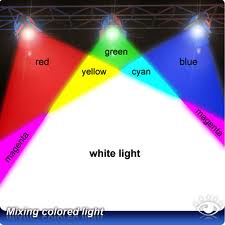
Tonight my eyes are heavy and I’m yearning to go exercise before the clock denies me the chance.  I’ve thought of you folk all day and your thoughtful replies to our difficult questions.  I sense that the difficult questions are not finished for us.  We wonder together, and that wondering in company with you has become my white light – many, perhaps small, particles of different colors and brilliance coming together into what we have.


ht. learn.uci.edu


Thinking about your comments, I remembered Marsha, a young adult who asked me, intelligently, hands flung open to the universe at large,

Who am I if I’m a different person just by taking these pills.  I’m so different!  I like that difference but I’m scared by it too.

She was so vulnerable sitting there, lip faintly quivering on her down angled face.  She asked as we ask together, as I believe God wants us to ask, to know that we have an essence and because that essence has an indestructible connection to Him, the intuitive fear falls into a more friendly perspective.

Good night friends who bring light.  Thank you.  Keep on.

Where Do You Think Behavior and Emotion Come From?

Animation of an MRI brain scan, starting at th...

Image via Wikipedia

Self-Care Tip #229 – See yourself as a friend by including biology in your self-perception.

In clinic, out of the clinic, here, there, if I were to pick one barrier to treatment anywhere, I’d pick the misunderstanding that behaviors and emotions come from somewhere other than the brain, and then from there, the outcropping of understanding why.

I don’t think most of us say it in so many words, but it’s intuitive. Maybe when pressed we’d say, “Where else do they (behaviors and emotions) come from?!” And then agree, the brain. But the connection that allows for self-care is missed. The connection that allows us to choose the freedom to feel good and behave well for our own sakes is lost in the shame of failing to do those very things.   The stance of courage it takes to be our own friend when we don’t even want to be in our own company, takes a lot to maintain.

The marvelous @MarjieKnudsen, tweeted a reference to a wonderful post by Sarah Boesveld, How ‘self-compassion’ trumps ‘self-esteem’. I enjoyed reading it very much as I felt it spoke to me and my generation with great perception… except! that it was without mention of biology, the brain; i.e. where behaviors and emotions come from.

In clinic, Naomi told me about her “failure” when ever she felt anxiety come on.

Why do I feel depressed when I feel the anxiety come?

I’m wondering what you think, reader, about this simply related story and the question.

I mirrored Naomi’s question,

Why do you think you feel depressed when that happens?

Today (similar to Naomi,) girl-crush, alias Rachelle Gardner, Literary Agent, wrote about feeling like a failure as well.  She asked at the end of her post the pithy questions,

What about you? How have you failed? What kind of wisdom has helped you deal with it (i.e. sense of failure)?

And I thought, how to answer? Here I am again “in the presence” of someone wonderful who in her post didn’t make it apparent that she was considering that this emotion might be a symptom of something biological.   We are willing to look under every rock, be in the space of our emotion and ponder reasons why.  We have the courage not to “run” even when we don’t like ourselves, but haven’t said it out loud to ourselves yet,

I might feel this way because my brain is dishing it out.   I might otherwise have not done anything to set this emotion or these behaviors in motion, other than being alive.

Girl-crush remains despite response.  So readers, don’t be scared to answer what you think.   If you even care, I’ll still admire the socks off you! – even if you think you are hyper every day since conception because you ate too much sugar.

Questions (In case you want me to write them again, which I’m really happy to do – anything you want so I can hear your responses): Where do you think your behaviors and emotions come from? …such as a sense of failure and/or a depressed mood? What has helped you deal with it? Please tell me your story.