Don’t Run Away. You Might Fall In Love With Your Flaws.

DSC03321

Empower yourself by going towards what scares you.  Take it to the table and be with it.  Get to know it and openly share company with it.

Opal was throwing up.  She threw up more when she gained weight or felt fat.  Throwing up didn’t help her lose weight.  It was just a tool she had to deal with it all.  Opal was told often not to worry about her weight.  Told, she looked fine and not to weigh herself.  No one said openly, “Opal, you’ve gained weight and you’re going to get other illnesses because of it if it keeps going.”  They were afraid saying anything like that would make her throw up.  Hm.

What do you say?

We remember the three things that help maintain long-term weight loss.  Well one of the main reasons they work is because they help keep us present with “the problem” or “fear” or “shame” or however we name it.  Our natural instinct is to go away from fear but this is another example of when we don’t get help following our instincts.

What empowers Opal is to get tools to contend with her struggle with obesity.  It is probably a life-er for her and oh-well!  We can love our flaws better if we stop running from them and grow our skills in living with them in a friendly way.

Get empowered with whatever you are afraid of in yourself.  If you can’t do what you need to do to be in the place of that fear, it may be that you have a medical illness keeping you from coping better.  It doesn’t mean you’ve failed.  Staying with your journey, even to taking medication, even to naming brain illness in your life is so courageous.  You become one of the great ones.  Heroic.  It is so much easier to disconnect and lose our opportunity to love our flaws.

Have you ever heard someone call their life-er, “my old friend?”  Maybe it is arthritis?  Or recurring cancer?  Maybe it is brain disease.  Some day, we will also name our own, “my old friend.”  And we, with Opal, will mean it.

Self-Care Tip – Empower yourself by your presence.

Questions:  How do you do what is friendly to yourself when your instincts tell you not to?  What has that done for you?  Please tell us your story.

Reworking Choices With Your Physician as Part of Your Team

What do you want? 

It is one of my challenges as a physician when someone comes to see me for reasons I’m not able to accommodate.  I can’t validate them.  I can’t tell them what they want to hear.

What can I do?  Help them “realize” that they came to see me for another reason.  Another way to say it is to help them “choose” another agenda.  A part of them realizes their need for help; they came.  A part of them believes I am a person that can help; they came.  A part of them.  A part that I and the patient are responsible to find and shift agendas deliberately or by any wiles possible.

Hands touching

Image via Wikipedia

We are an unusual team in this.  How often do you find another so awkwardly paired?  Yet these are some of my best patient-doctor relationships.

What do you want?

When there is a meeting up, a connection and everyone is working for the same “want,” both presence and movement are natural responses.  It’s like we’re standing still in the moment, senses taking it in, and moving all the while.  The process of moving itself brings pleasure and healing.  It is not always about arriving.  It is not always what we think we want.

Self-Care Tip – Enjoy your re-choices and what you will get from them.

Questions:  Have you every found yourself being “helped” to have a different agenda that improved your presence and movement in your personal journey?  Please tell us your story.

basics on Weight Management

A tipped cow. Taken near the Cliffs of Moher i...

cow-tipping

A day or two ago we talked about life-ers.  You and I gave our own.  Whatever yours is, you are not alone.  We share that being a friend to ourself means embracing our flaws, going towards our flaws and letting the shame dissipate in our familiar presence.  Weather it’s cigarettes, weight, yelling or cow-tipping, resisting our instinct to hide it, to ignore it and deny it brings us into a place of friendship and connection.

In all my blah-blah’s, sometimes people just want me to get down to the specifics.  I’ve never found those to be too exciting for me personally, but they do help when afraid.

Today I’m going to hit weight management up.  When hope seems to be leached out by failures, these are my efforts that keep me connected to my journey.  I eventually always go back to these.

Three Things That Have Long Term Influence on Weight Management:

1.  log your food.  For example, Sparkpeople.com or myfitnesspal.com are both wonderful sites that will help with this free, including apps for our smartphone.

2.  weigh yourself every day.  Just weighing in has long-term benefits.  Sweet.  Improves presence with our bodies, awareness, goes towards shame, etc…

3.  compete/support network

4.  the rest of it.  This is for all the other stuff that is critical on many levels.  However, only the three things I’ve mentioned have been shown to have long-term effects.

I know.  Where are my references?  This is my blog, so me.  But there are references if you like.  I don’t have time to pick them off of my under-table unfortunately.  Hope that doesn’t keep you from participating with us.

Self-Care Tip – Know where to go when you feel afraid – towards it and not away.

To Catch What People Throw At You, Give a Little or You’ll Drop It

Football: Jets-v-Eagles, Sep 2009 - 16

Image by Ed Yourdon via Flickr

Sometimes it doesn’t serve us well to follow our instincts.

When I was little, I don’t know, maybe nine, I remember one of the many times Dad tried to teach me how to throw and catch a football on our front lawn, under the huge tree that seemed to always block me. Dad had played college-ball on scholarship at Duke University where he promptly blew out his knee; one of the many orthopedic problems he’s known. However, he still had his arm and his gentle way of making me feel like he really enjoyed lopping the ball over short distances with me and my awkward hands.

Catch the ball right here, into your arm like you’d cradle a baby.

Nobody needs to try that many times before learning that footballs are hard and pointy and hurt a lot when we catch them wrong. Purposefully putting my body in front of that spinning high-speed object didn’t feel safe.

Get in there and watch it the whole way make contact with you as you catch it.

My eyes were still shut when he said that. I was trying not to cry but I was pretty sure my fingers were going to look differently when I opened them.

Here came more less obvious instruction,

Let your arms and hands give a little, while you catch, closing down on the ball as you let it push you.

People throw all sorts of things at us in the space between “me and thee.” It can hurt to catch and even physically damaging. But counterintuitively, we need to catch like we are cradling a baby, get in there, and give way a little.

This isn’t always advisable but it refers to opportunities to practice presence. Not every interpersonal moment is such an opportunity. Nor will each true opportunity be received naturally or effectively. Those will improve with practice, or perhaps coaching or medical intervention.

The other day, Frida told me with some self-satisfaction about the long hoped for day when she stayed with her daughter during her daughter’s anger, rather than escaping. She gave space for her daughter to throw her pain around. Frida cradled her in her personal space long enough to receive and throw back. For Frida, what she threw back was the next effort of growth. That day we celebrated the presence she was able to offer her daughter and herself.

Now get in there Frida, let it come into you. Give way to some of the momentum or you’ll drop it, and cradle what you catch.

For Frida to do this, she owned her choice to find the presence and to do the work to gain the skill. As I am a medical physician of the brain, you might guess we worked on her illnesses. Frida stayed, received her presence in the company of her daughter – and we celebrated.

Self-Care Tip #284 – Give way to some of the momentum and cradle what you want to be present with.

Related Articles:

Sucking Up to the Boss May Move You Up and Keep You Healthy

Finding What Perfectionism Can Offer Our Self-Care – In Summary

Gold star forehead

Image by cheerytomato via Flickr

We managed to run a series on perfectionism without even knowing it was happening.  Pretty cool.  Perfect?  No.

  1. Lady Gaga – Born This Way
  2. Try, Knowing We Will Fail
  3. Loving Me Without Ambivalence
  4. Codependent

Your comments have added to our momentum and interest.  Here are a few from a range of thoughts and opinions:

Jasmine said,

…there’s a fine line between accepting yourself for who you really are and not just who you would like to be…

Patricia didn’t mince words,

I don’t like the word fail as it implies failure which is defeatist. Lots of times I try something and have less success than I would like but that is not failing. It is learning, if only learning what doesn’t work or what not to do again.

I don’t think I would try anything if I knew I was going to fail!

Paula tells us that in her quest toward being perfect she has suffered,

…considerable self-flagellation over the years. i still bear the scars.

Sarah, our literarian, grammarian and editor, channels Atticus in To Kill a Mockingbird:

“…I wanted you to see what real courage is…. It’s when you know you’re licked before you begin but you begin anyway and you see it through no matter what. You rarely win but sometimes you do.”

Marie, who used to be “Livingsuicidal.com,” is now, “Livingvictorious.com” – whoo-ah!  She tells us in her usual courageous style,

Although rationally I know I can’t be perfect, emotionally (I) can’t stop pursuing (perfectionism)…

Carl, strong Carl who shares his weaknesses knowing they don’t have anything to do with weakening him, tells us to,

define the difference between co-dependency and partnership and that the two terms are not interchangeable.

And so I ask you to tell me more because you always say it so well.  Perfectly?  No.

It would be wonderful to hear from the rest of you too!  Speak out!  Connect and lead us into our summary.  Perfectly?  No.

Implications:

  1. Lady Gaga via biology.  How do you understand your biology to be influencing your view of perfectionism?
  2. Our efforts on volition/control.  What is it in regards to your self-grace, (i.e. forgiveness and allowance for ourselves?)
  3. Ambivalence on progress v. limitations and flaws.  How is this conflict affecting you?
  4. Perfectionism on pathologically depending on the opinion of others to qualify us.  Some people call this, “codependence.”  How do you qualify yourself?

Self-Care Tip #276 – Let good come from your propensity to crave perfection.  It can.

Codependent,… Or Something?!

Inquisition condemned (Francisco de Goya).

Image via Wikipedia

Codependent.

It’s a term a lot of people use but I don’t think we are all using it to mean the same thing.  It is poorly defined and confusing.  If codependency were a medication, we would call it a “dirty medicine,” because it hits so many “receptors.”  It is nonspecific.

Who hasn’t ever been shamed by the fear that they are codependent?

You are codependent! 

Am I codependent!!!??

The word implies blame.  Blame for what?  And that is one of the places we walk away without benefit.  Was the word useful to any of us in any way?

In general, vaguely, codependence implies awareness and participation with mal-behavior that we are powerless to.  Treatment preferably includes a twelve-step program that includes the surrender of what we don’t have power over to our Higher Power.  Codependence may incidentally be combined with brain disease and of course that would need medication therapy.

There are however a few things that must be cleared up.

  1. There is nothing shameful about being married, the child of or of any relation to an addict.  That position doesn’t diagnose us with codependency unless that’s what that word is being used to define.  You never know.
  2. There is no shame in wanting to be with people, depend on people, seek people out to problem-solve and get energy from being with people.  That position does not diagnose codependency unless that’s what the word is being used to define.  You never know.

However,

  1. There may be a relationship to family of addicts
  2. There may be a relationship to anger problems
  3. There may be a relationship to kids of parents who expected perfect kids, spouses of spouses who expect perfect spouses, pet-owners who… (Oh wait.  That’s not right.)

BUT, per Dr. Q, if we find ourselves…

  1. in recurring negativity – perhaps an argument that happens over and over
  2. with an increasingly limited ability to participate in life
  3. powerless
  4. doing things we wouldn’t normally do/out of character
  5. tied into someone else’s mal-behavior
  6. consciously aware of that someone’s mal-behavior

IT’S WORTH THINKING ABOUT IT.  We might not be codependent, whatever that means, but we do need help.

Questions:  How do you identify this in your life or someone you know?  How have you been able to stop being dependent on someone you knew was repeatedly doing mal-behavior?  Please tell me your story.

Self-Care Tip #275 – Forget the shame and just get about your work to figure this out.

Loving Me without ambivalence – Perfectionism v. Passive Surrender

Light cycles designed by Mead, as featured in ...

Image via Wikipedia

The conflict of perfectionism v.v. passive surrender of ourselves to ourselves.

Yesterday we talked about enjoying our failures.  That might have pushed a little much.  But who doesn’t nurse their failure more than their success?  Who doesn’t remember their hurt in life more often than their pleasure?  It can be confusing.

This friend we call, Me, pushes us and holds us back.  But that is not said well enough.  This description implies ambivalence – two strongly opposing forces in opposite directions.  Amidst all the push and pull, we can get confused.  We work so hard on our behalf that we forget we were born flawed and will, at every step of life’s journey, have a constant relationship with imperfect behaviors and emotions all the while having hope for what is better.

I remember in Tron: Legacy that Flynn explained that Clue was created to build the perfect world.  When things became bad and Clue was blamed, Flynn the Creator essentially said,

He’s just doing what he was designed to do.  

Clue, in the name of going toward what was considered perfect, began annihilating everything and everyone that wasn’t programmed right.  Clue was baffled by his Creator’s disagreement and in the end destroyed them both.

Clu: I did everything… everything you ever asked! 
Kevin Flynn: I know you did. 
Clu: I executed the plan! 
Kevin Flynn: As you saw it… 
Clu: You- You promised that we would change the world, together. You broke your promise… 
Kevin Flynn: I know. I understand that now. 
Clu: I took this system to its maximum potential. I created the perfect system! 
Kevin Flynn: The thing about perfection is that it’s unknowable. It’s impossible, but it’s also right in front of us all the time. You wouldn’t know that because I didn’t when I created you. I’m sorry, Clu. I’m sorry… 

We, like Flynn, forget that our beauty is the constant relationship between going toward that which is better for us and allowing for our limitations, regression and failures.  These forces don’t have to be opposing.  Our life is more than an allowance for betterment and foibles; it is a position of value and respect to both.  There is this wonderment that we can in all this chaos be what we should be, now, but still in process of change.  We are all these things and Me, our friend, loves that.

Questions:  How are you doing with your Me who struggles for the whole of you?  Are you able to join Me?  What limits you?  Please tell me your story.

Self-Care Tip #274 – Love what keeps you from your goals and what gets you there without ambivalence.

We Try Knowing We Will Fail. The Wonderful Journey Of Flawed People.

The t-shirt

Image by plαdys via Flickr

It’s 9:23 PM and our little kids are still awake!  They’ve cried.  They’ve laughed.  We’ve cuddled.  We’ve spanked.  They’ve taken two showers and brushed their teeth twice.  We ate several times.

I was riding my bike, watching a movie, (I love that!), and my daughters were taking turns coming in to complain, wet me with their tears, snuggle, hold me; you get it.  My exercise and my movie were peppered with refreshing breaks.  Sitting on the couch chair nearby with my five-year old during one of these intermissions, holding her, I was able to say,

It’s okay.  

I was able to do this because I was the one in the casita getting pumped up and my husband was the one in the house herding children to bed.  He had the tough job that turns me into a turnip and I had this.

You can do it.  You can try again.  You can try again, even if you are trying for the one-hundredth time.  You try and you try and you try again because that’s what makes our lives beautiful.  The trying part mostly.  Not the arrival.  

And that’s when I grabbed her and held on.  I suddenly felt so blessed.  From this off-night, I was given the reminder that the trying part of life is where it is at.

It’s 9:33 PM and I think they’re asleep.  Sigh.  Tonight was awesome.

We are flawed people.  We try, knowing we will fail.  Who does that?!  Why would anyone do that to themselves!?  Smile.  Ah.  Sounds wonderful.

Questions:  How is your journey?  Have you been enjoying your failures lately?  Please tell me your story.

Self-Care Tip #273  – Enjoy your failures.

In Mass and Individually, We Are Beautiful – Lady Gaga

Someone, who has experience fighting for her emotional and behavioral health, advised me to listen to Lady Gaga – Born This Way.  She said, “Don’t be scared by it!  Just listen!”

So I did.  And then I did again.  Her message is not, “Don’t stress out.  Don’t work hard.  Just be who you are.”  It is rather, “Figure out who you are and embrace that fully.”  By her own example, she tells us to work harder than anything else on embracing that.  Gaga says, love this unique self and respect it openly and privately.  She tells us that we are all beautiful in mass and individually.

So let us know what you think!  Is her message our message here at FriendtoYourself.com?  Are you uncomfortable with loving yourself so well?  Please tell me your story.

Me! Where Emotions and Behaviors Come From

steps 15

Image by Erik - parked in Cairo these days via Flickr

We are doing a narrative series on understanding where emotions and behaviors come from:

  1. Emotions Are Contagious – Emotions shared
  2. Our own Emotional Junk – Emotions hidden
  3. Positive Emotions and Behaviors are Contagious Too 
  4. Our Conscious Self is Our Board and Paddle at Sea – Small conscious self and BIG unconscious self
  5. Biopsychosocial Model – Biological, Psychological, Social selves
  6. Me!  (Today’s Post)

What we have covered so far in our series is that we know emotions are contagious.  We know that if we take care of our own first, we might not be as “susceptible” to negative “contagion” in turn and perhaps, be more available to giving and receiving positive “emotion-contagion.”  Further, we hope that if we do this, we might be able to choose to be with people we love even if they don’t do their own self-care.  We can have that connection without personalizing what isn’t about us.  Sigh.  That is nice, isn’t it?  Then …out at sea (away from our narrative for a day,) we talked about the pleasure in engaging with what bits of biology are directly available to us and the relationship we maintain with the big expanse of our unconscious biology.  Yesterday we reviewed our biopsychosocial model as a tool for further understanding where our emotions and behaviors come from.

Self-Care Tip #272 – If you are ever unsure about where your emotions and behaviors are coming from, it is always safe and true enough to say, “Me.”

Where do emotions and behaviors come from?

Me.

For example:  Me <–> Emotions Shared <–> Me <–> Emotions Hidden <–> Me <–> small conscious self and BIG unconscious self <–> Me <–> Biological, Psychological, Social selves <–> Me… round and round, starting and ending and starting with Me.

Rob and Yesenia were both breathing hard.  Rob was pale and Yesenia flushed.  Where to start?  With Me.  This is what I shared with them both.

Put your spouse down and take three steps back!  Own your own self.  Take care of your own self.  In the process, you will be able to pick each other up again and share love.

Questions:  What are you holding, carrying, using to explain where your emotions and behaviors come from?  How have you been able to put those down and hold yourself?  Please tell me your story.

Our Conscious Self is Our Board and Paddle at Sea

Paddle away

Image by San Diego Shooter via Flickr

We are doing a narrative series on understanding where emotions and behaviors come from:

  1. Emotions Are Contagious
  2. Our own Emotional Junk 
  3. Positive Emotions and Behaviors are Contagious Too 
  4. Our Conscious Self is Our Board and Paddle at Sea (today’s post) 

Paddle boarding in the Pacific Ocean (OP) today brought me to flocks of pelicans, breaking waves and a seal who said hello.  The OP was kicked up into big swells and long-shore currents.  There was all this ocean to connect with using not much more than a paddle.  Where do the waves come from?  The moon?  The wind traveling currents of changing temperature?  And what did I have?  A paddle and a board.

Our body is about like that.  There is this huge amount of unconscious self that we are connected to but not in a direct sensory way.  Our emotions, touch, smell, hearing, taste and sight; our spiritual quotient, emotional quotient, intellectual quotients – these are a pinch of what make us who we are.  These are our summarily interpretive lens for the world.  They steer our choices and shape our understanding of reality.  They are our “paddle and board” in an ocean of biology.

Even though the things we have a direct sense of, a direct connection with and thereby implying control of is not the majority of what makes us who we are, it is such a privilege to actively engage in it.  It is what makes our life worth living.

When we think of where behaviors and emotions come from, we think of many paradigms.  But that pinch, that bit of the great enormous creation we are that we are conscious of is such a pleasure and wonder.  To not engage with it fully as we are free to do is an unqualified loss.  It is to be without board and paddle at sea.

This is not to say that we are to ignore the great majority of our biology that is otherwise who we are.  Any surfer knows better.

Self-Care Tip #270 – Do all that you can with the amount of direct awareness you are given and relish the experience.

Positive Emotions and Behaviors are Contagious Too

Chris Sacca, Google special issues

Image by dfarber via Flickr

We are doing a narrative series on understanding where emotions and behaviors come from:

  1. Emotions Are Contagious
  2. Our own Emotional Junk 
  3. Positive Emotions and Behaviors are Contagious Too (today’s post) 

What we’ve covered so far in our series is that we know emotions are contagious and we know that if we take care of our own first, we might not be as “susceptible to contagion” in turn.  Further we were left with the hope that if we do this, we might have the ability to choose to be with people we love even if they don’t do their own self-care and have that connection without personalizing what isn’t about us.  Sigh.  That is nice, isn’t it?

Yesterday, M in his usual gentle way, reminded us that contagious emotions might be effective for spreading more deliberately and more in the positive nature.

 I am encouraged and hopeful. Being peaceful can be contagious too?

Then today I read a tweet about Chris Sacca’s commencement address.

presence -> sleeping well -> breathing *ahhh* -> embracing my weird self -> presence. Thx again @sacca So good.

Well worth my time!  Sacca spoke about being a friend to yourself!  Can you believe it!?  …Ok.  He didn’t say those words or mention this blog, …or me …but he may as well have!  (Wink.)

If you listen, think and process, please tell.   I would love to hear what you get from his speech.

…Did you catch the bit about start overs?!  You know I love that.

Sometimes however, I am a real bore making this “friend to yourself” thing seem so dull and difficult.  And M and Sacca are right!  Peace and happiness are also contagious and a better effort.  To get that, Sacca tells us to do some specific things.  Did you catch them?

Question:  What did Chris Sacca say that you find useful to friendship with yourself? or others?

Self-Care #269 – Positive emotions and behaviors are also contagious and are a better effort for your friend – You.

Self-Care Works You, Pushes You, Tires You Out Until You Are Happily Spent On Your Friend – You

two-girls-exercising-cayucos-beach2

Image by mikebaird via Flickr

What is being a friend to yourself?

Being a friend to yourself is more than getting our manicure, shopping, watching movies, being spontaneous and doing what we want.  In fact, often times, being a friend to yourself is not doing what we want.  Sounds great right?

Being a friend to yourself might be the hardest work you ever do.  For a time, it might feel like you are turning your back on your family, being selfish, sacrilegious and unfriendly.  You won’t get kudos from your support groups.  You won’t be noticed or hear thank-you very often.  I’m sure you can’t wait to hear the rest!  “Where can I sign up?”  Right?

Being a friend to yourself is taking accountability for our lives.  It says, everything starts and ends with Me.  It looks for accountability for our actions, our feelings, our health, our spirituality or connections in Me and not towards any external locus.

When we are a friend to ourselves, we don’t apologize and then say, “but….” We make amends for what we believe we are responsible for.  We do this without clarifying and justifying our behaviors.  We are not victims even though we may have been victimized, hurt, misused and forgotten.

Being a friend to yourself protects us against apperceiving that we are defined by anything we don’t choose.  Public opinion, stigma or even our pain does not define us. Our pain is not special. We are special.

We believe that we are freeFree to choose self-care.  Free not because of the men who died for our freedoms, not because of our behaviors or spending power, but we are free because we are human.  Being our own friend is a privilege that we can choose freely to exercise or not.  No one can make it happen except Me.  Just like no one can make me love you or demand a gift because of the inherent freedom within them.  These things happen only because we believe in them, won over by Love.

We become our own advocate, admirer and treasure of high value.

When we are a friend to ourselves, we don’t deny our history but we claim the freedom to start over any time.  The history does not define us.  We are more than actions good or bad.  We have an essence that is timeless and unchanged by the ravages of illness or misuse.

Being a friend to yourself means caring for the specifics of your body, your simple needs that lead to complex outcomes.  Your exercise, your sleep, your diet, water and air are all worth fighting for.  These things you do for yourself become your currency.  You find that the better friend you are to yourself, the better you become for others.

At this new place of safety for you, where you give less, you give more to those you love.  You discover the mystery that no one can give what she doesn’t have.  Just like any bank, we deposit and withdraw and must protect our basic assets before we are taken over and lose the freedoms because we were poor managers of this one body that God gave us.

Everyone pull out your wallets and please empty them on the desk.  How much do you have?  How far will that take you?  Do you ever go a little crazy wondering where you will get more?

Now imagine that this is your body.  You have these assets; this currency.  Currency like your energy, positive emotions, interest, motivation.  You have bank when you can move around, walk, and muscles to lift your child, this vision to admire her new dress.  This is money, this beauty that you offer your significant other, your body, and your shape.

Now you are giving to your children.  Up in the night when they wake up and you can’t sleep afterwards.  You skip exercise the next day, in fact, why even talk about it.  You haven’t exercised in a year or more.  It’s been really hard when your body is either pregnant or recovering from pregnancy over the past seven years.

You never lost the weight and for some reason, now that you want to, your body is firmly telling you, “No.”  You don’t care enough about not having had sex with your husband in four months, but it does bother you that he uses porn so much.  You don’t talk about it.  You’re too tired.

Your child now develops eczema.  She’s nervous and complains of stomach-ache often.  She cries a lot and you can’t remember the last time you enjoyed being with her or any of your kids.  No doubt.  You do love them.  That’s what all this is about, right?  You are sacrificing everything for them and would do it again.  They are your life and when they move out in 15 years, you’re moving with them.  Husband or no husband.  What else do you have?  You aren’t even interested in anything to want to do anything else besides bleed yourself for them.

You can see that this story isn’t anyone’s fantasy.  But can you see that the mother-character – she’s not very nice.  She is not nice to herself and not that nice to anyone else either.  Even though many people are on her list of party invites, she is not connected much to any of them.  You can bet that her family enjoys her about as much as she enjoys herself.  She is angry with them for this but doesn’t realize that she feels ashamed by it more than angry.  Betrayed.

Now enters the victim-role this mother plays.  Oh boy.  I know.  You probably don’t want to hear about it.  It hurts just to start in like this, huh?  So let’s not.  Let’s draw another picture.

Look at your wallets again.  Now how do you get what you need to keep it full?  How do you get what you want to give and splurge on the ones you love?  Where does all that money come from?

Work.  You said it sisters.  And so this is you.  You are a mother of how many?  Three?  Two?  Who do you live with?  What are your jobs at home and elsewhere?  How much of that can you do if you don’t have energy?  Motivation?  Interest?

Oh but you do.  You take care of your basic needs.  You exercise even when your kids are pulling on your sweat pants all the way out the door to the gym.  You don’t get up for your kids at night as quick.  You let them cry it out or do what ever it takes for them to get themselves back to bed.  You take medication if you must to get back to sleep after you are awoken.  You practice sleep hygiene and although you miss, you desperately miss having spontaneous late night TV, you don’t.  You go to bed.  Recently you lost twenty pounds and you are working all your resources to keep it off.  You can’t believe how hard it is to keep off even though you can barely believe how fantastic it feels every day without that weight.

You take your medication because you understand that emotions and behaviors come from the brain.  When you used to not feel pleasure, it wasn’t because you didn’t want to, try to, pray to.  It was because the symptoms from the condition of your brain health were emotions and behaviors in the down direction.  And thank goodness!  Now when you see your kids, you not only love them, you like them.  Sometimes it takes your breath away.  You just can’t believe that you didn’t feel this before.  You like your kids.

I can go on.  But I think you get it.  No one can give what you don’t have.  Now show me your wallets.  Put whatever you took out back in.  Not much?  No worries.  You are your own friend and will take care of yourself.

I know I’m making it sound like being a friend to yourself isn’t that fun.  Having fun isn’t the agenda of friendship.  The agenda is doing what is positive for your friend.  It is some of the hardest work you’ve ever done.  It means connecting with others because you know it is good for you – even though you are shaking, nervous or just plain don’t want to.  It means going out to find love when love doesn’t find you.  It is hard!  It isn’t necessarily doing what is smooth and easy, although sometimes it may be.

Self-care is a discipline of action, presence or whatever is called for by you, your friend.  It takes your natural genius, the things that came to you without working, and it uses those to steer your energies.  It uses those to tell you where you will be working like a mad-dog at times to find the most pleasure and be the most productive, have the most service to offer, be connected in the most intimate way with those you love – God and man.

Self-care is not for the people who need it.  It is for those who want it.  If you don’t want it, stop listening and be on your way.

Questions:  What is called for by you, your friend, to do?  What has pushed you, worked you, tired you out until you were happily spent on caring for your friend, you?  Please tell me your story.

Your Pain is Not Special. It Is Normal.

Self-Care Tip #243 – See yourself as special rather than your pain and know that you will find your normal again.

What is your normal?

When we were kids, we all had a perspective of what normal was.  Let’s say it was “here.”  Let’s imagine we were lovely then, nurtured and emotionally bonded.  We struggled through peer conflicts, social anxiety and rivalry.  We wanted a bike.

Two Sisters

Image via Wikipedia

Then we got a little older.  Maybe our parents divorced.  Maybe, a sibling died.  Maybe we were abused or in an accident and damaged.  Damage changes normal.  What we never would have thought would be acceptable in our lives became acceptable.  We suffered.  We lived.  Life was indiscriminate and ignored our status.  We think there must be a mistake.

What is our normal at one point, filtered through remaining hopes, grew into regenerating fantasies, through real potential and it moved again.  We are older now and more suffering comes.

Where is our normal?  We survive our child, our own dear perfect boy, hanging from a tree.  Normal?  No dear God!  No!  And we continue to live.

Two years.  Two years are what it takes for our biology to catch up to the shock.  Two years are what it takes for us to begin to accept and realize that in this new normal we care again.  We choose it in fact.

People don’t remember his name or talk about him and we can’t remember his eyes.  We are ashamed and lose our breath from panic just trying to see them.  We want to bang our head because we know there is something wrong about feeling normal! Ever! Again! after that.  But we do.

Our normal mutates over financial ruin, abandonment and a growing healthy list of disfiguring illnesses.  We accept them and say yes please.  Live.  We want to live.  This is acceptable.  This is normal.  Our friends die.  Our memory.  We can’t find our teeth.  Our heart stops.  We die and the world finds normal.  The world chooses just like we did.

What we don’t think will ever be allowed to happen while we brush hair, clip our nails and microwave food, happens. We endure these changes.  We find normal again.

What is your normal?

My brother, Vance Johnson MD, is a physical medicine and rehabilitation specialist.  He said that during his residency, close to 100% of spinal cord injury paralysis survivors he worked with wanted to die after their injury.  Many of them would beg him to let them die.  They would cuss at him for keeping them alive.

I leaned very heavily on the studies and data during those times.  It was very hard.

Vance said that what kept him faithful to his task was knowing that close to 100% of them after two years would be glad they were kept alive.

Even the ones who were basically breathing through a straw and that’s all that moved on them; even they wanted to live.  These people found a new normal.

Where is our normal?  We will want it.  We will adapt.  Biology will catch up to our reality.

Remember that your pain is not special.  You are special.  Not your pain.  Pain is normal.

Question:  When this happened to you, how did normal find you despite the rubble?  How does this concept feel to you, that your pain is not special?  Does it make you angry or what?  Please tell me your story.

Choose Back! …As Long As Life Chooses You.

A Girl On A Footbridge

Image by jyryk58 via Flickr

Self-Care Tip #241 – As long as life chooses you, it is your right to choose back – so do.

Although I am not a geriatric psychiatrist, I have still been given the pleasure of serving a “golden” few.  What has impressed me has been their willingness to start over.

Starting over takes courage and humility whether it is deliberate or not.  Sometimes fear dances between the lines of all the emotions and intentions. But still, wouldn’t you agree that it takes courage and humility to negotiate fear?

(Enters Hans.)  Hans was seventy-three years old.  He had struggled with brain illness on and off he thinks since he was at least twelve.  There were big spaces of time when his disease exacerbated, and he largely suffered.  But he chose, at this age, to try again for improved brain health.

Is there a time when we start thinking, don’t keep trying to start over?  Maybe in the dying process.  In case you don’t know, the dying process is a specific term.  It means the time when a person is facing impending death.

This area of medicine is not my specialty but I imagine at some point we want to stop with that starting over process, give up, but not in a hopeless way.  In a way that says,

I can stop trying for new anything and sit in the space of what I already have in me…

…Which hopefully includes all the ingredients and interrelations of life.

But how far before that point in life do we consider starting over reasonable?  I’ve heard of kids being told they’re too young to ride a bike, or cut with a knife, or understand the dinner conversation.  No one bobs their head at that.  But find a seventy-three year old who believes that after a lifetime of perceived failure by onlookers or themselves, who still says,

Now let’s give this another go,

…and if it hasn’t been said, it’s been thought,

give it over already!  You’ve hit your seventy-times-seven chances!

It’s like they’re shopping in the teen-ware.  We blink our eyes and angle our heads.  Even the thought of starting over as a real option feels indiscreet.

(Enters Hans.)  Hans is seventy-three.  He is starting over.  Humbly and with courage, he pursues brain health in the face of stigma.

I think I had celebrated my six birthday when my dad asked me if I felt any different from how I felt when I was five.

Yes!  I feel older!

 Then he asked me how old I thought he was.  When I answered some enormous number like, “twenty-two!” he asked,

Does forty-four seem old to you?  

Of course it did!  But I had an intuition that if he was old, than he’d die, so I said a definitive,

NO!  Daddy you’re still young!  You aren’t old!

Now, almost that same age myself, I am in awe of him and the others in their golden or not so golden years (Enters Hans) who believe that as long as life chooses them, they will choose back.  It is their freedom.

Questions:  When all your senses don’t sense pleasure in life, or you feel old and useless, or you feel that you’ve failed too many times, how do you choose to start over?  Who has inspired you and what did they do?  Please tell me your story.

Misrepresentation Of Self-Care Will Inevitably Be Part of Our Truth

Self-Care Tip #239 – Let the misrepresentation be.

In our efforts here at FriendtoYourself.com, we try through our limited selves, our flawed selves, our biased selves to understand self-care as well as we can.  Never-the-less, the process of the ongoing mix-and-separate leaves us ever aware that our work is unfinished.

When I say, “It’s biological,” see that there are other things in the room.  Please see the windows and doors still open.  Please know that I don’t deny that there are other senses than my own, other dimensions and other realities than what we perceive.  The reason I don’t always mention them, credit them for behaviors and emotions, the reason you don’t hear me say often enough that we are not unidimensional is that I speak about my area of experience – the brain.  It is what I do.  I am not an expert at all paradigms.

Acknowledging one reality is not a denial of the other unless… well unless other things happen, which I’m not ready to clarify.  I will throw out that maybe intention to throw them out needs to be there too.  Maybe saying that, we are in danger of being perceived to be denying other reasons.  It reminds me of Escher’s work of repeating beautiful patterns to infinity.

This makes many of us uncomfortable who are designed to be sensory aware, in the moment and  in the barn – contrasted to others who are wired to be connecting big picture concepts and grazers.  (See my blog-posts on Jungian-typology for more.)  I acknowledge this intuitive emotion response with respect and equality to any other of our temperaments, all of which are neither better nor worse than the other.  The discomfort that comes when we are out of our area of genetic-genius does not have moral quality; it just is.

The emotions will come.  We want them; the senses that interpret our reality.  We will with our sixth sense, our individual genetic  genius, our 10,000 hours of hard work and experience, with magic of what we still don’t understand and with our God – we will take care.  Of our selves, we will find a friend.

Questions:  Do you mind it?  All the bits that you don’t know about self-care still?  Do you mind the way it is misunderstood around you, projected and assuming?  How do you deal?  Please tell me your story.

Still Interested In Self-Care?

Working for Peanuts

Image via Wikipedia

Self-Care Tip #131 – Start all your efforts and end all your efforts accountably with yourself.

Self-care is:

For many of us, we wonder what self-care is.  Obviously being subjective, it is something unmeasured and changes between us.  It doesn’t interest or make sense to many, depending on their religious biases, culture, temperament and other things.  But others of us, for maybe the same reasons, find self-care to be the place from which our axis swings.  We have together, here at FriendtoYourself.com, through the past eight-plus months, agreed on much of what self-care is and is not.

It is not selfish-care, alone-care, sacrilegious or Godless-care.  It is more than any one thing, for self-care flattens knowledge.  It is not weak but rather courageous.  It brings us to humble accountability for our lives, not erasing our history but still being free to start over any time.  Self-care is living consistent with the belief that the success of our health (emotional, physical, spiritual) begins and ends with Me.

Despite the chorus of boos, we say that we serve God and man better by taking care of ourselves first.  We attack guilt, we stand up to shame, we live as we choose despite stigma and we work harder than we ever have on perhaps the hardest job of our lives.  This is, Self-care.

Are you still interested?

Question:  How do you define self-care?  How is it played out in your life story?  Please tell us.

You Bring Light

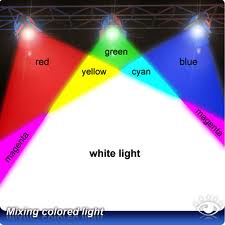
Tonight my eyes are heavy and I’m yearning to go exercise before the clock denies me the chance.  I’ve thought of you folk all day and your thoughtful replies to our difficult questions.  I sense that the difficult questions are not finished for us.  We wonder together, and that wondering in company with you has become my white light – many, perhaps small, particles of different colors and brilliance coming together into what we have.


ht. learn.uci.edu


Thinking about your comments, I remembered Marsha, a young adult who asked me, intelligently, hands flung open to the universe at large,

Who am I if I’m a different person just by taking these pills.  I’m so different!  I like that difference but I’m scared by it too.

She was so vulnerable sitting there, lip faintly quivering on her down angled face.  She asked as we ask together, as I believe God wants us to ask, to know that we have an essence and because that essence has an indestructible connection to Him, the intuitive fear falls into a more friendly perspective.

Good night friends who bring light.  Thank you.  Keep on.

Where Do You Think Behavior and Emotion Come From?

Animation of an MRI brain scan, starting at th...

Image via Wikipedia

Self-Care Tip #229 – See yourself as a friend by including biology in your self-perception.

In clinic, out of the clinic, here, there, if I were to pick one barrier to treatment anywhere, I’d pick the misunderstanding that behaviors and emotions come from somewhere other than the brain, and then from there, the outcropping of understanding why.

I don’t think most of us say it in so many words, but it’s intuitive. Maybe when pressed we’d say, “Where else do they (behaviors and emotions) come from?!” And then agree, the brain. But the connection that allows for self-care is missed. The connection that allows us to choose the freedom to feel good and behave well for our own sakes is lost in the shame of failing to do those very things.   The stance of courage it takes to be our own friend when we don’t even want to be in our own company, takes a lot to maintain.

The marvelous @MarjieKnudsen, tweeted a reference to a wonderful post by Sarah Boesveld, How ‘self-compassion’ trumps ‘self-esteem’. I enjoyed reading it very much as I felt it spoke to me and my generation with great perception… except! that it was without mention of biology, the brain; i.e. where behaviors and emotions come from.

In clinic, Naomi told me about her “failure” when ever she felt anxiety come on.

Why do I feel depressed when I feel the anxiety come?

I’m wondering what you think, reader, about this simply related story and the question.

I mirrored Naomi’s question,

Why do you think you feel depressed when that happens?

Today (similar to Naomi,) girl-crush, alias Rachelle Gardner, Literary Agent, wrote about feeling like a failure as well.  She asked at the end of her post the pithy questions,

What about you? How have you failed? What kind of wisdom has helped you deal with it (i.e. sense of failure)?

And I thought, how to answer? Here I am again “in the presence” of someone wonderful who in her post didn’t make it apparent that she was considering that this emotion might be a symptom of something biological.   We are willing to look under every rock, be in the space of our emotion and ponder reasons why.  We have the courage not to “run” even when we don’t like ourselves, but haven’t said it out loud to ourselves yet,

I might feel this way because my brain is dishing it out.   I might otherwise have not done anything to set this emotion or these behaviors in motion, other than being alive.

Girl-crush remains despite response.  So readers, don’t be scared to answer what you think.   If you even care, I’ll still admire the socks off you! – even if you think you are hyper every day since conception because you ate too much sugar.

Questions (In case you want me to write them again, which I’m really happy to do – anything you want so I can hear your responses): Where do you think your behaviors and emotions come from? …such as a sense of failure and/or a depressed mood? What has helped you deal with it? Please tell me your story.

Choosing Perspective

choose

Image by miki** via Flickr

Self-Care Tip #225 – If you can’t choose a better perspective on your own, it might be time to choose it via a medical route.

Feeling trapped?  Overextended?  Used and neglected by others?  It might be true.  But why do we get in these impossible places?

In the Wrinkle In Time by Madeleine L’Engle, towards the end of the story we find ourselves in a room with Charles and It.  Charles is trapped by It.  He has disconnected from his own thoughts and has given himself over to the control of “It.”

Charles’ sister, Meg, comes in and reminds him about Love and that changed the perspective of everything.  It reminded Charles about why he wanted to choose for himself, to have his own thoughts, to love and receive love.  And then, with that, Charles was reconnected with himself again, whole and sharing space with Love.

The changing perspective turned what seemed an impossible bondage into freedom.

When we feel disconnected from our personal journey, impossibly overextended and trapped, remembering our freedom to choose, freedom because of Love can make all the difference.  The perspective shifts.  The impossible becomes possible.  Magic.

Sometimes, choosing is thwarted by brain disease.  When we can’t extricate ourselves, when guilt plagues us, when we feel like things are about us that really aren’t, when the emotion jarring us is inappropriate to the context – we need to use that as a cue to choose to get “free” via medical help.

Questions:  When have you felt trapped?  When you did feel trapped, how did you find your freedom?  Please tell me your story.